


Granite is cheaper upfront. Quartz costs more per square foot but requires less maintenance over time. For bathroom countertops in Xenia, OH, granite starts at $45/SF and quartz at $55/SF — but the right choice depends on your budget, usage, and how much upkeep you want.
Here’s a full breakdown so you can make the right call before spending a dollar.
What Is the Price Difference Between Granite and Quartz Bathroom Countertops?
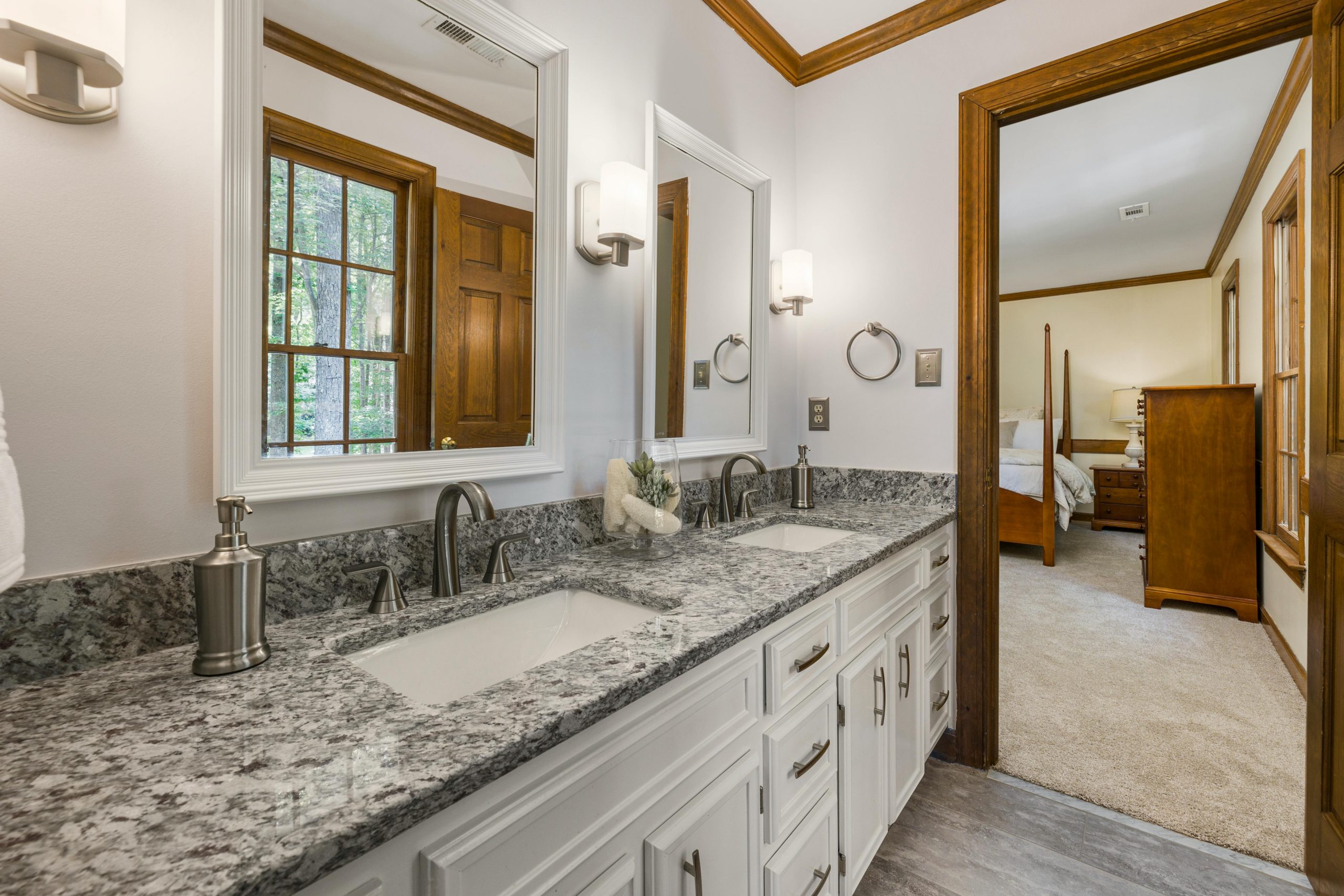
Granite is the more affordable option at entry level. The gap is roughly $10–$30 per square foot depending on the slab grade and finish.
| Granite | Quartz | |
| Starting price (per SF) | $45 | $55 |
| Mid-range (per SF) | $65 – $90 | $75 – $110 |
| Premium (per SF) | $100 – $150+ | $100 – $180+ |
| Typical bathroom vanity (15–25 SF) | $675 – $2,250 | $825 – $2,750 |
| Typical full bathroom (25–40 SF) | $1,125 – $3,500 | $1,375 – $4,500 |
For standard single-sink bathroom countertops in the Xenia, OH, most homeowners pay between $800 and $1,800 for granite and $950 and $2,200 for quartz, fully installed.
Is Granite or Quartz Cheaper to Install?
Installation labor costs are roughly the same for both materials — typically $200–$500 for a bathroom vanity depending on complexity. The price difference comes from the slab itself, not the labor.
A few factors can push installation costs higher for either material:
- Cutouts — faucet holes and undermount sink cutouts add $50–$150 each
- Edge profiles — standard eased edges are usually included; decorative profiles like ogee or dupont cost extra
- Seams — double-sink vanities or L-shaped counters require seams; skilled fabrication minimizes visibility
- Removal of old countertop — add $100–$250 if the crew handles tearout
At Granite Empire of Cincinnati, cutouts are included in package pricing — a cost that other fabricators often add separately.
Which Is Cheaper Long-Term: Granite or Quartz?
Quartz wins on long-term cost. Granite requires annual sealing ($15–$50 DIY or $100–$200 professional) to stay stain-resistant. Quartz is non-porous and needs no sealing — ever.
| Cost Factor | Granite | Quartz |
| Upfront material cost | Lower | Higher |
| Annual sealing | Yes ($15–$200/year) | No |
| Crack/chip repair | $200–$500 | $200–$500 |
| Lifespan | 20–30+ years | 20–25 years |
| Resale value impact | High | High |
Over 10 years, granite’s sealing cost adds $150–$2,000 depending on whether you DIY or hire out. For a bathroom vanity — a lower-traffic surface than a kitchen — many homeowners seal it themselves and keep that cost minimal.
Granite vs. Quartz: Which Is Better for a Bathroom?
Both work well in bathrooms. The deciding factor is usually aesthetics and maintenance preference, not durability.
Choose granite if you want:
- Lower upfront cost starting at $45/SF
- A natural, one-of-a-kind stone look with variation in pattern
- Colors like Luna Pearl, Giallo Ornamental, Dallas White, or Azul Platino
- A high-end look at a mid-range price
Choose quartz if you want:
- Zero maintenance — no sealing, ever
- A consistent, uniform pattern (better for modern and minimalist bathrooms)
- Stain resistance around toothpaste, makeup, and hair dye
- Colors like Crystal White, White Lace, or Bianco Absoluto
For bathroom countertops in Xenia, OH, granite is the more popular choice among budget-conscious renovators. Quartz is preferred by homeowners who want a truly maintenance-free surface.
What Are the Most Popular Stone Colors for Bathroom Countertops in 2026?
White and light neutral tones dominate bathroom renovations in Ohio in 2026. The most requested colors at Granite Empire of Cincinnati include:
Granite:
- White Sparkle & Dallas White — bright white with subtle movement; pairs with any vanity color
- Luna Pearl — soft gray with silver shimmer; works with both warm and cool tones
- Azul Platino — blue-gray with fine grain; popular for contemporary bathrooms
- Giallo Ornamental — cream and gold; classic with dark wood or navy vanities
Quartz:
- Crystal White & White Lace — clean, bright white; ideal for small bathrooms to maximize light
- Bianco Absoluto — soft white with subtle veining; mimics marble without the upkeep
- Mystique White — warm white with delicate texture; works well in transitional styles

How Long Does It Take to Install Bathroom Countertops?
Granite Empire of Cincinnati completes most bathroom countertop installations in 5–7 business days from the initial measurement — including fabrication and installation.
Typical project timeline:
- Day 1 — Measurement and slab selection
- Days 2–4 — Template cutting and fabrication in-house
- Days 5–7 — Installation and final cleanup
This is significantly faster than the industry average of 2–4 weeks. For homeowners renovating a bathroom on a tight schedule, that turnaround makes a real difference.
Is Marble a Good Alternative to Granite or Quartz for Bathrooms?
Marble is a viable option for bathrooms — starting at $55/SF at Granite Empire of Cincinnati — but it requires the most maintenance of the three. It’s porous, prone to etching from acidic products like certain cleansers and citrus, and needs sealing every 6–12 months.
| Granite | Quartz | Marble | |
| Starting price/SF | $45 | $55 | $55 |
| Maintenance | Annual sealing | None | Every 6–12 months |
| Etching risk | Low | None | High |
| Bathroom suitability | Excellent | Excellent | Good (low-traffic) |
| Aesthetic | Natural variation | Consistent | Luxurious veining |
Marble is best suited for powder rooms or guest bathrooms with light daily use. For a primary bathroom used every day, granite or quartz will hold up better with less effort.
Frequently Asked Questions
Is granite or quartz better for a bathroom vanity? Both are excellent. Granite costs less upfront ($45/SF vs. $55/SF) but needs annual sealing. Quartz is maintenance-free and more consistent in pattern. For a primary bathroom, quartz is the lower-effort choice. For budget renovations, granite delivers more value per dollar.
How much does a granite bathroom countertop cost in Xenia, OH? A granite bathroom vanity top in the Xenia, OH area typically costs $800–$2,200 fully installed, depending on square footage, edge profile, and stone grade. Granite Empire of Cincinnati starts at $45/SF.
Does quartz crack easily in bathrooms? No. Quartz is one of the most durable countertop materials available. It resists cracking under normal use. Avoid dropping heavy objects on edges, which is the most common cause of chipping in any stone.
Can I get a custom-cut bathroom countertop for an unusual vanity size? Yes. Granite Empire of Cincinnati fabricates custom granite countertops in Xenia, OH and the surrounding area for any vanity size or shape, including double sinks, vessel sink cutouts, and non-standard dimensions.
How do I maintain a granite bathroom countertop? Seal it once a year with a penetrating stone sealer. Wipe up standing water around the faucet area to prevent mineral buildup. Avoid harsh chemical cleaners — use pH-neutral stone cleaner or mild dish soap.
What edge profile should I choose for a bathroom countertop? Eased or straight edges are the most popular — clean, simple, and easy to wipe down. Beveled and bullnose edges are common in traditional bathrooms. Waterfall and ogee edges add a decorative touch but cost more to fabricate.
Get a Free Quote on Bathroom Countertops
Granite Empire of Cincinnati fabricates and installs granite, quartz, marble, and other natural stone countertops for kitchens and bathrooms across the greater Cincinnati area, including Xenia, OH, Hamilton, and Dayton.
Address: 9474 Princeton Glendale Rd, Hamilton, OH 45011 Phone: (513) 547-3711 Turnaround: 5–7 business days from measurement Services: Granite, quartz, marble, and stone countertop fabrication and installation