


A good-quality granite slab should have a sound structure, an attractive and consistent finish, no significant cracks or structural damage, and characteristics that are appropriate for the countertop application. However, quality is not determined by color or price alone. When choosing granite, homeowners should inspect the slab itself, ask about its characteristics, and consider how it will be fabricated and installed.
For homeowners comparing granite countertop stores in Alexandria, KY, it is important to look beyond a small sample. Granite is natural stone, so every slab can have differences in mineral distribution, color, movement, and pattern. Granite Empire of Cincinnati provides granite countertop fabrication and installation, with granite starting at $45 per square foot.
A good slab is ultimately one that combines the appearance you want with the physical characteristics needed for your kitchen or bathroom.
What Should You Look for When Inspecting a Granite Slab?
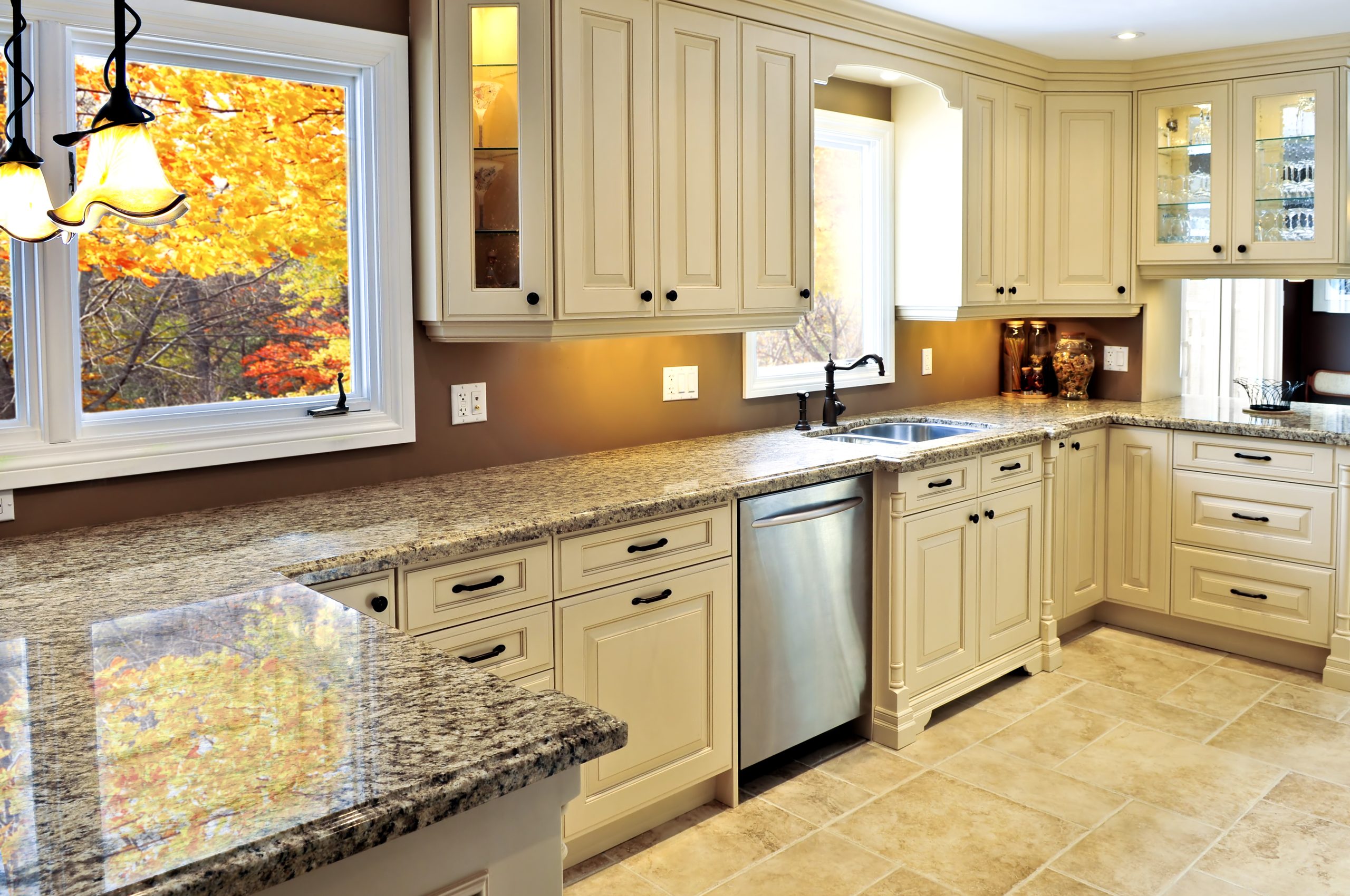
Start by examining the entire slab rather than focusing only on one attractive section. Look for cracks, major fissures, chips, poorly finished areas, and unusual surface defects that could affect fabrication or the finished countertop.
A professional slab inspection should consider:
- Overall structural condition
- Cracks and significant fissures
- Surface consistency
- Polishing quality
- Color and mineral distribution
- Natural movement and pattern
- Thickness
- Edge condition
- Existing chips or damage
- How the slab can be fabricated for the project
Natural variation is not automatically a defect. Granite is a natural material, so mineral movement, small pits, and variations in color can be part of the stone’s character.
The key is distinguishing natural characteristics from problems that could interfere with fabrication or long-term use.
Are All Granite Slabs the Same Quality?
No. Granite slabs can vary significantly even when they are marketed under the same general color or stone name.
For example, two slabs sold as a similar white granite may have different amounts of gray mineral movement, different patterns, and different levels of visual consistency.
Granite varieties can include Luna Pearl, Dallas White, Ubatuba Green, Giallo Ornamental, and Azul Platino, among many others. The appearance and characteristics can vary between individual slabs.
This is one reason homeowners should inspect the actual slab whenever possible rather than relying entirely on a photograph or a small showroom sample.
Does Granite Color Determine Quality?
No. Color is primarily a design preference and does not automatically tell you whether a slab is structurally better.
A dark granite is not inherently higher quality than a light granite, and a heavily patterned granite is not necessarily better than a relatively uniform one.
For example, Ubatuba Green can have a deep, dark appearance with mineral variation, while Luna Pearl has a much lighter and more consistent visual character. Both can be appropriate countertop materials when the individual slab is suitable for the application.
The important question is whether the specific slab is sound, properly finished, and appropriate for the project.
What Does a Good Granite Surface Look Like?
A properly finished granite surface should have an even, professional finish appropriate to the selected product.
For polished granite, the surface should have a consistent reflective appearance without obvious dull areas caused by poor finishing.
When examining a slab, look at it from different angles and under different lighting conditions.
Pay attention to:
- Dull spots
- Uneven polishing
- Visible scratches
- Chips
- Surface irregularities
- Abrupt changes in finish
- Areas that appear different from the surrounding stone
Some natural variation is expected. The concern is whether the variation appears to be part of the stone’s natural character or the result of damage or poor fabrication.
Are Cracks and Fissures in Granite a Problem?
They can be, but it is important to distinguish between natural fissures and actual structural cracks.
Granite can contain natural characteristics such as mineral lines and fissures. Some are stable and part of the stone’s natural appearance, while significant cracks can create fabrication or installation concerns.
A large crack that extends through the slab deserves particular attention.
If you notice a questionable line, ask the fabricator to identify what it is before purchasing the slab.
A professional should be able to explain whether a particular feature is an ordinary characteristic of the stone or something that could compromise the project.
How Can You Check a Granite Slab for Damage?
Inspect the slab visually from multiple directions and distances. A surface that looks perfect from several feet away may reveal a chip, crack, or finish inconsistency when examined more closely.
Check the edges and corners particularly carefully because they are more vulnerable to damage during transportation and handling.
Also look at the slab’s back and front surfaces when possible.
The goal is not to find a slab with absolutely no natural variation. The goal is to make sure that any visible characteristics are understood before the slab is fabricated.
Does Granite Thickness Matter?
Yes. Thickness is an important specification when evaluating a countertop project.
Granite countertops are commonly fabricated from slabs available in different thicknesses, with the appropriate choice depending on the product and application.
Thickness can influence:
- Appearance
- Weight
- Edge fabrication
- Support requirements
- Installation details
- Overall design
A thicker-looking edge can sometimes be created through fabrication techniques rather than simply selecting a substantially thicker slab.
The fabricator should confirm the thickness and construction method before fabrication begins.
Does Granite Slab Size Matter?
Yes. Slab dimensions can affect both the design and the cost of a countertop.
A large kitchen island may require a large slab to avoid unnecessary seams. A smaller countertop may fit comfortably within a single slab.
Slab size also affects layout planning.
For example, a homeowner may prefer the strongest natural pattern to appear on the island. The fabricator needs to plan the cuts around the slab dimensions and the kitchen layout before fabrication.
This is one reason slab selection and fabrication should be treated as connected decisions.
Why Does Granite Slab Layout Matter?
Slab layout determines where individual countertop pieces will be cut from the stone.
This is particularly important for granite with noticeable movement.
A fabricator may consider where to position:
- Kitchen islands
- Sink sections
- Main countertop runs
- Peninsulas
- Backsplash pieces
- Seams
A visually attractive portion of the slab can potentially be positioned in the most prominent area of the kitchen.
Poor planning can result in an attractive slab being divided into pieces in a way that does not showcase its natural pattern.
Can a Good Granite Slab Still Look Bad After Installation?
Yes. A high-quality slab does not guarantee a good finished countertop if fabrication or installation is poorly executed.
The final result depends on several stages:
- Slab selection
- Measurement
- Templating
- Layout
- Cutting
- Edge fabrication
- Sink and appliance cutouts
- Polishing
- Transportation
- Installation
A good fabricator needs to consider the stone’s characteristics throughout the process.
This is why choosing a countertop company is about more than finding an attractive slab.
Does the Granite Brand Matter?
Granite is different from engineered quartz in this respect. Many granite products are identified by quarry, variety, color, or commercial stone name rather than by a single consumer brand.
You may encounter names such as:
- Luna Pearl
- Dallas White
- Ubatuba Green
- Giallo Ornamental
- Azul Platino
- Santa Cecilia
- Black Galaxy
The exact appearance can vary between individual slabs even when they share the same commercial name.
For that reason, the actual slab can be more important than the name printed on a sample label.
How Much Does Good Granite Cost?
Granite Empire of Cincinnati currently lists granite starting at $45 per square foot.
For basic budgeting, that starting price would correspond to:
- 30 sq. ft. — $1,350
- 40 sq. ft. — $1,800
- 50 sq. ft. — $2,250
- 60 sq. ft. — $2,700
- 70 sq. ft. — $3,150
- 80 sq. ft. — $3,600
These are starting-price calculations rather than guaranteed final project totals.
The final price can depend on the selected slab, countertop size, fabrication requirements, cutouts, edges, seams, and installation.
Is the $1,999 Granite Package a Good Value?
Granite Empire of Cincinnati currently offers a $1,999 granite countertop package for up to 50 square feet.
The package includes:
- Up to 50 sq. ft.
- 4 granite color options
- Free sink
- Free sink cutout
This gives homeowners a defined pricing option when comparing countertop projects.
At the $45 starting rate, 50 square feet would calculate to $2,250 before considering other project-specific factors. The package therefore provides a different way to budget for a qualifying countertop project.
The exact package terms should be confirmed before ordering.
How Does Granite Compare With Quartz and Marble?
Granite, quartz, and marble can all be used for kitchen and bathroom countertops, but they have different characteristics.
| Feature | Granite | Quartz | Marble |
| Material | Natural stone | Engineered stone | Natural stone |
| Starting price | $45/sq. ft. | $55/sq. ft. | $55/sq. ft. |
| Natural variation | High | More controlled | High |
| Custom fabrication | Yes | Yes | Yes |
| Sealing | May be required | Generally not required | Typically recommended |
| Pattern | Unique to slab | More predictable | Unique to slab |
| Maintenance | Low to moderate | Low | Moderate to high |
For homeowners who specifically want natural stone, granite offers a combination of durability, visual variation, and customization.
Quartz can be attractive to homeowners who prioritize consistent patterns and low routine maintenance. Marble is often chosen for its distinctive veining and natural luxury appearance.
How Much Should You Pay for a Granite Countertop?
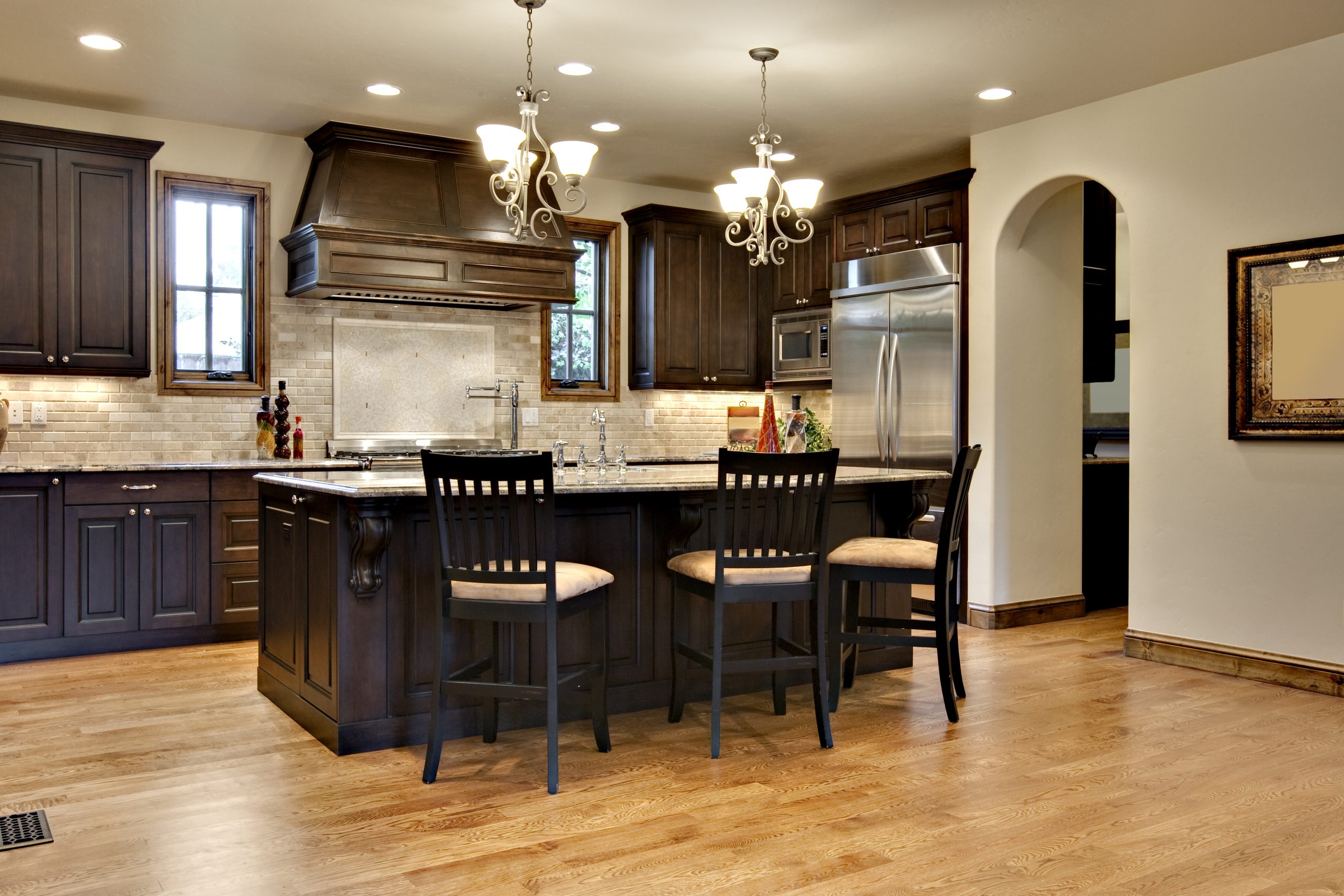
There is no single price that defines a high-quality granite countertop.
A higher price can reflect the stone’s appearance, availability, fabrication requirements, or the complexity of the kitchen rather than a simple measure of quality.
For example, a relatively affordable granite slab can still be an excellent choice if it is structurally sound and fits the desired design.
At Granite Empire of Cincinnati, granite starts at $45 per square foot, providing a concrete starting point for homeowners planning a project.
The complete quote is more important than the material price alone.
What Questions Should You Ask Before Buying a Granite Slab?
Before choosing a slab, ask the countertop company:
- Is this actual granite or another stone?
- What is the commercial name of this granite?
- Is this the actual slab I will receive?
- Are there any known cracks or significant fissures?
- What thickness is the slab?
- How will the slab be laid out?
- Where will the seams be?
- Can the slab accommodate my island?
- Can you show me where the sink and cooktop will be cut?
- What edge profiles are available?
- What fabrication is included?
- What installation is included?
- How long will fabrication take?
- What maintenance does this granite require?
These questions can help you understand both the material and the fabrication process.
How Long Does It Take to Get Granite Countertops?
The complete project typically involves several stages, so the process takes longer than the actual installation appointment.
Granite Empire of Cincinnati lists installation timelines starting from approximately 5–7 business days for qualifying projects after final templating and approval.
A typical project involves:
Selection → measurement → templating → slab layout → fabrication → quality check → installation
The physical installation itself can often take several hours to one day for a standard countertop.
More complicated kitchens may require additional fabrication time.
Where Can You Find Quality Granite Near Alexandria, KY?
Homeowners researching granite countertop stores in Alexandria, KY should compare not only the granite selection but also the company’s fabrication and installation capabilities.
Granite Empire of Cincinnati provides granite countertop fabrication and installation, as well as quartz, marble, and other stone countertop services.
The company’s granite starts at $45 per square foot, and its current $1,999 granite package includes up to 50 square feet, four color options, a free sink, and a free sink cutout.
For homeowners in Alexandria, KY, the ability to work with a company that handles the countertop from fabrication through installation can make the process easier to coordinate.
Frequently Asked Questions About Granite Slab Quality
What is the most important thing to check when buying granite?
Start with the slab’s structural condition. Look for significant cracks, damage, poor finishing, and characteristics that could interfere with fabrication.
Are natural fissures in granite always bad?
No. Natural fissures can be part of the stone’s characteristics. The important question is whether a particular fissure is stable and suitable for the intended countertop application.
Is expensive granite always better?
No. Price does not automatically determine quality. An affordable granite can be an excellent countertop if the slab is suitable, properly fabricated, and professionally installed.
Should I see the actual granite slab before buying?
Yes, particularly when the stone has strong movement or distinctive patterns. A small sample may not accurately represent the appearance of an entire slab.
What granite colors are available?
Options can include Luna Pearl, Dallas White, Ubatuba Green, Giallo Ornamental, Azul Platino, and other varieties, depending on current inventory.
How much does granite cost at Granite Empire of Cincinnati?
Granite starts at $45 per square foot. The final project price depends on size, slab selection, fabrication, installation, and additional requirements.
What is included in the $1,999 granite package?
The current package includes up to 50 square feet, four granite color options, a free sink, and a free sink cutout.
How long does granite countertop installation take?
Granite Empire of Cincinnati lists installation timelines starting from approximately 5–7 business days for qualifying projects after final templating and approval.
Is granite good for bathrooms?
Yes. Granite can be an excellent bathroom countertop material when properly fabricated, installed, and maintained.
Can granite be custom fabricated?
Yes. Granite can be fabricated for specific kitchen and bathroom dimensions, including islands, sink cutouts, cooktop openings, custom edges, corners, and seams.
Granite Empire of Cincinnati: Granite Countertop Fabrication and Installation
Granite Empire of Cincinnati provides granite, quartz, marble, and other stone countertop fabrication and installation.
Address:
9474 Princeton Glendale Rd, OH 45011
Phone:
(513) 547-3711
Starting prices:
- Granite — $45/sq. ft.
- Quartz — $55/sq. ft.
- Marble — $55/sq. ft.
Granite Countertop Package — $1,999
- Up to 50 sq. ft.
- 4 granite color options
- Free sink
- Free sink cutout
Quartz Countertop Package — $3,000
- Up to 50 sq. ft.
- 4 quartz color options
- Free sink
- Free sink cutout
Installation timeline: Starting from approximately 5–7 business days for qualifying projects after final templating and approval.
When comparing granite countertop stores in Alexandria, KY, remember that a good slab is only the beginning. The actual quality of the finished countertop depends on the stone, the slab layout, the precision of the fabrication, and the installation. A structurally sound slab with the right pattern and professional fabrication can provide a durable and visually distinctive countertop for many years.