


A granite company turns a raw stone slab into a finished countertop through a series of steps that include slab selection, measuring, templating, layout planning, cutting, edge fabrication, polishing, quality control, and installation. The goal is to transform a large piece of natural stone into precisely shaped countertop sections that fit the cabinets, sink, appliances, walls, and other features of the room.
For homeowners comparing granite companies in Covington, KY, understanding this process is useful because fabrication quality can affect the final appearance just as much as the granite itself. A beautiful slab can still produce a disappointing countertop if measurements, seams, cutouts, or edge details are poorly executed.
Granite Empire of Cincinnati provides granite countertop fabrication and installation, along with quartz, marble, and other stone countertop services. Granite starts at $45 per square foot, and the company currently offers a $1,999 granite countertop package for up to 50 square feet, with four color options, a free sink, and a free sink cutout.
What Happens Before Granite Fabrication Begins?
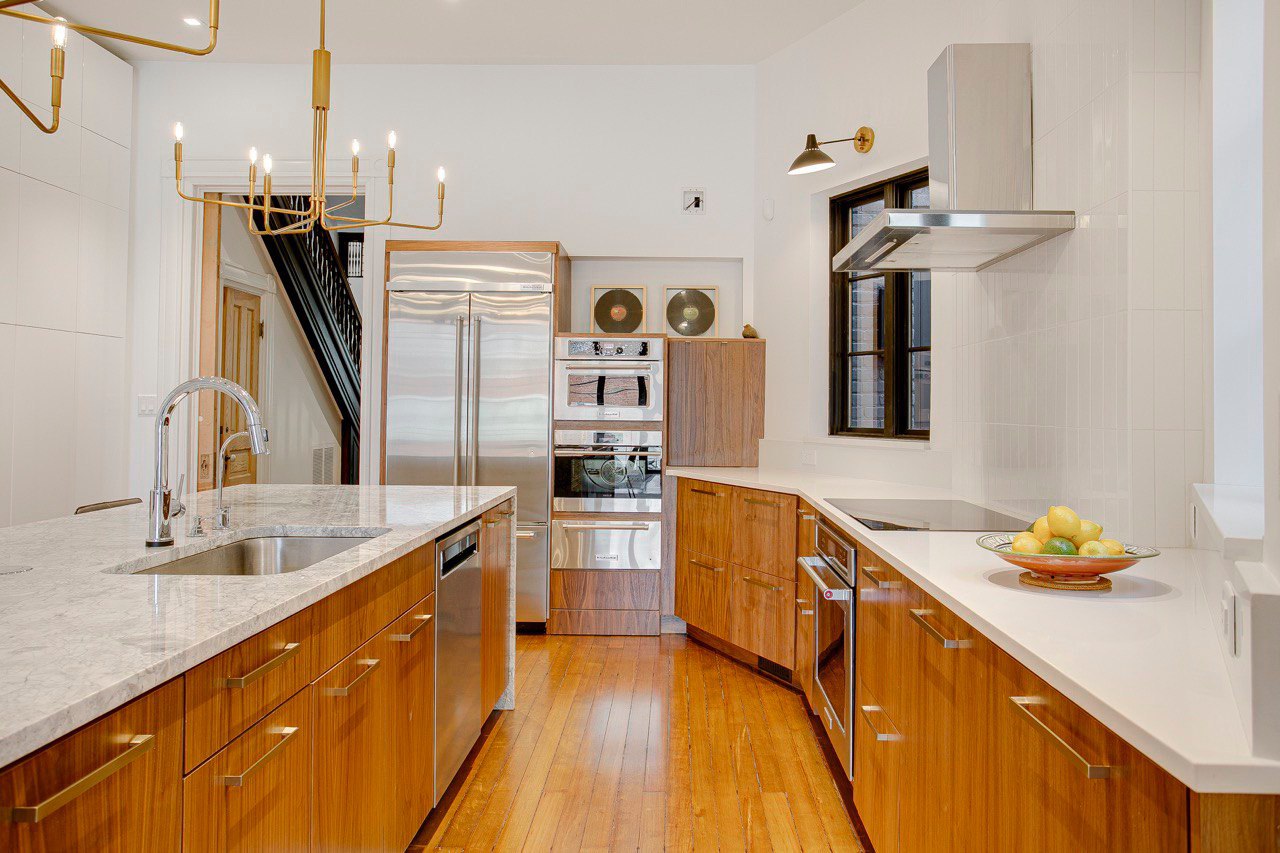
The process begins with choosing the stone and understanding the exact countertop design. The fabricator needs to know the dimensions of the kitchen or bathroom, the location of sinks and appliances, the desired edge profile, and how the stone should be positioned.
A typical project starts with:
- Choosing the granite
- Confirming the countertop design
- Measuring the space
- Creating a template
- Planning the slab layout
- Confirming cutouts and edges
- Approving the final design
The fabricator uses this information to determine how the countertop pieces will be cut from the slab.
Because granite is natural stone, the layout stage is particularly important. The goal is not simply to cut the stone into rectangles, but to make the finished countertop look intentional.
How Do You Choose the Right Granite Slab?
The actual slab should be selected based on both appearance and suitability for the project.
Granite varieties can include Luna Pearl, Dallas White, Ubatuba Green, Giallo Ornamental, Santa Cecilia, and Azul Platino, among many others.
Each slab can have its own pattern, mineral distribution, and movement.
When choosing a slab, homeowners should consider:
- Background color
- Veining or mineral movement
- Pattern density
- Slab size
- Thickness
- Existing fissures
- Surface condition
- How the pattern will look after cutting
For example, a kitchen island may benefit from a section of granite with particularly attractive movement.
The fabricator can use the slab layout to position that section where it will be most visible.
Why Is Measuring So Important?
Accurate measurements determine whether the finished countertop will fit the existing cabinets and walls correctly.
Even a small measurement error can affect the position of a sink, cooktop, backsplash, or edge.
Professional fabrication therefore relies on detailed measurements and templating before the granite is cut.
Measurements typically account for:
- Cabinet dimensions
- Wall angles
- Countertop depth
- Sink dimensions
- Cooktop dimensions
- Appliance clearances
- Overhangs
- Seams
- Backsplash requirements
This information is converted into a template that guides the fabrication process.
What Is a Countertop Template?
A template is a precise representation of the countertop shape that tells the fabricator where the stone needs to be cut.
The template accounts for irregular walls, corners, cutouts, and other project-specific details.
Instead of assuming that every kitchen is perfectly square, professional fabrication takes the actual space into account.
This is particularly important in older homes, where walls and cabinets may not be perfectly straight.
The template helps reduce the risk of producing a countertop that does not fit correctly.
How Is the Granite Slab Laid Out?
After measurements and templating, the fabricator determines where each countertop section will be positioned on the slab.
This stage is sometimes called slab layout or cutting layout.
The fabricator considers:
- Countertop dimensions
- Island dimensions
- Natural granite movement
- Vein or pattern direction
- Sink location
- Cooktop location
- Seams
- Material efficiency
A good layout can make a major difference in the finished appearance.
For granite with dramatic movement, the layout can determine whether the most attractive section appears on the island, along the main countertop, or somewhere less visible.
Why Do Granite Seams Matter?
Seams are the places where two countertop pieces meet.
Large kitchens or layouts that cannot be cut from a single piece may require one or more seams.
A professional fabricator plans seams strategically rather than placing them randomly.
Factors that can affect seam placement include:
- Slab dimensions
- Cabinet layout
- Sink location
- Island size
- Natural stone pattern
- Structural requirements
A seam cannot always be eliminated, but careful placement can make it less visually distracting.
How Is Granite Cut?
Once the layout is approved, the slab is cut according to the template.
Professional stone fabrication uses specialized equipment designed to cut natural stone accurately.
The cutting process creates the individual pieces needed for the countertop.
Depending on the project, fabrication may include:
- Straight cuts
- Angled cuts
- Sink cutouts
- Cooktop cutouts
- Faucet openings
- Appliance openings
- Corners
- Custom shapes
Precision is critical because the countertop pieces must fit together correctly during installation.
How Are Sink Cutouts Made?
Sink cutouts are created during fabrication according to the dimensions and specifications of the selected sink.
The type of sink matters because an undermount sink, drop-in sink, and other sink configurations can require different cutout approaches.
Granite Empire of Cincinnati’s current $1,999 granite package includes a free sink and sink cutout for up to 50 square feet, subject to the package terms.
A fabricator should confirm the exact sink specifications before cutting the stone.
How Are Faucet Holes and Appliance Cutouts Created?
Additional openings can be fabricated into the granite according to the kitchen design.
These can include openings for:
- Faucets
- Soap dispensers
- Air gaps
- Cooktops
- Other countertop-mounted accessories
The exact requirements should be confirmed before fabrication begins.
Once the granite is cut, changing the dimensions can be significantly more complicated than making the correct cut during the fabrication stage.
How Are Granite Countertop Edges Finished?
The edge profile determines how the front edge of the countertop looks and feels.
A simple edge can create a clean modern appearance, while a more decorative profile can provide a traditional look.
Common edge styles can include:
- Eased edge
- Straight edge
- Bullnose
- Ogee
- Beveled edge
- Custom edge profiles
The selected profile needs to be considered during fabrication because the edge must be shaped and polished before installation.
How Is Granite Polished?
After cutting and edge fabrication, exposed stone surfaces and edges are finished to create the desired appearance.
For polished granite, the surface and exposed edges are processed to create a smooth, reflective finish.
The goal is to achieve a consistent appearance between the main countertop surface and fabricated edges.
Poor edge finishing can make an otherwise attractive granite countertop look unfinished.
How Does a Fabricator Handle Natural Granite Variation?
Natural variation is one of granite’s defining characteristics.
A fabricator does not attempt to make every section of granite look identical. Instead, the layout is planned to work with the stone’s natural pattern.
For example, a slab might contain:
- Dark mineral clusters
- Light areas
- Veins
- Speckles
- Directional movement
- Color variation
These characteristics can become part of the design.
The objective is to make the finished countertop look balanced rather than artificially uniform.
What Happens During Quality Control?
Before installation, fabricated pieces should be inspected for obvious issues.
Quality control can involve checking:
- Dimensions
- Cutouts
- Edge profiles
- Surface finish
- Polishing
- Chips
- Cracks
- Seam preparation
- Overall appearance
The finished pieces need to correspond to the approved layout and measurements.
A final inspection can help identify problems before the countertop reaches the installation site.
How Much Does Granite Fabrication Cost?

Granite Empire of Cincinnati currently lists granite starting at $45 per square foot.
For basic budgeting:
| Countertop Area | Starting Calculation |
| 30 sq. ft. | $1,350 |
| 40 sq. ft. | $1,800 |
| 50 sq. ft. | $2,250 |
| 60 sq. ft. | $2,700 |
| 70 sq. ft. | $3,150 |
| 80 sq. ft. | $3,600 |
These calculations use the starting granite price and do not represent guaranteed final project prices.
The final cost can depend on the slab, layout, cutouts, edge profile, seams, installation, and other requirements.
Is the $1,999 Granite Package a Good Option?
Granite Empire of Cincinnati currently offers a $1,999 granite countertop package for up to 50 square feet.
The package includes:
- Up to 50 sq. ft.
- Four granite color options
- Free sink
- Free sink cutout
The package can make budgeting easier because the price and included features are clearly defined.
Homeowners should confirm current availability and any project-specific conditions before ordering.
How Does Granite Fabrication Compare With Quartz Fabrication?
Granite and quartz both require professional fabrication, but the materials have different characteristics.
Granite is natural stone, meaning every slab has its own pattern and mineral distribution.
Quartz is engineered, so colors and patterns are generally more consistent.
| Feature | Granite | Quartz |
| Material | Natural stone | Engineered stone |
| Starting price | $45/sq. ft. | $55/sq. ft. |
| Pattern | Naturally variable | More consistent |
| Custom fabrication | Yes | Yes |
| Sink cutouts | Yes | Yes |
| Custom edges | Yes | Yes |
| Professional installation | Recommended | Recommended |
Both materials require careful measurements and fabrication.
The main difference is how the fabricator works with the material’s visual and physical characteristics.
How Long Does Granite Fabrication Take?
Granite countertop fabrication involves several stages, so the overall timeline depends on the project.
Granite Empire of Cincinnati lists installation timelines starting from approximately 5–7 business days for qualifying projects after final templating and approval.
The timeline can include:
Selection → Measurement → Templating → Layout → Cutting → Edge fabrication → Quality control → Installation
A straightforward countertop can move through the process relatively quickly.
A more complicated project with a large island, multiple seams, unusual angles, or extensive cutouts may require additional preparation.
How Are Granite Countertops Installed?
After fabrication is complete, the finished countertop pieces are transported to the project site.
Installers position the pieces on the cabinets and check the fit.
The installation process can involve:
- Preparing the cabinets
- Positioning countertop sections
- Checking alignment
- Joining seams
- Securing the stone
- Installing or positioning the sink
- Checking overhangs
- Completing final adjustments
- Cleaning the finished surface
The countertop should sit securely and align correctly with the cabinets, walls, appliances, and other elements.
What Makes Professional Granite Fabrication Different?
Professional fabrication is about precision at every stage.
The quality of the final countertop depends on much more than the granite itself.
Important factors include:
- Accurate measurements
- Proper templating
- Efficient slab layout
- Clean cuts
- Precise sink openings
- Consistent edge profiles
- Proper polishing
- Thoughtful seam placement
- Careful installation
This is why homeowners should evaluate the fabricator as carefully as they evaluate the stone.
What Should You Ask a Granite Company Before Fabrication?
Before approving the project, ask:
- Who will measure the countertop?
- Who will fabricate the granite?
- Where is the granite fabricated?
- Can I approve the slab layout?
- Where will the seams be?
- What sink cutout is included?
- Which edge profiles are available?
- What is included in the quoted price?
- How long will fabrication take?
- When is installation scheduled?
- What happens if the slab arrives damaged?
- What warranty or workmanship coverage is provided?
Clear answers to these questions can help homeowners understand what they are actually purchasing.
Why Does the Fabricator Matter as Much as the Granite?
The granite is the visible material, but fabrication determines how that material becomes a finished countertop.
A beautiful slab can be poorly utilized if the layout ignores its natural movement.
A good slab can also look significantly better when the seams, edges, and cutouts are carefully planned.
For homeowners comparing granite companies in Covington, KY, it is therefore worth looking at completed projects and asking how the company handles fabrication.
Can a Granite Company Handle the Entire Project?
Yes. A full-service countertop company can coordinate several stages of the project under one process.
Granite Empire of Cincinnati provides granite, quartz, marble, and other stone countertop fabrication and installation.
This means homeowners can work with the same countertop company for material selection, fabrication, and installation rather than coordinating completely separate providers.
For a custom countertop project, having these stages connected can simplify communication and scheduling.
Frequently Asked Questions About Granite Fabrication
How does granite become a countertop?
A granite slab is measured, templated, laid out, cut, shaped, polished, inspected, and then installed.
How long does granite fabrication take?
The complete timeline depends on the project. Granite Empire of Cincinnati lists installation timelines starting from approximately 5–7 business days for qualifying projects after final templating and approval.
Can granite be custom cut?
Yes. Granite can be custom fabricated for kitchen countertops, islands, bathroom vanities, sinks, cooktops, corners, and other project-specific requirements.
How are granite sink cutouts made?
The fabricator creates the opening according to the specifications of the selected sink. The exact dimensions should be confirmed before cutting.
Can granite have a custom edge?
Yes. Granite can be fabricated with different edge profiles, including eased, beveled, bullnose, ogee, and other custom options.
How much does granite cost at Granite Empire of Cincinnati?
Granite starts at $45 per square foot.
What is included in the $1,999 granite package?
The current package includes up to 50 square feet, four granite color options, a free sink, and a free sink cutout.
Does granite fabrication create seams?
It can. The need for seams depends on the countertop layout, slab dimensions, and design. A professional fabricator plans seam locations carefully.
Can the fabricator choose which part of the slab becomes the island?
The slab layout can be planned so that important areas of the natural pattern are positioned strategically, subject to the slab’s dimensions and project requirements.
Is professional granite installation important?
Yes. Proper installation helps ensure that the fabricated pieces fit correctly, seams are handled properly, and the countertop is securely positioned.
Granite Empire of Cincinnati: Granite Countertop Fabrication and Installation
Granite Empire of Cincinnati provides granite, quartz, marble, and other stone countertop fabrication and installation.
Address:
9474 Princeton Glendale Rd, OH 45011
Phone:
(513) 547-3711
Starting prices:
- Granite — $45/sq. ft.
- Quartz — $55/sq. ft.
- Marble — $55/sq. ft.
Granite Countertop Package — $1,999
- Up to 50 sq. ft.
- 4 granite color options
- Free sink
- Free sink cutout
Quartz Countertop Package — $3,000
- Up to 50 sq. ft.
- 4 quartz color options
- Free sink
- Free sink cutout
Installation timeline: Starting from approximately 5–7 business days for qualifying projects after final templating and approval.
For homeowners comparing granite companies in Covington, KY, the finished countertop is the result of many individual fabrication decisions. From selecting the right portion of the slab to creating accurate templates, positioning seams, cutting sink openings, polishing edges, and completing the installation, every stage contributes to the final result. Granite Empire of Cincinnati provides both stone fabrication and installation, allowing the project to move from slab selection to finished countertop through one countertop company.