

When designing your dream kitchen, choosing the right countertop material is one of the most crucial decisions you will make. Your countertops not only need to look beautiful, but they also need to be durable, functional, and easy to maintain. Two of the most popular materials in the market today are granite and quartz. Both are luxurious, high-quality options, but how do you decide which one suits your needs best? In this article, we will break down the differences between granite and quartz countertops, helping you decide which is right for your kitchen, especially when it comes to countertops in Sharonville, OH.
Understanding Granite and Quartz: What’s the Difference?
 Before diving into the details of durability, aesthetics, and costs, it’s important to first understand what sets granite and quartz apart.
Granite is a natural stone, formed by geological processes over millions of years. It is mined from quarries and then cut into slabs that are polished for use in kitchens, bathrooms, and other areas. Each granite slab is unique, with its own distinct patterns, colors, and texture.
Quartz, however, is an engineered material made from natural quartz crystals combined with resins and other synthetic materials. While quartz is often marketed as “natural,” it’s actually a man-made product. The combination of minerals and resins allows for a more controlled and consistent appearance, with an almost endless range of colors and patterns.
Both materials have their advantages, but they cater to different preferences and needs. Now, let’s dive deeper into the factors that will help you decide between these two great options.
Durability: Which Material is Tougher?
When it comes to countertops in Sharonville, OH, durability is a top concern for homeowners. Both granite and quartz are known for their resilience, but they differ in some key areas.
Granite is one of the hardest materials available for countertops. It is highly resistant to heat, scratches, and general wear and tear. Whether you’re preparing a hot pot of soup or chopping vegetables, granite can withstand the daily demands of your kitchen. However, granite is porous, which means it can absorb liquids, including oil, wine, and coffee, if not sealed properly. This makes granite countertops a bit more labor-intensive in terms of maintenance. Sealing your granite regularly will help protect it from stains and keep it looking pristine.
Quartz, being non-porous, does not require sealing, which is one of its biggest advantages. This makes quartz countertops incredibly resistant to staining and bacterial growth. You won’t have to worry about spills or food stains soaking into your countertop. However, quartz is more sensitive to heat compared to granite. Placing a hot pot directly on a quartz surface could result in discoloration or even warping, so it’s always a good idea to use trivets or hot pads.
In terms of durability, both materials are tough, but if you want something that requires less maintenance, quartz countertops could be a better option.
Aesthetic Appeal: Granite vs. Quartz in Your Kitchen
Both granite and quartz offer stunning aesthetics, but their appearance differs significantly.
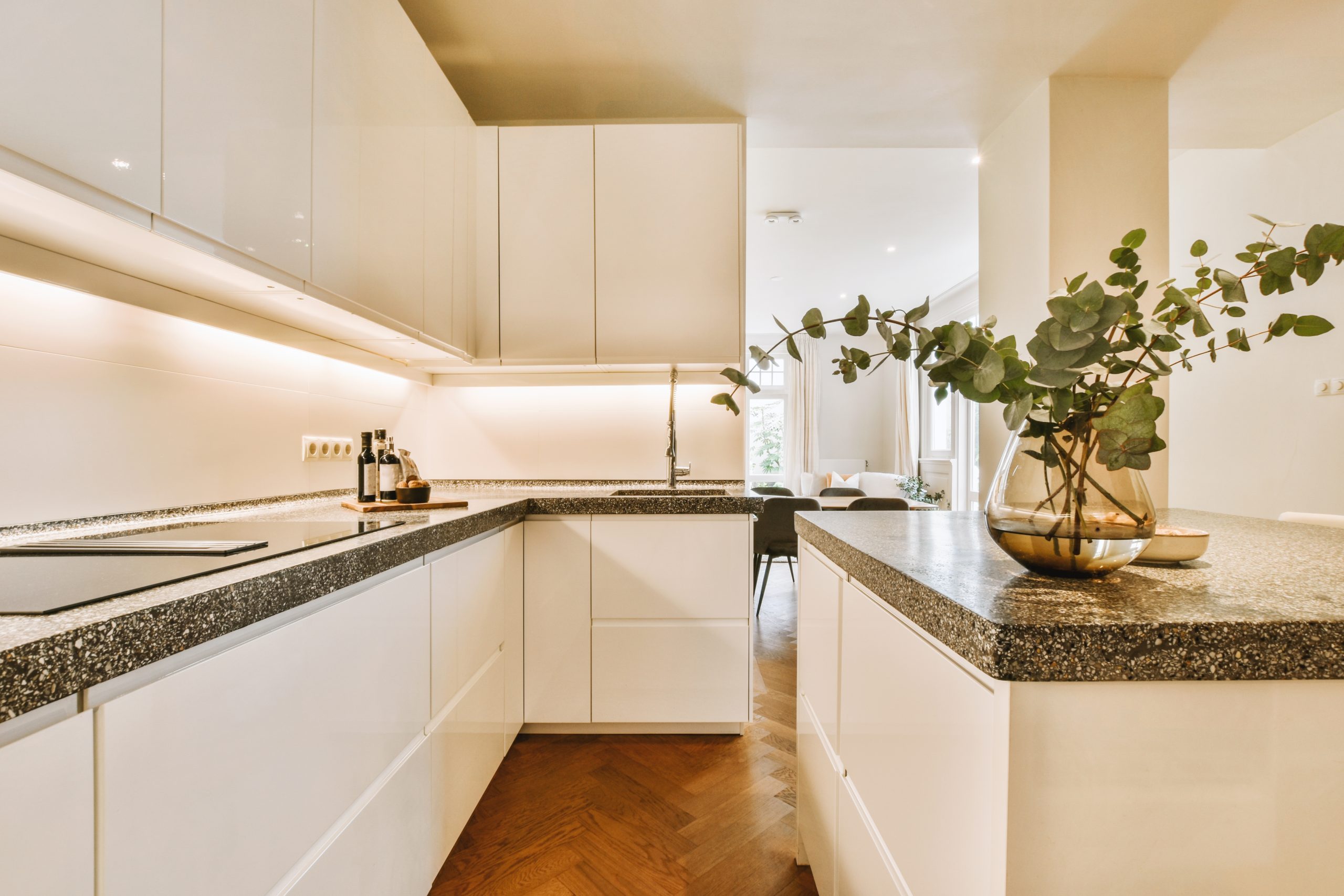
Granite is known for its natural beauty. No two slabs of granite are the same, which means your kitchen countertops will have a unique look. The variations in color, pattern, and texture make granite an ideal choice for homeowners who appreciate natural stone. Whether you want rich, dark hues or lighter, more subtle tones, granite offers a wide array of options. From specks and veins to bold, dramatic patterns, granite allows you to bring a touch of nature into your kitchen.
On the other hand, quartz countertops are engineered for consistency. This means you can expect a more uniform appearance, making quartz ideal for homeowners who prefer clean lines and a more modern look. While quartz can be manufactured to mimic natural stone, such as granite or marble, the surface is more predictable. If you’re looking for a sleek, polished aesthetic, quartz might be a better fit.
In terms of visual appeal, granite brings the allure of nature, while quartz offers a more polished, modern design. Both have their place, depending on your personal style.
Maintenance and Care: How Easy Is It?
 Maintenance is another important factor to consider when choosing countertops. With proper care, both granite and quartz can last a lifetime, but they each come with different maintenance needs.
Granite requires regular sealing to protect it from stains and spills. Over time, granite can absorb liquids like oil or wine, which can cause permanent stains if not properly sealed. The sealing process is simple but needs to be repeated annually or more often, depending on the type of granite. Additionally, granite can chip or crack if heavy objects are dropped on it, particularly along the edges, so care must be taken to avoid accidental damage.
Quartz, on the other hand, is non-porous and doesn’t require sealing. This makes quartz countertops extremely low-maintenance compared to granite. You can clean quartz with just a damp cloth and mild detergent, and there’s no need to worry about oil stains or bacterial growth. However, while quartz is resistant to most scratches and stains, it can still be damaged by excessive heat. It’s always advisable to use trivets or hot pads to protect your quartz countertops from hot pots and pans.
If you’re looking for countertops that require minimal maintenance, quartz may be your best option. Granite, while stunning, requires more care in the long term to maintain its beauty and functionality.
Cost: Which is More Affordable?
Cost is another factor that many homeowners consider when choosing between granite and quartz for their kitchen. Both materials are premium options, but they vary in price.
Granite is generally less expensive than quartz, especially if you go for a more common variety. However, prices can fluctuate significantly depending on the rarity of the granite and the quality of the stone. High-end, exotic granite can be quite costly. Additionally, you’ll need to factor in the cost of sealing and occasional repairs, which can add to the long-term expense.
Quartz countertops tend to be more expensive than granite on average. However, since quartz is low-maintenance, it may end up being more cost-effective in the long run. The absence of sealing costs and the reduced likelihood of damage can offset the initial investment over time. If you plan to stay in your home for many years, quartz may be worth the higher upfront cost.
Ultimately, your budget and long-term plans for the kitchen should influence your choice. If you want a more affordable option upfront, granite is a great choice. If you’re willing to invest more initially for a low-maintenance, durable material, quartz could be the right fit for your kitchen.
Environmental Considerations: Which Material is More Eco-Friendly?
Sustainability has become a growing concern for many homeowners. If you are interested in choosing countertops in Sharonville, OH, that are eco-friendly, it’s important to understand the environmental impact of both materials.
Granite is a natural stone, and the extraction process can be quite resource-intensive. Mining granite can have a significant environmental footprint, especially if the stone is sourced from overseas. Additionally, granite production involves significant energy consumption and transportation emissions. However, granite is a durable material with a long lifespan, which means it doesn’t need to be replaced as often, reducing its long-term environmental impact.
Quartz, while engineered, can be made from recycled materials, which can make it a more sustainable option. Many manufacturers now offer quartz countertops that incorporate recycled glass, stone, and other materials, making them more eco-friendly. Additionally, quartz is highly durable, so it doesn’t need to be replaced as often, reducing the overall environmental footprint.
If sustainability is a major factor in your decision, quartz countertops might be the more environmentally friendly option, especially if you choose a product made with recycled materials.
Conclusion: Making the Right Choice for Your Kitchen
Choosing between granite and quartz for your kitchen comes down to personal preference, budget, and lifestyle. Both materials offer unique benefits, and either option will give you a beautiful, durable, and functional kitchen countertop.
For homeowners in Sharonville, countertops in Sharonville, OH, such as granite and quartz, provide excellent choices depending on what you’re looking for. If you love the natural beauty of stone and don’t mind the maintenance required, granite may be the ideal option for you. If you prefer low-maintenance, consistent designs with added durability, quartz could be the right material.
For expert advice and high-quality installation, consider reaching out to Granite Empire of Cincinnati. Whether you’re leaning toward granite or quartz, the professionals at Granite Empire of Cincinnati can help you make the best decision and ensure that your countertops perfectly complement your dream kitchen.