


Choosing new countertops is one of the most important decisions in any kitchen or bathroom renovation. Stone surfaces are not just decorative features. They influence how you cook, clean, entertain, and maintain your home for years to come. Granite continues to stand out as one of the most dependable and visually striking options available.
For homeowners researching granite countertops in Dayton, OH, the process involves more than picking a color. It requires understanding stone quality, fabrication standards, installation practices, and how granite compares to other natural stone materials like marble and quartz. Making the right choice means balancing appearance, durability, and long-term value.
This guide walks through the key steps that help ensure you select the right granite countertop for your space.
Understand Why Granite Remains a Leading Choice

Granite is formed under extreme heat and pressure beneath the earth’s surface. This process creates a dense, durable stone that resists scratches, heat, and impact. Its natural mineral patterns give every slab a unique appearance.
Unlike engineered surfaces, granite offers organic movement and depth that cannot be replicated exactly. That uniqueness appeals to homeowners who want character rather than uniformity.
When comparing granite countertops in Dayton, OH, it is helpful to understand what sets granite apart from other stone surfaces:
Granite offers high heat resistance and natural strength.
Quartz offers low maintenance and consistent patterning.
Marble offers timeless elegance but requires more care.
Each material serves different needs, but granite balances durability and aesthetics effectively.
Step One: Evaluate Your Lifestyle and Usage
Before selecting a slab, consider how the space will be used.
Is this a busy kitchen with daily cooking and frequent gatherings?
Is it a bathroom vanity exposed to water and cosmetics?
Do you prefer minimal maintenance or are you comfortable with periodic sealing?
Granite performs well in high-use kitchens because it tolerates hot pans and daily wear. However, it does require sealing to maintain stain resistance.
For homeowners installing granite countertops, understanding daily habits helps determine the right granite type and finish.
Step Two: View Full Slabs, Not Just Samples
Small samples rarely show the full character of a granite slab. Natural stone varies significantly across its surface. Veining, mineral clusters, and color shifts may not appear on a small display piece.
When possible, view the entire slab before making a decision. This allows you to evaluate:
Overall color consistency
Movement patterns
Potential focal points for islands
Areas suitable for seam placement
Granite Empire of Cincinnati encourages full slab viewing to ensure customers know exactly what they are purchasing.
Step Three: Choose the Right Finish
Granite countertops are available in several finishes, each affecting both appearance and maintenance.
Polished Finish
Polished granite has a glossy surface that enhances color and depth. It is easier to clean and slightly more resistant to moisture penetration.
Honed Finish
Honed granite offers a matte look with a softer appearance. It may show fingerprints less but can require more frequent cleaning to maintain uniformity.
Selecting the right finish depends on both design preference and practical expectations.
Step Four: Consider Edge Profiles Carefully
Edge profiles influence both style and durability. Sharp edges may chip more easily, especially in high-traffic kitchens.
Rounded or eased edges reduce impact stress and provide a safer surface in family homes.
Quality fabrication ensures edges are shaped without weakening the stone.
Step Five: Pay Attention to Thickness and Support
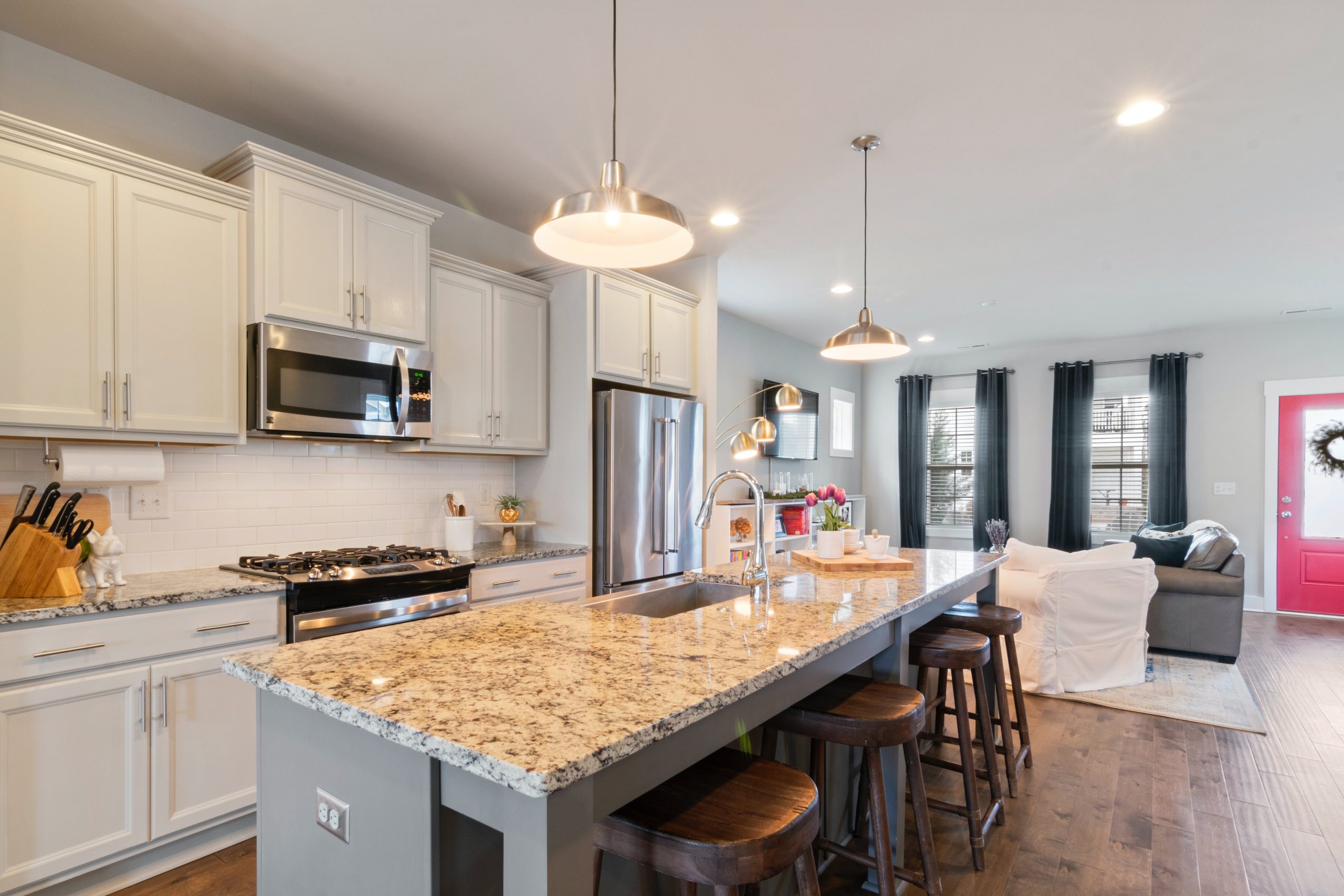
Granite slabs are typically available in standard thicknesses. Thicker slabs may provide a more substantial look but also require proper cabinet support.
Before installation, cabinets must be inspected for levelness and structural strength. Granite is heavy and unforgiving if improperly supported.
When selecting granite countertops, verify that installation includes cabinet preparation and reinforcement where needed.
Step Six: Ask About Sealing and Maintenance
Granite is naturally porous, though density varies by variety. Proper sealing protects against staining from oils and liquids.
Ask about:
How often sealing is recommended
What type of sealer is used
Proper cleaning products
Maintenance is manageable, but understanding expectations prevents future issues.
Step Seven: Evaluate Fabrication and Installation Quality
Material selection is only half the process. Fabrication and installation determine long-term performance.
Seam Placement
Seams should be placed strategically to reduce visibility and minimize structural stress. Poor seam placement can lead to cracking over time.
Sink and Cooktop Reinforcement
Cutouts remove structural support from the slab. Reinforcement at these points reduces fracture risk.
Granite Empire of Cincinnati emphasizes structural awareness during fabrication to ensure durability.
Among providers of granite countertops, installation standards vary. Choosing experienced professionals protects your investment.
Step Eight: Compare Granite With Other Stone Countertops
Although granite is the focus, understanding alternatives clarifies your decision.
Quartz
Quartz offers a non-porous surface and consistent patterns. It requires no sealing but is less heat resistant than granite.
Marble
Marble provides elegance and classic appeal but is softer and more reactive to acids.
Granite often strikes the best balance for homeowners seeking both durability and natural beauty.
Step Nine: Think About Long-Term Value
Granite countertops increase property value due to their durability and aesthetic appeal. Buyers often view granite as a premium feature.
Choosing high-quality granite and proper installation reduces the likelihood of repairs or early replacement.
For homeowners planning long-term occupancy, this durability translates to cost efficiency.
Step Ten: Work With a Reputable Stone Specialist
Selecting the right supplier is as important as selecting the right slab.
Granite Empire of Cincinnati has built its reputation by focusing on careful fabrication, honest guidance, and professional installation.
When comparing companies offering granite countertops in Dayton, OH, look beyond price alone. Ask about their templating process, reinforcement methods, and installation standards.
Experience matters when working with heavy, natural stone.
Common Mistakes to Avoid
Avoid choosing granite based solely on color trends. Trends change, but stone remains for decades.
Avoid skipping slab viewing. Variations are part of granite’s beauty.
Avoid assuming all granite is identical. Density and porosity vary by quarry.
Avoid ignoring installation quality. Poor preparation undermines even the strongest stone.
Final Thoughts
Selecting the right granite countertop involves more than finding an attractive slab. It requires thoughtful evaluation of material quality, finish options, structural support, and professional installation.
For homeowners exploring granite countertops in Dayton, OH, granite continues to offer an excellent balance of strength, heat resistance, and timeless style. When paired with careful fabrication and installation, it provides decades of reliable performance.
Granite Empire of Cincinnati supports homeowners throughout the entire selection process, ensuring each granite countertop is measured, cut, and installed with precision.
In the end, the right granite countertop is not just about appearance. It is about performance, longevity, and confidence that your investment will stand up to everyday life.