


Choose real marble if natural veining, depth, and the way stone develops character over time matter most to you. Choose marble-look quartz if you want a similar light, veined appearance with lower maintenance, better stain resistance, and no routine sealing.
For homeowners comparing quartz countertops in Alexandria, KY, the decision often comes down to how much maintenance you are comfortable with. Marble is a natural stone that can etch and develop patina, while engineered quartz provides a more predictable appearance and is generally easier to maintain in a busy kitchen.
At Granite Empire of Cincinnati, quartz and marble currently start at $55 per square foot. The company provides templating, fabrication, and professional installation of quartz, marble, granite, and other stone countertops, with qualifying projects starting from approximately 5–7 business days after final templating and approval.
What Is the Biggest Difference Between Marble and Marble-Look Quartz?

The biggest difference is that marble is natural stone, while marble-look quartz is an engineered surface designed to reproduce the appearance of natural veining.
Every marble slab is unique.
Carrara, Calacatta, Statuario, and Arabescato can contain natural changes in:
- Vein thickness
- Vein direction
- Background color
- Mineral deposits
- Fissures
- Pattern density
Quartz manufacturers create controlled patterns that can resemble these natural stones.
The result is usually more predictable from one slab to another, although exact pattern placement can still vary.
Does Marble-Look Quartz Really Look Like Marble?
High-quality marble-look quartz can look very convincing, especially from normal viewing distances. Real marble still has natural depth and irregularity that an engineered pattern cannot reproduce exactly.
Modern quartz designs can include:
- Soft Carrara-style veining
- Bold Calacatta-style veins
- Warm gold movement
- Fine gray lines
- Wide dramatic veins
- Bright or warm white backgrounds
Manufacturers such as Cambria, Caesarstone, Silestone by Cosentino, MSI Q Quartz, Viatera by LX Hausys, and Corian Quartz offer marble-inspired designs.
The best choice depends on whether you prefer natural irregularity or a more controlled pattern.
Which Looks More Natural: Marble or Quartz?
Real marble looks more natural because it is natural. Its veins were created geologically rather than printed or engineered into a repeating design.
That difference is particularly visible on large islands.
A full marble slab can contain dramatic movement that changes across several feet of stone.
Quartz can create a similar overall aesthetic, but homeowners who closely examine the surface may notice greater pattern consistency.
For some kitchens, that predictability is actually an advantage.
What Is the Difference Between Carrara and Calacatta Marble?
Carrara typically has a softer gray background or white-gray base with finer, more frequent veining. Calacatta usually has a brighter background with larger, more dramatic veins.
Calacatta may also contain warm gold or beige movement.
Other premium marble options include:
- Statuario
- Arabescato
- Calacatta Gold
- Calacatta Borghini
These stones vary significantly from slab to slab.
Two pieces sold under the same marble name may still look noticeably different.
What Quartz Looks Most Like Carrara Marble?
Quartz with a soft white or light-gray background and subtle gray veins generally provides the closest Carrara-inspired appearance. The goal is understated movement rather than large dramatic veins.
Many manufacturers produce designs in this category.
When comparing them, look at:
- Background warmth
- Vein thickness
- Pattern repetition
- Surface finish
- Slab size
- Vein direction
A small sample is useful for color, but viewing a full slab or large-format image is better for understanding the overall pattern.
What Quartz Looks Most Like Calacatta Marble?
Quartz with a bright background and large gray or gray-and-gold veins generally creates the strongest Calacatta-inspired look. These designs are especially popular for large kitchen islands.
Brands such as Cambria, Caesarstone, Silestone, MSI Q Quartz, and Viatera offer multiple interpretations of dramatic marble.
Some patterns use broad veins.
Others use thin branching lines or warm gold accents.
The best design should be selected alongside the cabinets, flooring, backsplash, and lighting rather than in isolation.
Is Marble-Look Quartz Easier to Maintain Than Real Marble?
Yes. Quartz is generally much easier to maintain because it is nonporous and normally does not require sealing.
Quartz also has strong resistance to common household stains.
Real marble requires more attention because it can absorb liquids and react chemically with acids.
Common marble concerns include:
- Wine
- Coffee
- Lemon juice
- Vinegar
- Tomato
- Cooking oils
- Acidic cleaners
For a household that wants a light marble aesthetic without marble-specific maintenance, quartz is usually the simpler option.
Does Real Marble Stain Easily?
Marble can stain if liquids penetrate the stone, particularly when spills remain on the surface. Proper sealing can reduce absorption but does not make marble completely stain-proof.
Cooking oils and strongly colored liquids deserve particular attention.
Potential staining substances include:
- Red wine
- Coffee
- Oil
- Juice
- Sauces
- Food coloring
Cleaning spills quickly is one of the easiest ways to reduce staining risk.
Can Marble-Look Quartz Stain?
Quartz is highly stain-resistant, but it is not impossible to stain or discolor. Strong pigments and aggressive chemicals should still be cleaned promptly.
Potential problems include:
- Hair dye
- Permanent markers
- Strong food coloring
- Some solvents
- Harsh cleaning chemicals
White quartz can make residue or discoloration more noticeable simply because the background is light.
Low maintenance does not mean zero maintenance.
What Is Etching, and Why Does It Matter With Marble?
Etching is a chemical reaction that changes the marble surface when it comes into contact with acids. It often appears as a dull or lighter spot rather than a dark stain.
Common causes include:
- Lemon
- Lime
- Vinegar
- Wine
- Tomato
- Some cleaning products
This is one of the most important differences between marble and quartz.
Quartz does not react to ordinary kitchen acids in the same way natural marble does.
Does Sealing Marble Prevent Etching?
No. Sealing helps reduce absorption, but it does not prevent the chemical reaction that causes marble to etch.
This distinction is important.
A properly sealed marble countertop can still develop dull spots from lemon juice or vinegar.
Homeowners who want a surface that remains visually consistent may find marble-look quartz easier to live with.
Does Quartz Need to Be Sealed?
No. Engineered quartz normally does not require sealing because it is nonporous.
That eliminates one maintenance consideration associated with many natural stones.
Granite and marble may require sealing depending on their absorption characteristics.
Quartz generally requires routine cleaning rather than periodic application of penetrating stone sealer.
Is Marble or Quartz Better for People Who Cook Every Day?
Quartz is usually more forgiving for frequent cooking because it resists stains and acids better than marble. Marble can still work beautifully in an active kitchen if the homeowner accepts etching and natural aging.
The tradeoff is heat.
Quartz contains polymer resins and should be protected from very hot cookware.
Marble has good heat resistance, although trivets are still recommended as a simple protective habit.
Can You Put Hot Pans on Marble-Look Quartz?
Direct contact with very hot cookware should be avoided. Quartz contains resins that can be affected by excessive heat.
Use a trivet under:
- Hot pans
- Baking sheets
- Dutch ovens
- Air fryers when heat buildup is a concern
- Other high-temperature cookware
Heat damage can cause discoloration or other permanent changes.
Granite generally offers better heat resistance if direct exposure to hot cookware is a major concern.
Can You Put Hot Pans on Marble?
Marble has good natural heat resistance, but using trivets is still recommended. Sudden temperature changes and prolonged concentrated heat can create unnecessary risk.
A trivet costs very little and protects both the countertop and its finish.
The fact that natural stone handles heat does not mean every hot object should routinely be placed directly on it.
Which Scratches More Easily: Marble or Quartz?
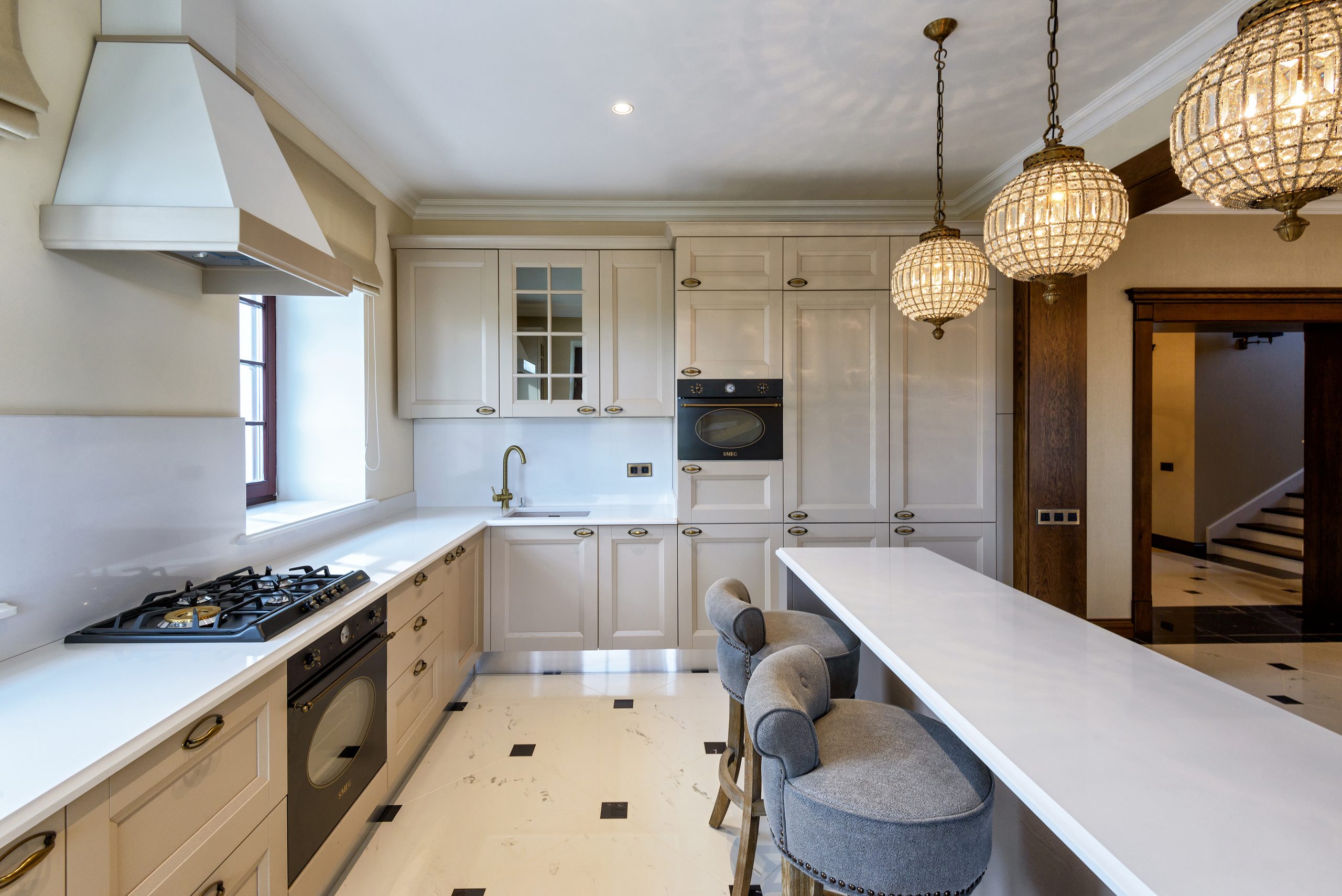
Marble is generally more vulnerable to scratching and surface wear than quartz. Quartz is hard and durable, although it can still be damaged.
Neither material should be used as a cutting board.
Using a cutting board protects:
- Countertop finish
- Knives
- Food preparation area
Marble may develop small scratches and patina over time.
Some homeowners appreciate this natural aging, while others prefer quartz because it tends to maintain a more consistent appearance.
Does Marble-Look Quartz Turn Yellow?
White quartz can sometimes discolor or yellow due to prolonged UV exposure, excessive heat, certain chemicals, or other environmental factors. Quality material and proper care reduce the risk.
Indoor quartz should not be treated as an outdoor surface unless the manufacturer specifically approves that use.
Pay particular attention to:
- Direct sunlight
- High heat
- Harsh chemicals
- Incorrect cleaning products
Manufacturer care instructions should always take priority.
Does Real Marble Change Color Over Time?
Marble can develop patina and visual changes as it ages. Staining, oxidation in certain minerals, moisture exposure, and surface wear can all influence its appearance.
This does not necessarily mean the marble is failing.
Natural stone is valued partly because it changes with use.
Homeowners seeking a perfectly uniform appearance for many years may prefer quartz.
What Does Marble Look Like After 10 Years?
Well-maintained marble can still look beautiful after 10 years, but it may show etching, minor scratches, patina, and other signs of use. The degree of change depends heavily on the household.
A kitchen used daily will generally develop more character than a lightly used bathroom vanity.
Marble can also be professionally refinished.
Honing or polishing can improve an older surface without replacing the entire countertop.
What Does Quartz Look Like After 10 Years?
Quality quartz can remain close to its original appearance after 10 years when properly maintained. Avoiding excessive heat, UV exposure, harsh chemicals, and heavy impact helps preserve the surface.
Quartz does not develop the same type of natural patina as marble.
That consistency is a major advantage for some homeowners.
For others, the evolving appearance of real stone is part of the appeal.
Is Honed Marble Easier to Live With Than Polished Marble?
Honed marble can make minor etching and wear less visually obvious because the surface is already matte. It does not prevent etching or staining.
Polished marble has a glossy surface that emphasizes color and veining.
When an acidic substance etches a polished surface, the resulting dull area may be easier to notice.
For homeowners who like natural patina, honed marble can be a practical option.
Can You Get Honed Marble-Look Quartz?
Some quartz manufacturers offer matte, suede, or other low-sheen finishes that create a softer appearance. Availability depends on the specific brand and design.
A matte quartz surface can create a look closer to honed natural stone.
However, finish can affect how fingerprints, oils, and cleaning marks appear.
It is useful to see and touch a full-size sample before making the final decision.
Which Material Is Better for a White Kitchen?
Both can work extremely well. Marble creates authentic natural movement, while marble-look quartz provides a cleaner and more controlled appearance.
With white cabinets, consider the undertone carefully.
A countertop can lean:
- Cool white
- Warm white
- Gray
- Cream
- Beige
Lighting can make these differences much more noticeable.
Compare the countertop against an actual cabinet door whenever possible.
Which Material Is Better for a Large Kitchen Island?
Real marble creates a unique statement because a large island can display the natural movement of an entire slab. Quartz can provide a similar dramatic effect with more predictable veining and easier maintenance.
Slab dimensions matter for both materials.
A large island may require:
- An oversized slab
- A seam
- Careful vein positioning
- Multiple slabs
- Special handling
Before selecting a stone, confirm whether the island can be fabricated from one slab.
How Visible Are Seams in Marble-Look Quartz?
Seams can be visible, especially on quartz with dramatic directional veining. Good layout planning helps the pattern transition more naturally between pieces.
Seam visibility depends on:
- Quartz color
- Vein direction
- Slab dimensions
- Seam location
- Fabrication
- Lighting
A plain white quartz seam may behave visually very differently from a bold Calacatta-style pattern.
Ask about seam placement before fabrication begins.
Can Marble Veins Be Matched Across Seams?
Marble veins can sometimes be coordinated across seams, but perfect matching is not always possible. Natural slabs were not created with countertop seams in mind.
The fabricator has to balance:
- Visual appearance
- Slab dimensions
- Sink location
- Cooktop location
- Structural requirements
- Material efficiency
Vein matching becomes particularly important with waterfall islands and full-height backsplashes.
Is Marble-Look Quartz Better for a Waterfall Island?
Quartz can be a practical choice for a waterfall island because dramatic patterns can be planned across horizontal and vertical surfaces. However, successful results depend heavily on fabrication and vein layout.
Real marble can create an even more organic waterfall effect.
The difference is that every marble vein is unique.
Both materials benefit from careful slab layout before cutting begins.
How Much Do Marble and Quartz Countertops Cost in Alexandria, KY?
At Granite Empire of Cincinnati, both quartz and marble currently start at $55 per square foot. A complete project can cost more depending on square footage, material selection, edge details, cutouts, slab requirements, and installation complexity.
For homeowners comparing quartz countertops in Alexandria, KY, a general planning range for a standard quartz project may be around $2,500–$6,000+.
Premium quartz, large islands, waterfall panels, and complex fabrication can push a project toward $7,000–$10,000+.
Marble projects may commonly fall around $2,500–$7,000+, while rare Calacatta, Statuario, or other premium slabs can exceed that range.
These are general planning estimates, not fixed Granite Empire of Cincinnati quotes.
Why Can Premium Marble Cost More Than Quartz?
Rare natural marble can cost more because pricing is affected by quarry availability, appearance, slab dimensions, and demand. Each slab is a unique natural product.
Calacatta and Statuario can command premium prices.
Carrara is generally more accessible because it is more widely available.
Quartz pricing is also affected by brand, design complexity, slab size, and collection.
A dramatic premium quartz can therefore cost considerably more than an entry-level quartz design.
What Is Included in Granite Empire of Cincinnati’s $3,000 Quartz Package?
The qualifying $3,000 quartz countertop package includes up to 50 square feet, four selected quartz colors, a free sink, and a free sink cutout.
The package includes:
- Four selected colors
- Up to 50 square feet
- Free sink
- Free sink cutout
Additional square footage and custom features can affect the final project price.
Premium colors, extra cutouts, specialty edges, waterfall panels, and other upgrades should be discussed during quoting.
Is There a Lower-Cost Natural Stone Alternative?
Granite can be a useful alternative when you want natural stone but do not specifically need marble’s appearance. Granite currently starts at $45 per square foot at Granite Empire of Cincinnati.
The qualifying granite package is $1,999 and includes:
- Four selected colors
- Up to 50 square feet
- Free sink
- Free sink cutout
Granite offers strong heat resistance and excellent durability.
Popular granite styles include Luna Pearl, Dallas White, Santa Cecilia, Giallo Ornamental, Ubatuba, Steel Gray, New Caledonia, and New Venetian Gold.
How Do Marble, Quartz, and Granite Compare?
Quartz requires the least routine maintenance, marble provides the most authentic marble appearance, and granite combines natural stone with excellent durability and heat resistance.
| Feature | Marble | Marble-Look Quartz | Granite |
| Starting Price at Granite Empire | $55/sq. ft. | $55/sq. ft. | $45/sq. ft. |
| Natural Stone | Yes | No | Yes |
| Sealing | Often recommended | Normally not required | May be needed |
| Acid Etching | Yes | No marble-style etching | Much less vulnerable |
| Stain Resistance | Moderate | Excellent | High when maintained |
| Heat Resistance | Good | Moderate | Excellent |
| Pattern | Completely natural | Engineered | Completely natural |
| Maintenance | Higher | Low | Moderate |
No material wins every category.
The best choice depends on how the homeowner actually uses the kitchen.
Which Quartz Brands Should You Compare?
Compare designs, warranties, finishes, slab sizes, and actual appearance rather than choosing solely by brand recognition.
Well-known quartz manufacturers include:
- Cambria
- Caesarstone
- Silestone by Cosentino
- MSI Q Quartz
- Viatera by LX Hausys
- Corian Quartz
Each manufacturer offers multiple marble-inspired designs.
One brand may have the right soft Carrara look, while another may offer a more convincing dramatic Calacatta pattern for your particular kitchen.
Should You Choose Marble or Quartz for a Busy Family?
Quartz is generally easier for a busy household because it requires less maintenance and offers excellent stain resistance. It is particularly practical when children use the kitchen or when spills are common.
Marble requires more acceptance of natural aging.
If every etch mark or small scratch will be frustrating, quartz is probably the more comfortable surface to live with.
If natural variation and patina are part of what you love about stone, marble may be worth the extra care.
Which Is Better for a Bathroom: Marble or Marble-Look Quartz?
Both work well, but quartz is easier around frequent moisture, cosmetics, hair products, and cleaning products. Marble can create a more distinctive natural appearance.
Bathrooms generally expose marble to fewer cooking acids than kitchens.
However, marble can still be affected by:
- Perfume
- Toothpaste
- Cosmetics
- Hair products
- Acidic cleaners
For a low-maintenance children’s bathroom, quartz is often practical.
For a primary bathroom where natural stone is a design priority, marble can be a strong choice.
Does Marble Add More Home Value Than Quartz?
There is no universal dollar amount showing that marble will always add more value than quartz. Resale impact depends on the overall home, neighborhood, design, installation quality, and buyer preferences.
Both materials are commonly associated with upgraded kitchens.
A well-designed quartz kitchen may appeal more to a buyer who prioritizes maintenance.
A carefully maintained natural marble kitchen may appeal more to someone who values authentic stone.
Material alone does not determine resale value.
How Long Do Marble and Quartz Countertops Last?
Both can remain functional for decades when properly fabricated, installed, and maintained. Their aging characteristics are different.
A practical planning comparison is:
| Material | General Planning Lifespan |
| Quartz | 20–30+ years |
| Marble | 50+ years physically possible |
| Granite | 30–50+ years |
These are not expiration dates.
Marble can often be professionally refinished, while quartz tends to maintain a more consistent surface without refinishing but can be harder to restore after certain types of heat damage.
Can Marble or Quartz Countertops Be Repaired?
Both can sometimes be repaired, but repair options depend on the type of damage.
Marble can often be professionally treated for:
- Etching
- Dullness
- Minor scratches
- Small chips
- Some stains
Quartz repairs may address:
- Small chips
- Minor edge damage
- Certain seam issues
Severe heat discoloration or widespread damage to quartz may be more difficult to restore invisibly.
How Long Does Countertop Fabrication and Installation Take?
Qualifying Granite Empire of Cincinnati projects can move from final templating to installation in approximately 5–7 business days. Special-order materials or complicated fabrication can require additional time.
A typical project may involve:
| Stage | Typical Time |
| Material selection | 1–3 days |
| Final design decisions | 1–2 days |
| Templating | About 1–3 hours |
| Fabrication | Several business days |
| Installation | Several hours to 1 day |
| Sink/adhesive cure where applicable | About 12–24 hours |
Material availability is important.
A special-order marble or quartz design can add days or weeks before fabrication can begin.
Can Quartz Countertops Be Installed in One Week?
Qualifying projects can sometimes reach installation approximately 5–7 business days after final templating and approval. The material must be available and the kitchen needs to be ready.
The process moves more efficiently when:
- Cabinets are installed
- Cabinets are level
- Sink is selected
- Cooktop specifications are available
- Material is available
- Edge profile is approved
- No major changes occur after templating
Alexandria, KY homeowners should coordinate countertop timing with cabinets, appliances, plumbing, electrical work, and backsplash installation.
What Should You Look at Before Choosing Between Marble and Quartz?
Look at full slabs or large-format samples whenever possible. Small samples do not show how dramatic veining will appear across an island or long countertop run.
Compare:
- Background color
- Vein scale
- Vein direction
- Finish
- Slab dimensions
- Maintenance requirements
- Heat resistance
- Stain resistance
- Price
- Seam placement
Also consider how you feel about aging.
That question often makes the decision much easier.
What Are the Most Common Questions About Marble vs. Quartz?
Does quartz look exactly like real marble?
No. High-quality quartz can imitate marble very effectively, but natural marble has unique mineral depth and irregular veining.
Which is easier to maintain?
Quartz is easier because it normally does not require sealing and has excellent stain resistance.
Which material handles heat better?
Marble generally tolerates heat better than engineered quartz, although trivets are recommended for both.
Which material stains more easily?
Marble is generally more vulnerable to staining because it is a natural porous stone. Quartz is nonporous and highly stain-resistant.
Does quartz etch like marble?
No. Quartz does not experience the same acid reaction associated with calcium-based marble.
Does marble need to be sealed?
Many marble countertops benefit from sealing. The appropriate schedule depends on the particular stone, sealer, absorption, and use.
Does quartz need sealing?
No. Engineered quartz normally does not require sealing.
Which material is better for a busy kitchen?
Quartz is generally more forgiving for a busy kitchen because of its low maintenance and stain resistance.
Which looks more expensive?
That depends on the specific material and design. Premium natural marble and high-end quartz can both create an upscale appearance.
Which lasts longer?
Both can last for decades. Marble can physically last for generations and can often be refinished, while quartz offers easier day-to-day maintenance.
Should Alexandria, KY Homeowners Choose Marble or Marble-Look Quartz?
Choose marble when authentic natural stone and unique veining are more important than maintaining a nearly unchanged surface. Choose quartz when you want the marble aesthetic with less day-to-day maintenance.
For homeowners shopping for quartz countertops in Alexandria, KY, lifestyle should be considered alongside appearance.
Quartz is especially practical if you:
- Cook frequently
- Have children
- Want minimal maintenance
- Do not want periodic sealing
- Prefer predictable patterns
- Want strong stain resistance
Marble may make more sense if you:
- Want authentic natural stone
- Value one-of-a-kind veining
- Like the way stone develops patina
- Accept etching as part of marble ownership
- Are willing to maintain the surface carefully
Neither choice is automatically better.
The better countertop is the one whose real-world behavior matches your expectations.
Where Can You Compare Marble and Quartz Near Alexandria, KY?
Granite Empire of Cincinnati provides quartz, marble, granite, and other stone countertop fabrication and professional installation for Alexandria, KY homeowners and surrounding communities.
Homeowners looking for quartz countertops in Alexandria, KY can work with Granite Empire of Cincinnati to compare marble and quartz, review pricing, select materials, complete templating, and move through fabrication and professional installation.
Granite Empire of Cincinnati
Address: 9474 Princeton Glendale Rd, OH 45011
Phone: (513) 547-3711
Starting prices:
- Granite from $45 per square foot
- Quartz from $55 per square foot
- Marble from $55 per square foot
Granite Countertop Package — $1,999
- Four selected colors
- Up to 50 square feet
- Free sink
- Free sink cutout
Quartz Countertop Package — $3,000
- Four selected colors
- Up to 50 square feet
- Free sink
- Free sink cutout
Services include: quartz countertop fabrication and installation, marble countertops, granite countertops, kitchen countertops, bathroom vanity tops, templating, slab layout, edge fabrication, sink and cooktop cutouts, delivery, and professional installation.
Qualifying installation timeline: starting from approximately 5–7 business days after final templating and approval.
To compare real marble with marble-look quartz, discuss project pricing, or plan fabrication and installation, contact Granite Empire of Cincinnati at (513) 547-3711 or visit 9474 Princeton Glendale Rd, OH 45011.
Tighten the article for readabilityRemove repetitive sections and answers