


Quartz is one of the best countertop materials for handling everyday bathroom moisture because it is nonporous and normally does not require sealing. Granite is another durable option when properly maintained, while marble can perform well in bathrooms but requires more attention to sealing, spills, and acidic products.
For homeowners choosing custom bathroom countertops in Florence, KY, moisture resistance is only one part of the decision. The countertop also needs to handle standing water, toothpaste, cosmetics, soap, hair products, cleaning chemicals, and daily use around the sink.
Granite Empire of Cincinnati fabricates and installs granite, quartz, marble, and other stone countertops for bathroom vanities and other residential applications. Current starting prices are $45 per square foot for granite, $55 for quartz, and $55 for marble, with qualifying projects starting from approximately 5–7 business days after final templating and approval.
Which Bathroom Countertop Material Handles Water Best?
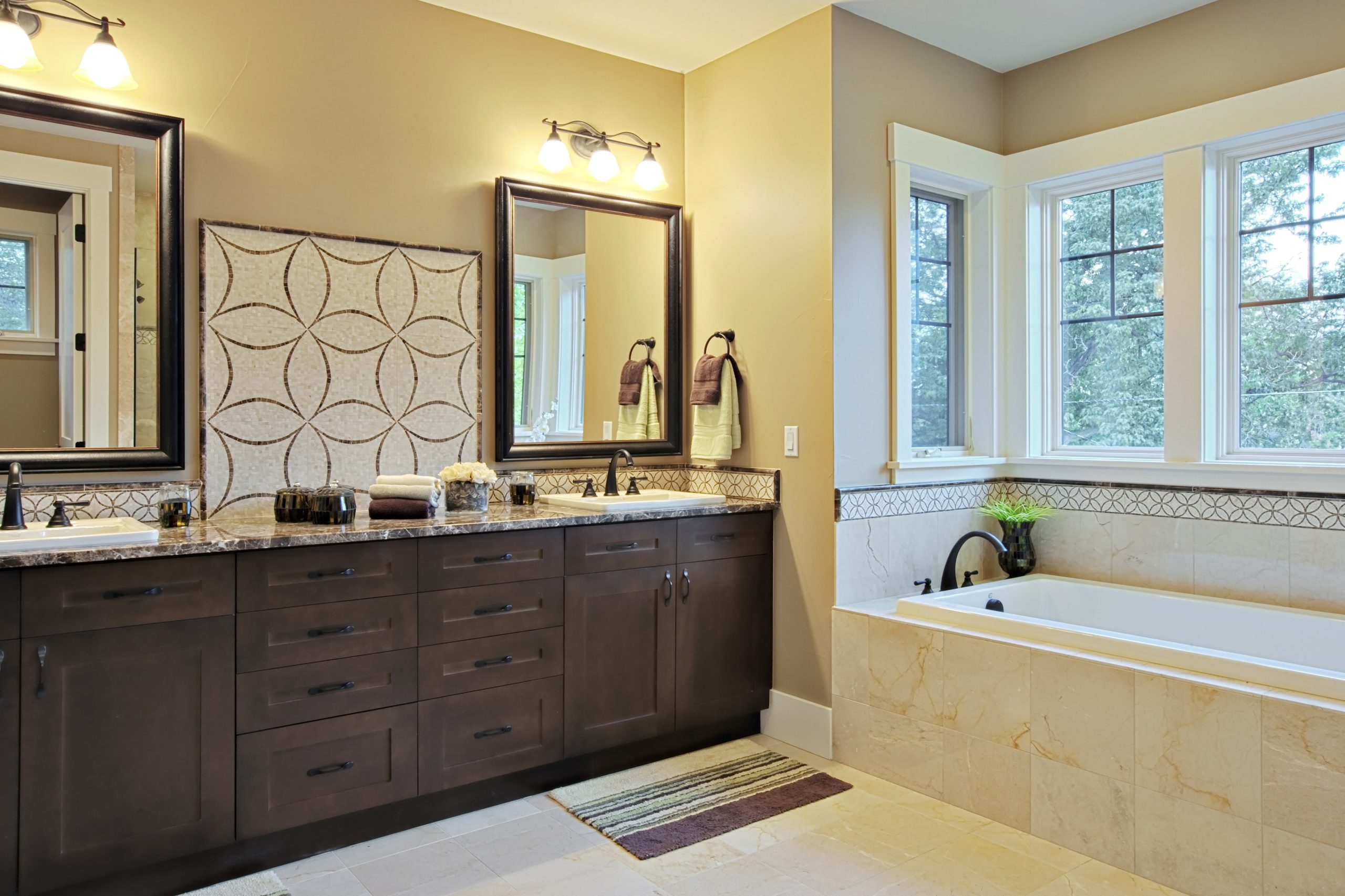
Quartz generally offers the easiest protection against everyday water exposure because engineered quartz is nonporous. Water does not need to be absorbed into the surface for damage to occur around a vanity, but a nonporous countertop reduces concerns about moisture penetrating the material itself.
Here is a practical comparison:
| Material | Moisture Resistance | Sealing | Stain Resistance | Maintenance |
| Quartz | Excellent | Normally not required | Excellent | Low |
| Granite | Excellent when properly maintained | May be required | High | Moderate |
| Marble | Good with proper care | Often recommended | Moderate | Higher |
| Quartzite | Very good | Usually requires sealing | High | Moderate |
| Porcelain | Excellent | Normally not required | Excellent | Low |
For a busy bathroom where water is frequently left around the sink, quartz is often the simplest option.
Natural stone can also perform very well when homeowners understand its maintenance requirements.
Why Is Quartz So Good for Bathroom Countertops?
Quartz works particularly well in bathrooms because its engineered surface is nonporous, stain-resistant, and easy to clean. It normally does not need the periodic sealing associated with many natural stones.
That makes quartz practical around:
- Bathroom sinks
- Toothbrush holders
- Soap dispensers
- Cosmetics
- Makeup
- Lotions
- Shaving products
- Water glasses
Popular quartz manufacturers include Cambria, Caesarstone, Silestone by Cosentino, MSI Q Quartz, Viatera by LX Hausys, and Corian Quartz.
These brands offer everything from simple white surfaces to designs inspired by Carrara and Calacatta marble.
Does Quartz Absorb Water?
Quartz countertops are essentially nonporous, so normal bathroom water exposure does not penetrate them the way it can with some natural stones. This is one of the reasons quartz is frequently selected for bathroom vanity tops.
That does not mean water should be left indefinitely.
Standing water can still leave:
- Mineral deposits
- Soap residue
- Hard-water marks
- Film around faucets
- Discoloration in caulk or adjoining materials
Wiping the vanity dry periodically helps keep the entire installation looking cleaner.
Can Standing Water Damage a Quartz Bathroom Countertop?
Standing water usually will not penetrate quality quartz, but it can still create deposits and affect surrounding materials. The countertop itself is only one component of the vanity.
Water can collect around:
- Faucet bases
- Sink rims
- Backsplash joints
- Caulk lines
- Wall connections
Hard water may leave white or cloudy mineral deposits even on a nonporous surface.
Prompt cleaning prevents buildup from becoming difficult to remove.
Is Granite Good for a Bathroom Countertop?
Yes. Granite is an excellent bathroom countertop material because it is durable, heat-resistant, scratch-resistant, and capable of handling years of daily use.
Granite is a natural stone, however, and absorption rates vary between slabs.
Depending on the specific granite, periodic sealing may be recommended to reduce absorption.
Popular granite choices include:
- Luna Pearl
- Dallas White
- Santa Cecilia
- Giallo Ornamental
- New Caledonia
- Steel Gray
- Ubatuba
- Azul Platino
- New Venetian Gold
Light granite can create a bright bathroom, while darker granite can provide stronger contrast against white or natural-wood cabinetry.
Does Granite Absorb Bathroom Moisture?
Some granite can absorb small amounts of moisture because natural stone has varying levels of porosity. Proper sealing, when needed, helps reduce absorption.
The actual performance depends on the specific stone.
A simple water absorption test can help determine whether a granite surface may need resealing.
If water darkens the stone relatively quickly, the surface may benefit from a penetrating sealer.
Does Granite Need to Be Sealed in a Bathroom?
Some granite countertops need periodic sealing, while dense varieties may require it less frequently. There is no universal schedule that applies to every granite slab.
Sealing needs depend on:
- Granite type
- Porosity
- Sealer used
- Frequency of use
- Cleaning routine
- Exposure to liquids
Homeowners should not automatically apply sealer on a fixed calendar.
Testing absorption is a better way to determine whether resealing is actually necessary.
Is Marble a Good Choice for a Bathroom Vanity?
Yes. Marble can be an excellent bathroom material when homeowners want natural veining and accept that it requires more care than quartz.
Bathrooms can actually be a practical location for marble because countertops are generally not exposed to the same cooking oils, wine, tomato sauce, and hot cookware found in kitchens.
Popular marble varieties include:
- Carrara
- Calacatta
- Statuario
- Arabescato
- Crema Marfil
- Emperador
Carrara offers softer gray veining, while Calacatta and Statuario are known for more dramatic patterns.
The final decision is often driven as much by appearance as by maintenance.
Can Water Stain Marble Countertops?
Water can temporarily darken absorbent marble, and mineral deposits may leave marks around frequently wet areas. Proper sealing can reduce absorption but does not make marble completely maintenance-free.
Bathroom products can actually present a greater concern than plain water.
Marble may come into contact with:
- Perfume
- Toothpaste
- Cosmetics
- Facial products
- Hair products
- Acidic cleaners
- Harsh bathroom chemicals
Because marble is calcium-based, acidic substances can cause etching.
An etched area is physical surface damage rather than a conventional stain.
Does Sealing Marble Make It Waterproof?
No. Sealer helps reduce absorption but does not turn marble into a waterproof or stain-proof material.
It also does not prevent acid etching.
A penetrating stone sealer can provide additional time to wipe up liquids before they penetrate the surface.
Homeowners who choose marble should still clean spills promptly and use stone-safe cleaning products.
Is Quartz or Granite Better for a Bathroom?
Quartz is generally easier to maintain, while granite provides a natural-stone surface with excellent durability. Both can perform very well in bathrooms.
The choice depends on the homeowner’s priorities.
Choose quartz when you prioritize:
- Minimal maintenance
- No routine sealing
- Consistent patterns
- Excellent stain resistance
- Marble-inspired designs
Choose granite when you prioritize:
- Natural stone
- Unique slab patterns
- Excellent heat resistance
- Strong scratch resistance
- Natural variation
For many Florence, KY bathroom projects, either material can provide decades of service when properly fabricated and installed.
Is Quartz or Marble Better Around Bathroom Moisture?
Quartz is easier around moisture because it is nonporous and requires less maintenance. Marble offers a natural appearance that engineered quartz cannot duplicate exactly, but it needs more attentive care.
This comparison helps explain the tradeoff:
| Feature | Quartz | Marble |
| Water Resistance | Excellent | Good with proper care |
| Sealing | Normally not required | Often recommended |
| Stain Resistance | Excellent | Moderate |
| Acid Etching | Very low risk | High risk |
| Pattern | Controlled | Natural and unique |
| Maintenance | Low | Higher |
| Starting Price at Granite Empire | $55/sq. ft. | $55/sq. ft. |
Homeowners who love the appearance of Calacatta or Carrara but want easier maintenance can also consider marble-look quartz.
What Bathroom Products Can Damage Stone Countertops?
Acidic or aggressive chemicals can damage certain countertop materials even when ordinary water cannot. Marble is particularly sensitive to acids, while strong chemicals can also affect engineered quartz.
Be careful with:
- Drain cleaner
- Oven-strength degreasers
- Strong bleach solutions
- Acetone
- Nail polish remover
- Hair dye
- Harsh acidic cleaners
- Abrasive powders
Product recommendations vary by countertop manufacturer.
When in doubt, use a mild cleaner appropriate for the specific material rather than a general-purpose chemical.
Can Hair Dye Permanently Stain a Bathroom Countertop?
Yes. Hair dye contains strong pigments and can leave difficult marks, particularly if it remains on a surface for an extended period.
Even highly stain-resistant quartz should be cleaned promptly.
Marble and other absorbent natural stones require additional caution.
If hair coloring is regularly done in the bathroom, placing a protective towel or mat over the vanity is an inexpensive precaution.
Can Nail Polish Remover Damage Bathroom Countertops?
Yes, depending on the countertop material and chemical formulation. Solvents such as acetone should not automatically be considered safe for every stone or engineered surface.
Quartz contains polymer binders that can be affected by aggressive chemicals.
Natural stone sealers can also be damaged by certain solvents.
A small nail polish spill should therefore be cleaned according to the manufacturer’s care instructions rather than treated with increasingly strong chemicals.
Can Hot Hair Tools Damage Bathroom Countertops?
They can. Curling irons, flat irons, and other styling tools can become hot enough to damage some surfaces or sealers.
Quartz deserves particular caution because excessive heat can affect its resin components.
Use a heat-resistant mat under:
- Curling irons
- Flat irons
- Hair straighteners
- Hot styling brushes
Granite has stronger heat resistance, but protecting any vanity top from concentrated heat is still a sensible habit.
What Is the Best Bathroom Countertop for a Kids’ Bathroom?
Quartz is often one of the most practical choices because it combines low maintenance with excellent resistance to everyday spills. A kids’ bathroom typically benefits more from practicality than from a delicate surface.
Children may leave behind:
- Standing water
- Toothpaste
- Soap
- Cosmetics
- Art supplies
- Lotions
A simple quartz design can reduce maintenance while still giving the bathroom a clean appearance.
Granite is another strong option when a natural-stone surface is preferred.
What Is the Best Countertop for a Primary Bathroom?
Quartz, granite, and marble can all work well in a primary bathroom, depending on whether maintenance or luxury appearance is the priority.
Quartz works well for low-maintenance spaces.
Granite provides natural character and durability.
Marble works especially well when the bathroom is designed as a more luxurious space and the homeowner is comfortable with natural patina and maintenance.
For custom bathroom countertops in Florence, KY, Granite Empire of Cincinnati can fabricate vanity tops around specific cabinet dimensions, sink styles, and bathroom layouts.
What Is the Best Countertop for a Guest Bathroom?
Quartz or granite are practical choices because they are durable and easy for guests to use without special instructions. Guest bathrooms also tend to experience less daily wear than primary bathrooms.
A small vanity can be a good opportunity to use a distinctive stone.
Because the square footage is limited, homeowners may be able to choose a more dramatic material without dramatically increasing the total project budget.
Can You Use a Stone Remnant for a Bathroom Vanity?
Yes. A stone remnant can be an excellent option for a smaller vanity because bathrooms require much less material than kitchens.
A remnant is a usable piece left from a larger slab after another project has been fabricated.
Remnants may be available in:
- Granite
- Quartz
- Marble
- Quartzite
They can be especially useful for:
- Powder rooms
- Single-sink vanities
- Small guest bathrooms
- Laundry counters
- Makeup stations
Availability changes constantly, so a specific color or size cannot always be guaranteed.
Is a Stone Remnant Cheaper Than Buying a Full Slab?
It can be significantly more economical because a small bathroom may not require an entire slab. The actual savings depend on the material, remnant dimensions, fabrication, and installation.
A remnant can also give homeowners access to premium stone that might be expensive for a full kitchen.
For example, a small vanity may require only 10–15 square feet of material.
Buying an entire premium slab for such a small area may not make financial sense when a suitable remnant is available.
Can You Replace the Countertop Without Replacing the Bathroom Vanity?
Yes, if the existing vanity cabinets are structurally sound, properly secured, and suitable for the new countertop. This is one of the simplest ways to update an older bathroom.
Before installing stone, the vanity should be checked for:
- Water damage
- Structural weakness
- Loose cabinets
- Levelness
- Proper support
- Correct dimensions
A damaged vanity should be repaired or replaced before the new countertop is templated.
Installing expensive stone on unstable cabinetry can create fit and support problems.
How Thick Should a Bathroom Countertop Be?

Stone countertops are commonly available in approximately 2 cm or 3 cm thicknesses, depending on material and product availability. The best thickness depends on the desired appearance, cabinet design, and stone selection.
A thicker profile can create a more substantial appearance.
Another option is a mitered edge, which can make the front of the countertop look thicker without using a solid slab of that full thickness.
Granite Empire of Cincinnati can fabricate different edge profiles depending on the material and bathroom design.
What Edge Profiles Work Best in Bathrooms?
Simple eased and beveled edges are popular because they are clean, practical, and easy to maintain. Decorative edges can also work in traditional bathrooms.
Common choices include:
- Eased
- Beveled
- Half bullnose
- Full bullnose
- Ogee
- Mitered
An eased edge fits contemporary and transitional bathrooms.
An ogee edge creates a more traditional appearance, while a mitered edge can create a thicker modern profile.
Is an Undermount Sink Better for a Stone Vanity?
An undermount sink is a popular choice because it creates a clean transition from the countertop into the basin. Water and debris can be wiped directly toward the sink without a raised rim sitting on the countertop.
Undermount sinks work well with:
- Granite
- Quartz
- Marble
- Quartzite
The sink should be selected before final fabrication.
The exact model determines the size and shape of the cutout.
Should the Sink Be Selected Before Bathroom Countertop Templating?
Yes. The sink model should ideally be finalized before templating and fabrication.
This is especially important for:
- Undermount sinks
- Vessel sinks
- Integrated-style designs
- Double-sink vanities
The fabricator needs accurate dimensions for the sink opening and faucet placement.
Changing sinks after fabrication has started can delay the project or require modifications.
How Much Do Bathroom Countertops Cost?
Bathroom countertop pricing depends on material, vanity size, edge profile, sink cutout, and whether a full slab or remnant is used. A smaller vanity can cost considerably less than a full kitchen countertop project because it requires less material.
At Granite Empire of Cincinnati, current starting material prices are:
| Material | Starting Price |
| Granite | $45/sq. ft. |
| Quartz | $55/sq. ft. |
| Marble | $55/sq. ft. |
As a general planning range, a smaller custom stone vanity project may fall around $500–$1,500+, while larger double vanities or projects using premium materials may reach approximately $1,500–$3,000+.
These are planning ranges rather than fixed Granite Empire quotes. Actual pricing depends on measurements, material availability, fabrication, cutouts, and project details.
What Makes a Bathroom Countertop More Expensive?
Material selection, size, multiple sinks, premium edges, and complex fabrication can increase the price.
Important cost factors include:
- Total square footage
- Material
- Stone rarity
- Full slab versus remnant
- Number of sink cutouts
- Faucet holes
- Edge profile
- Backsplash
- Vanity shape
- Installation conditions
A simple rectangular single-sink vanity is generally less expensive to fabricate than a large double vanity with premium marble and decorative edges.
Can Bathroom Projects Use Granite Empire’s Countertop Packages?
The current packages are particularly useful when the project requires enough countertop material to take advantage of the included square footage. Smaller bathroom-only projects may be better priced individually depending on their dimensions and available material.
Granite Empire of Cincinnati currently offers:
Granite Countertop Package — $1,999
- Four selected colors
- Up to 50 square feet
- Free sink
- Free sink cutout
Quartz Countertop Package — $3,000
- Four selected colors
- Up to 50 square feet
- Free sink
- Free sink cutout
For a small bathroom vanity, ask whether individual pricing or an available remnant makes more sense than a package.
For a project involving multiple bathrooms or a kitchen and bathroom renovation together, package pricing may become more relevant.
How Long Does a Custom Bathroom Countertop Take?
Qualifying Granite Empire of Cincinnati projects can move from final templating to installation in approximately 5–7 business days. Special-order materials or complex custom work can require additional time.
A typical process may look like this:
| Project Stage | Typical Time |
| Material selection | 1–3 days |
| Sink and design confirmation | 1–2 days |
| Templating | About 1–2 hours for many vanity projects |
| Fabrication | Several business days |
| Installation | Several hours |
| Sink/adhesive cure where applicable | About 12–24 hours |
The process can move faster when the vanity is installed, the sink has been selected, and the material is already available.
Florence, KY homeowners working around a larger bathroom renovation should coordinate the countertop schedule with cabinetry, plumbing, mirrors, tile, and fixtures.
Can a Bathroom Countertop Be Installed in One Day?
Yes. The physical installation of a standard vanity countertop can often be completed within several hours.
Fabrication happens before installation day.
Installation may involve:
- Placing the countertop
- Checking fit
- Securing the countertop
- Joining seams when necessary
- Installing or preparing the sink
- Installing backsplash pieces
Plumbing may need to be reconnected separately.
Depending on the sink mounting method and adhesive, approximately 12–24 hours of curing time may be recommended before full use.
What Should Be Ready Before Bathroom Countertop Templating?
The vanity should be installed, secured, and level, and the sink should be selected. Finalizing these details helps prevent measurement changes later.
Before templating, confirm:
- Vanity location
- Vanity dimensions
- Sink model
- Faucet configuration
- Backsplash plans
- Edge profile
- Wall conditions
For a double vanity, both sink locations should be finalized.
Changing the cabinet or sink after templating can delay fabrication.
How Long Should a Stone Bathroom Countertop Last?
A properly installed stone or quartz bathroom countertop can last for decades. The actual lifespan depends on the material, installation, maintenance, and how the bathroom is used.
Granite can commonly remain functional for 30–50 years or more.
Quartz can often provide 20–30 years or more of service under normal indoor use.
Marble can last for generations because it can often be refinished, although its appearance naturally changes with use.
Which Bathroom Countertop Requires the Least Maintenance?
Quartz generally requires the least routine maintenance. It does not normally require sealing and provides excellent resistance to water and staining.
For homeowners comparing custom bathroom countertops in Florence, KY, this makes quartz particularly attractive for busy primary bathrooms and children’s bathrooms.
Granite is also relatively easy to maintain but may need periodic sealing depending on the stone.
Marble requires more attention because it can etch when exposed to acidic products.
What Are the Most Common Questions About Bathroom Countertops and Moisture?
What is the best bathroom countertop for water resistance?
Quartz is one of the easiest choices because it is nonporous and normally does not require sealing. Porcelain also offers excellent moisture resistance.
Is granite waterproof?
Granite is highly durable but is a natural stone with varying absorption rates. Some granite benefits from a penetrating sealer.
Can marble handle bathroom moisture?
Yes. Marble has been used successfully in bathrooms for generations, but proper maintenance and prompt cleanup are important.
Does quartz need to be sealed in a bathroom?
No. Engineered quartz normally does not require sealing.
Can standing water damage a bathroom vanity top?
It depends on the material. Even when the countertop itself resists water, prolonged moisture can affect caulk, cabinets, seams, and surrounding materials.
What countertop is best for a kids’ bathroom?
Quartz is often a practical choice because it is nonporous, stain-resistant, and low maintenance.
Can hair dye stain quartz?
Yes, strong pigments can leave marks if they remain on the surface. Hair dye should be cleaned immediately.
Is marble better for a bathroom than a kitchen?
For some homeowners, yes. Bathrooms expose marble to fewer cooking acids, oils, and hot pans, although cosmetics and bathroom chemicals still require care.
Can you use a granite or quartz remnant for a bathroom vanity?
Yes. Remnants can be an economical option for small vanities when a suitable piece is available.
How quickly can Granite Empire of Cincinnati install a bathroom countertop?
Qualifying projects can move from final templating to installation in approximately 5–7 business days, depending on material availability and project complexity.
Which Material Should You Choose for Your Bathroom?
Choose quartz for the lowest maintenance, granite for durable natural stone, and marble when natural veining and luxury appearance are the highest priorities.
A simple decision guide is:
- Choose quartz if you want excellent moisture and stain resistance with minimal maintenance.
- Choose granite if you want natural stone, durability, and strong heat resistance.
- Choose marble if you want distinctive natural veining and accept additional maintenance.
- Consider quartzite if you want a premium natural-stone appearance with strong durability.
- Consider a remnant if you have a smaller vanity and want to reduce material cost.
There is no single material that is best for every bathroom.
The right surface depends on how the room is used, how much maintenance you want, and the design you prefer.
Where Can You Order Custom Bathroom Countertops Near Florence, KY?
Granite Empire of Cincinnati provides granite, quartz, marble, and other stone countertop fabrication and professional installation for Florence, KY homeowners and surrounding communities.
Homeowners looking for custom bathroom countertops in Florence, KY can choose a material based on moisture resistance, maintenance, design, and budget, then have the countertop templated, fabricated, and professionally installed.
Granite Empire of Cincinnati
Address: 9474 Princeton Glendale Rd, OH 45011
Phone: (513) 547-3711
Starting prices:
- Granite from $45 per square foot
- Quartz from $55 per square foot
- Marble from $55 per square foot
Granite Countertop Package — $1,999
- Four selected colors
- Up to 50 square feet
- Free sink
- Free sink cutout
Quartz Countertop Package — $3,000
- Four selected colors
- Up to 50 square feet
- Free sink
- Free sink cutout
Services include: granite countertop fabrication and installation, quartz countertops, marble countertops, custom bathroom vanity tops, kitchen countertops, templating, sink and cooktop cutouts, edge fabrication, delivery, and professional installation.
Qualifying installation timeline: starting from approximately 5–7 business days after final templating and approval.
For bathroom countertop material selection, pricing, remnant availability, custom fabrication, or installation scheduling, contact Granite Empire of Cincinnati at (513) 547-3711 or visit 9474 Princeton Glendale Rd, OH 45011.