


After 5 years of daily use, marble countertops will show wear — but how much depends almost entirely on how well they were maintained. A properly sealed and cared-for marble surface develops a soft natural patina that many homeowners find adds character. A neglected marble countertop will show etching, staining, and dull spots that are expensive to restore. For homeowners considering marble kitchen countertops in Beavercreek, OH, understanding what to realistically expect over time is the most important part of the buying decision.
Marble starts at $55/SF installed at Granite Empire of Cincinnati, with installation completed in 5–7 business days.
What Does Marble Look Like After 5 Years of Daily Kitchen Use?
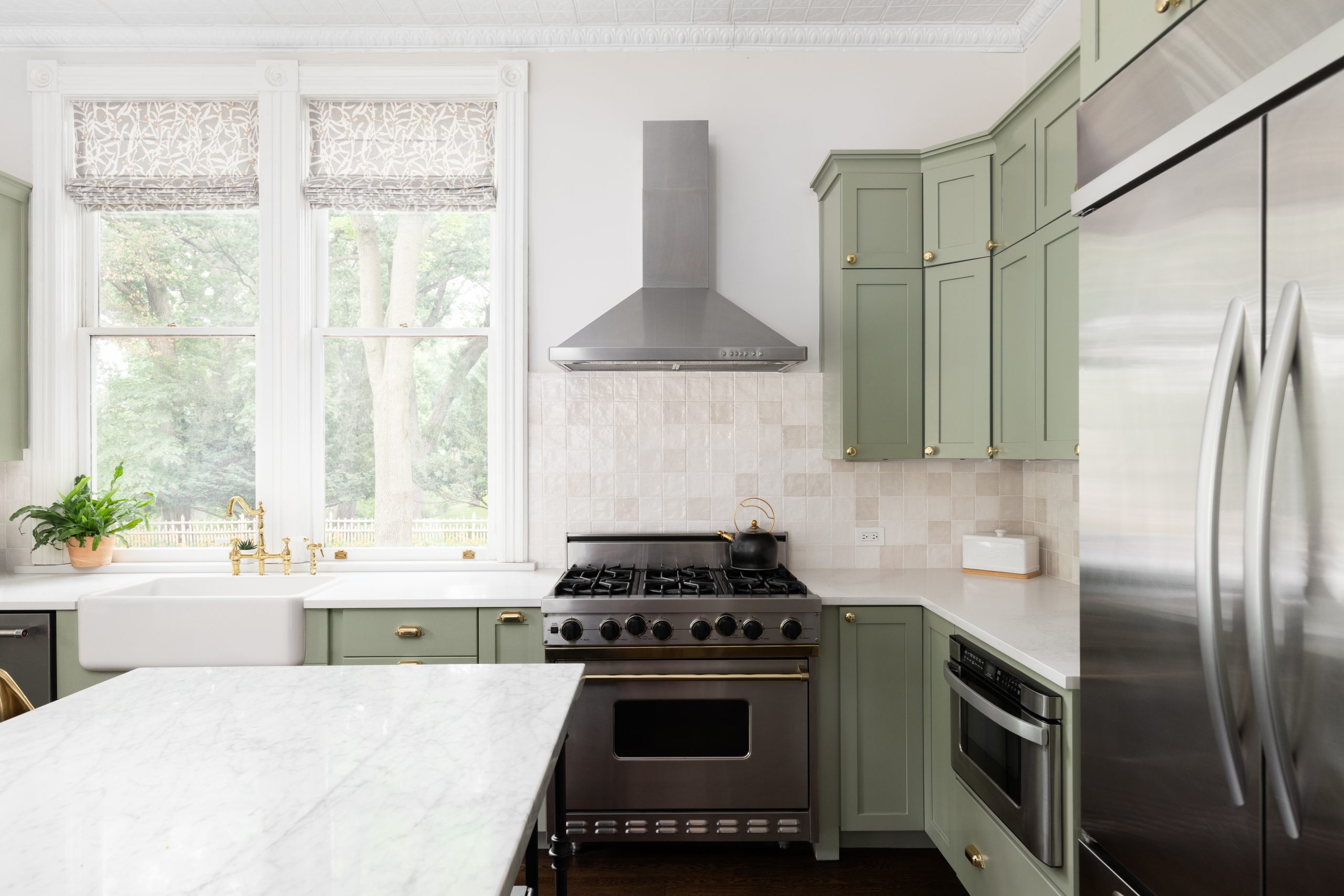
The honest answer: it depends on the household. Here are the three most common outcomes after five years:
Scenario 1 — Well-maintained marble: The surface has developed a soft, lived-in patina. Minor etching may be visible in raking light but is not noticeable in normal conditions. The veining looks richer with age. Most homeowners in this category say the stone looks better at 5 years than it did when installed.
Scenario 2 — Average maintenance: Some visible etching around the sink and food prep areas. Light staining in spots where spills weren’t wiped quickly. Surface may look slightly dull compared to installation day. A professional polish and reseal ($200–$400) restores most of the original appearance.
Scenario 3 — Poor maintenance: Significant etching across high-use areas. Staining from wine, coffee, or oil that penetrated an unsealed surface. Deep scratches from cutting directly on the stone. Restoration is possible but costly — full professional restoration runs $500–$1,500 depending on the extent of damage.
The difference between Scenario 1 and Scenario 3 is maintenance discipline, not the stone itself.
What Is Etching and How Much Will It Affect My Marble Over Time?
Etching is the most common long-term issue with marble kitchen countertops. It’s not a stain — it’s a chemical reaction between acidic substances and the calcium carbonate in marble that dulls the surface finish.
Common causes of etching:
- Lemon juice, lime, and citrus-based foods
- Vinegar and vinegar-based cleaning products
- Wine, coffee, and carbonated drinks left on the surface
- Tomato sauce and other acidic foods
- Certain household cleaners not rated for natural stone
Etching happens even on sealed marble — sealer protects against staining but not chemical etching. After 5 years in a high-use kitchen, expect some degree of etching around the sink, prep areas, and anywhere acidic foods are regularly handled.
The practical fix: a professional re-honing ($300–$600) removes surface etching and restores a uniform finish. Many marble owners do this every 3–5 years as part of regular maintenance.
Does Marble Stain Over Time — and Can It Be Fixed?
Marble stains when liquids penetrate the surface. A properly sealed marble countertop resists staining well — but sealer wears down over time and must be reapplied every 6–12 months in a kitchen environment.
The most common stains after 5 years of use:
| Stain Type | Cause | Removable? |
| Oil stains | Cooking oil, butter, lotions | Yes — poultice treatment |
| Organic stains | Coffee, wine, tea, juice | Yes — hydrogen peroxide poultice |
| Rust stains | Metal objects left on wet surface | Yes — specialized rust remover |
| Deep etching | Acid contact over time | Partial — re-honing required |
| Permanent discoloration | Years of neglect without sealing | Difficult — professional restoration |
Most stains accumulated over 5 years are reversible with professional treatment. The key variable is whether the surface was kept sealed — a single missed sealing cycle significantly increases staining risk.
How Does Marble Compare to Granite and Quartz After 5 Years?
This is the most practical comparison for homeowners deciding between materials for marble kitchen countertops in Beavercreek, OH.
| Factor | Marble (5 years) | Granite (5 years) | Quartz (5 years) |
| Etching | Visible in high-use areas | Rare to none | None |
| Staining (properly maintained) | Minimal | Minimal | None |
| Scratching | Some surface marks possible | Minimal | Minimal |
| Sealing required | Every 6–12 months | Annually | Never |
| Appearance change | Natural patina develops | Minimal change | No change |
| Restoration cost (if needed) | $300 – $1,500 | $200 – $800 | $200 – $600 |
| Starting price/SF | $55 | $45 | $55 |
Granite and quartz hold up better under daily kitchen use with less maintenance. Marble’s tradeoff is that it requires more attention but delivers an aesthetic that neither granite nor quartz can match — the natural veining and depth of Carrara, Calacatta, or Statuario marble is genuinely unique.
Which Marble Types Hold Up Best in a Kitchen Over 5 Years?
Not all marble performs equally. Density and mineral composition vary significantly between varieties, which affects how they age in a kitchen environment.
Most durable for kitchen use:
- Carrara — the most practical kitchen marble; softer veining, lower porosity than many varieties, and widely available starting at $55/SF; the best entry point for homeowners in the Beavercreek, OH area
- Calacatta — denser than Carrara in many cases; bold veining; higher price point ($90–$150/SF) but holds up well with proper sealing
- Arabescato — similar density to Calacatta; intricate veining; a strong mid-range option
Requires more care in a kitchen:
- Statuario — bright white background shows etching and staining more visibly; stunning but high-maintenance; $100–$180/SF
- Emperador — dark marble that shows water spots and calcium deposits from hard water; requires diligent wiping and sealing
For most homeowners in the Dayton and Cincinnati area, Carrara is the recommended starting point — it offers the classic marble look at the most accessible price with the most forgiving performance over time.
What Maintenance Does Marble Require to Look Good After 5 Years?
The homeowners whose marble looks excellent at 5 years follow a consistent maintenance routine. Here’s what it takes:
Daily:
- Wipe spills immediately — don’t let anything acidic or pigmented sit on the surface
- Use pH-neutral stone cleaner or mild dish soap; never vinegar, bleach, or citrus-based cleaners
- Dry the area around the sink after use to prevent water spotting
Monthly:
- Apply a quick-spray stone sealer to high-use areas around the sink and prep zone
- Check for any new etching or dull spots and note their location for the next professional service
Every 6–12 months:
- Apply a full penetrating impregnator sealer to the entire surface
- Professional application costs $100–$200; DIY products run $15–$50 and take about 30 minutes
Every 3–5 years:
- Professional re-honing to remove accumulated surface etching and restore an even finish
- Cost: $300–$600 for a standard kitchen
- This single service can make a 5-year-old marble countertop look close to new
Is Marble a Good Long-Term Investment for a Kitchen?
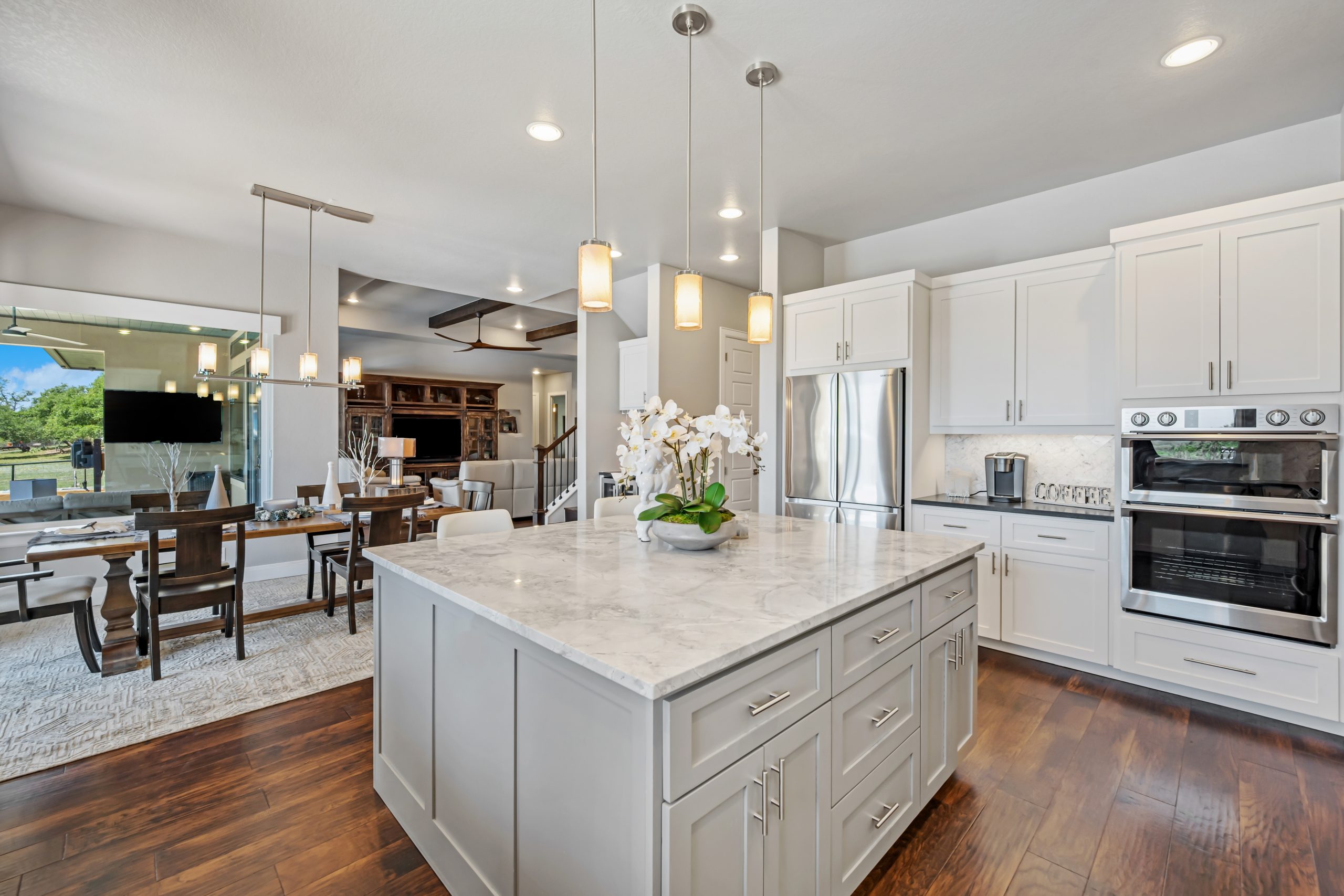
Yes — with the right expectations. Marble is not a set-it-and-forget-it countertop material. It rewards homeowners who engage with it and penalizes those who don’t.
The long-term case for marble:
- Resale value — natural stone countertops consistently rank among the top kitchen features buyers value; marble in particular commands attention at resale
- Longevity — with proper maintenance, marble lasts 20–50+ years; the stone itself doesn’t wear out
- Aesthetic payoff — no engineered material replicates the depth and movement of natural marble; Calacatta and Statuario remain the most photographed and admired kitchen surfaces in 2026
- Character over time — unlike quartz, which looks the same at year 1 and year 10, marble develops a patina that many homeowners come to love
The long-term case against marble for a kitchen: if you’re not willing to seal it regularly and wipe spills immediately, quartz at the same starting price ($55/SF) will look better with less effort after 5 years.
How Long Does Marble Countertop Installation Take?
Granite Empire of Cincinnati installs marble countertops in 5–7 business days from the initial measurement. The timeline:
- Day 1 — Consultation, marble variety selection, and showroom slab viewing
- Day 2 — In-home measurement and template creation
- Days 3–5 — In-house fabrication: cutting, edge profiling, and cutout preparation
- Days 5–7 — Professional installation, silicone finishing, and cleanup
Marble requires extra care during fabrication — it’s softer than granite and more vulnerable to cracking during cutting if handled incorrectly. Granite Empire of Cincinnati’s in-house fabrication team has the experience and equipment to handle marble precisely, which is not something every countertop company in the Beavercreek, OH area can say.
Frequently Asked Questions
Does marble always look worse after 5 years? Not necessarily. Well-maintained marble develops a natural patina that many homeowners prefer to the original polished surface. The homeowners whose marble looks poor after 5 years are almost always those who skipped regular sealing or used acidic cleaners on the surface.
Can etched marble be restored to look new? Yes. Professional re-honing removes surface etching by resurfacing the top layer of the stone. It won’t restore deep damage, but for normal accumulated etching over 5 years, the result is close to the original finish. Cost runs $300–$600 for a standard kitchen.
Is marble practical for a family kitchen in Beavercreek, OH? It can be, but it requires commitment. Families with young children who can’t reliably wipe spills immediately will find quartz more practical. Homeowners who cook frequently with acidic ingredients will see more etching. For families who want marble and are willing to maintain it, Carrara at $55/SF from Granite Empire of Cincinnati is the most practical starting point.
How does marble kitchen countertops in Beavercreek, OH pricing compare to quartz over 10 years? Marble starts at the same price as quartz — $55/SF at Granite Empire of Cincinnati. Over 10 years, marble adds $150–$2,000 in sealing and maintenance costs depending on DIY vs. professional service. Quartz adds nothing. The aesthetic difference, however, is significant enough that many homeowners consider the maintenance cost worthwhile.
What is the best marble for a kitchen that will hold up over time? Carrara is the most practical kitchen marble — widely available, starts at $55/SF, and performs better under daily use than higher-prestige varieties like Statuario. For homeowners who want bolder veining, Calacatta is the next step up in both price and visual impact.
Where can I see marble slabs in person near Beavercreek, OH? Granite Empire of Cincinnati’s showroom at 9474 Princeton Glendale Rd, Hamilton, OH is approximately 25–30 minutes from Beavercreek, OH. You can view full marble slabs in person before committing — the only reliable way to evaluate how a specific slab’s veining and color will look in your kitchen. For marble kitchen countertops in Beavercreek, OH, call (513) 547-3711 to confirm current slab availability before visiting.
Get a Free Quote on Marble Countertops
Granite Empire of Cincinnati fabricates and installs marble, granite, quartz, and other natural stone countertops for kitchens and bathrooms across the greater Cincinnati area, including Beavercreek, OH, Dayton, Xenia, and Hamilton.
Address: 9474 Princeton Glendale Rd, Hamilton, OH 45011
Phone: (513) 547-3711
Turnaround: 5–7 business days from measurement
Marble starting price: $55/SF installed
Services: Marble, granite, quartz, and stone countertop fabrication and installation
Serving: Beavercreek, OH, Dayton, Xenia, Hamilton, and the greater Cincinnati area