

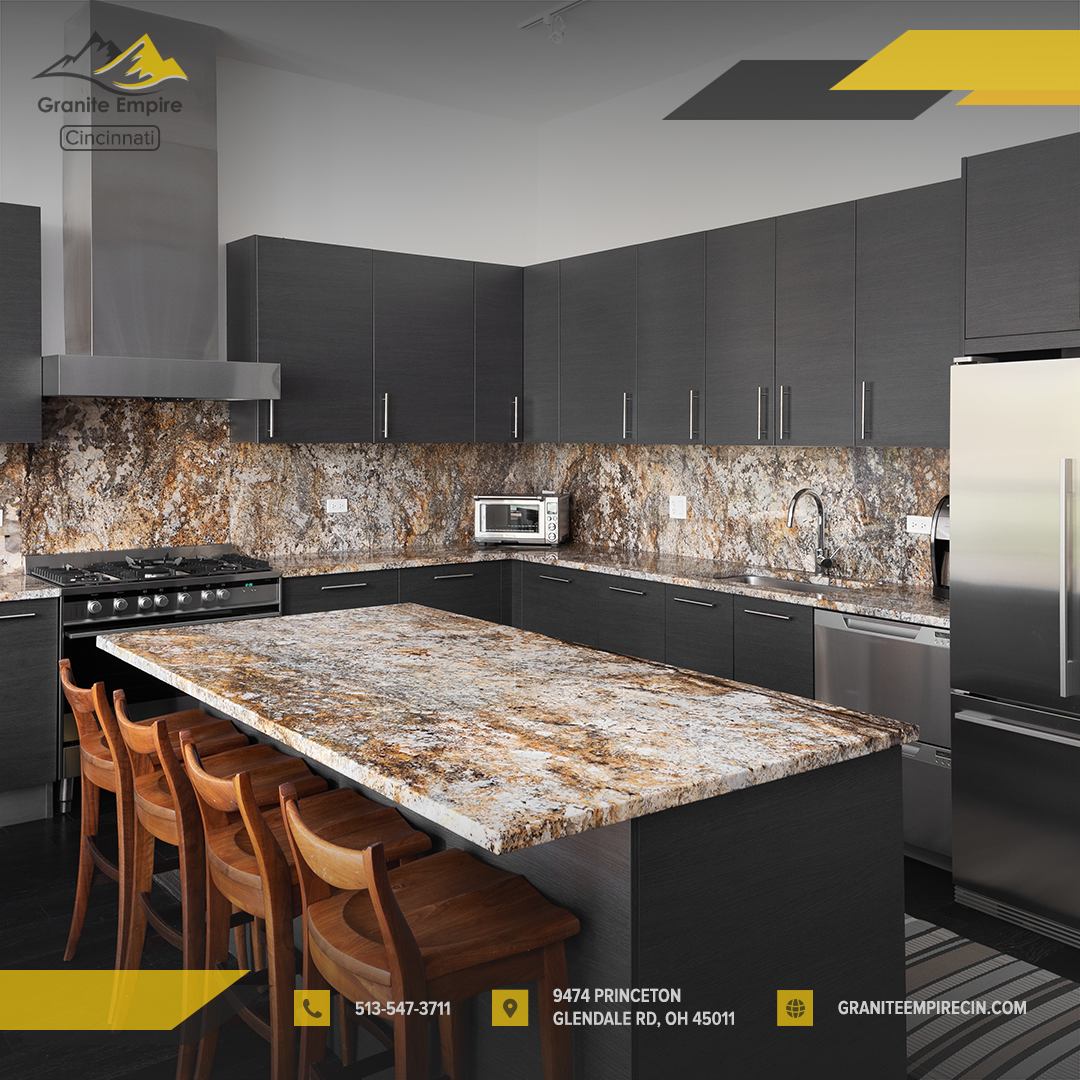
The biggest factors that make one countertop more expensive than another are the material itself, slab rarity, brand, thickness, fabrication complexity, edge profile, number of cutouts, seam planning, installation difficulty, and total square footage. Two countertops that look similar in a showroom can end up with very different final prices once fabrication and installation are included.
For homeowners comparing kitchen countertops in Florence, KY, it is important to look beyond the advertised price per square foot. A lower-priced slab can become more expensive if the project requires multiple seams, waterfall panels, specialty edges, several sink or cooktop cutouts, or difficult installation conditions.
Granite Empire of Cincinnati fabricates and installs granite, quartz, marble, and other stone countertops for homeowners in Florence, KY and surrounding communities. Our current starting prices are $45 per square foot for granite, $55 per square foot for quartz, and $55 per square foot for marble, with qualifying installation timelines starting from approximately 5–7 business days after final templating and approval.
Why Can Two Countertops of the Same Size Have Different Prices?
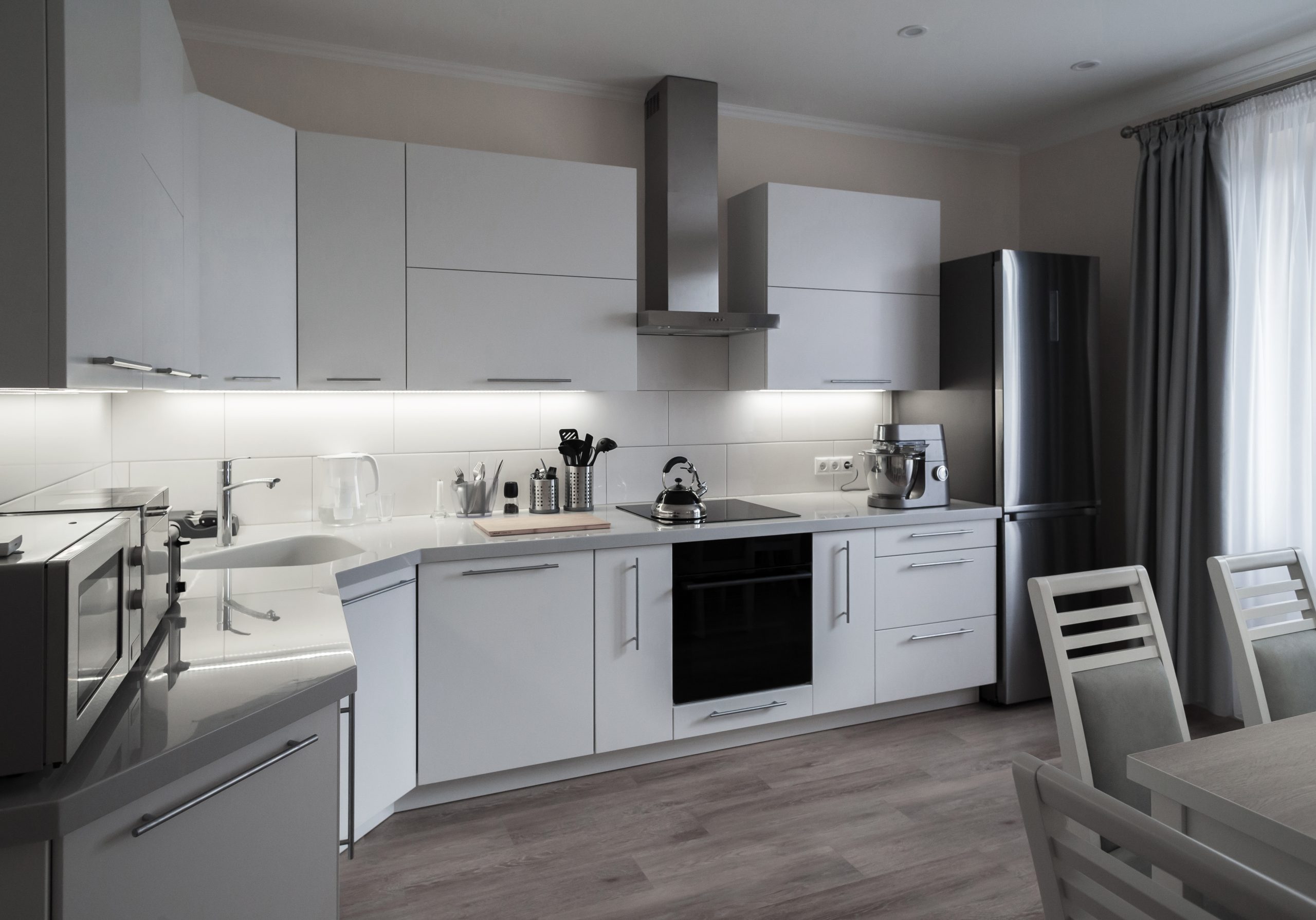
Two countertops with the same square footage can cost very different amounts because the material and fabrication requirements may not be the same. A simple 50-square-foot granite kitchen with one sink cutout is very different from a 50-square-foot quartz kitchen with a waterfall island, mitered edges, and multiple seams.
The final cost may include differences in:
- Material grade
- Slab availability
- Manufacturer or brand
- Thickness
- Number of slabs required
- Pattern complexity
- Edge profile
- Sink cutouts
- Cooktop cutouts
- Faucet holes
- Waterfall panels
- Backsplash
- Seam placement
- Removal of existing countertops
- Installation access
This is why homeowners should compare complete project estimates instead of only comparing the advertised square-foot price.
Which Countertop Materials Usually Cost More?
Quartzite, premium marble, and designer quartz are often more expensive than entry-level granite or standard quartz. However, exact prices vary widely based on the slab, brand, color, and fabrication requirements.
A general comparison looks like this:
| Material | Typical Price Position | Starting Price at Granite Empire | Main Cost Factors |
| Granite | Entry to premium | $45/sq. ft. | Color, rarity, slab pattern |
| Quartz | Mid-range to premium | $55/sq. ft. | Brand, design, veining |
| Marble | Mid-range to luxury | $55/sq. ft. | Type, rarity, vein movement |
| Quartzite | Premium | Varies | Slab rarity, hardness, fabrication |
| Porcelain | Mid-range to premium | Varies | Panel size, fabrication difficulty |
These are starting points, not fixed installed prices for every project.
A common granite such as Luna Pearl or Dallas White may cost less than a dramatic quartzite such as Taj Mahal or Cristallo. Likewise, an entry-level quartz may cost significantly less than a premium Cambria or Caesarstone design.
Why Does the Countertop Material Affect the Price So Much?
The material affects both the slab cost and the labor required to fabricate it. Some stones are more abundant and easier to work with, while others are rare, fragile, dense, or difficult to cut.
Granite is available in a wide range of price levels. More common colors may be relatively affordable, while exotic slabs with dramatic movement can cost much more.
Quartz pricing often depends on the manufacturer and design series. Brands such as Cambria, Caesarstone, Silestone by Cosentino, MSI Q Quartz, and Viatera by LX Hausys offer collections at different price levels.
Marble can also vary dramatically. Carrara is usually more affordable than premium Calacatta or Statuario because those stones are rarer and often selected for bold, highly visible veining.
Why Are Some Granite Colors More Expensive Than Others?
Granite prices increase when a color is rarer, harder to source, imported from a limited quarry, or has unusual movement and mineral patterns. Common granite colors are generally easier to keep in stock and may therefore be more affordable.
More budget-friendly granite options often include names such as:
- Luna Pearl
- Dallas White
- Santa Cecilia
- Giallo Ornamental
- New Caledonia
- Ubatuba
Higher-priced granite may feature unusual blue, gold, black, or multicolor movement.
The name alone does not determine the final cost. Slab size, quality, thickness, availability, and the number of slabs needed also matter.
At Granite Empire of Cincinnati, granite currently starts at $45 per square foot.
Why Can Quartz Prices Vary So Much?
Quartz prices vary because engineered quartz is sold in different collections, design tiers, and brand categories. A simple solid color or fine-speckled pattern is usually less expensive than a large-scale marble-look design.
Premium quartz may feature:
- Large Calacatta-style veining
- Bookmatched patterns
- More realistic stone movement
- Specialty finishes
- Exclusive color collections
- Higher-end manufacturer branding
Popular quartz brands include:
- Cambria
- Caesarstone
- Silestone by Cosentino
- MSI Q Quartz
- Viatera by LX Hausys
- Corian Quartz
Designs inspired by Calacatta or Carrara marble can cost more because they require more complex visual production and often belong to premium collections.
At Granite Empire of Cincinnati, quartz currently starts at $55 per square foot.
Why Is Marble Sometimes More Expensive Than Granite?
Marble can cost more because some varieties are rare, highly sought after, and more difficult to fabricate without damage. The stone’s natural veining also requires careful layout when homeowners want specific patterns to appear in visible areas.
Common marble varieties include:
- Carrara
- Calacatta
- Statuario
- Arabescato
Carrara is generally more available and may fall into a lower price range.
Calacatta and Statuario are usually more expensive because of their distinctive white backgrounds, bold veining, and limited supply.
Granite Empire of Cincinnati currently starts marble at $55 per square foot, while premium marble slabs can cost considerably more.
Does the Brand Affect the Price of Quartz Countertops?
Yes. Brand can significantly affect quartz pricing because manufacturers use different designs, warranties, manufacturing standards, distribution networks, and product collections.
For example, Cambria is often positioned as a premium quartz brand. Caesarstone, Silestone, MSI Q Quartz, and Viatera also offer multiple price tiers.
Brand should not be the only factor in the decision.
Homeowners should also compare:
- Actual slab appearance
- Warranty
- Thickness
- Finish
- Availability
- Fabrication quality
- Installation quality
An expensive quartz slab installed poorly will not deliver better results than a more affordable slab fabricated correctly.
Does Countertop Thickness Affect the Price?
Yes. Thicker countertop slabs usually require more material and can therefore cost more. Thickness can also affect edge appearance, weight, support requirements, and fabrication.
Common stone thicknesses include approximately:
- 2 cm
- 3 cm
A 3 cm countertop often creates a more substantial appearance without requiring a built-up edge.
Some homeowners choose a mitered edge to create the appearance of an even thicker countertop. This adds fabrication labor and can increase the total project price.
Why Do Waterfall Countertops Cost More?
Waterfall countertops cost more because they require additional material, precise cuts, mitered edges, and careful pattern alignment. Instead of ending at the horizontal surface, the stone continues vertically down the side of the island.
A standard island may require one large horizontal section.
A waterfall island may require:
- One horizontal top
- One vertical side
- Two vertical sides
- Mitered edges
- Additional polishing
- Vein matching
- Additional slab material
If the design uses dramatic Calacatta quartz, marble, or quartzite, fabricators may spend additional time aligning the pattern across the corner.
That extra material and labor can increase the project by hundreds or even thousands of dollars depending on the stone.
Why Do Countertop Edge Profiles Affect the Cost?
Specialty edge profiles cost more because they require additional cutting, shaping, polishing, and labor. A simple eased edge is usually more economical than a detailed ogee or a fabricated mitered edge.
Common edge profiles include:
- Eased
- Beveled
- Half bullnose
- Full bullnose
- Ogee
- Mitered
An eased edge is popular because it works with many kitchen styles and is relatively simple to fabricate.
A mitered edge can create a dramatic, thick appearance, especially on kitchen islands, but it requires highly accurate fabrication.
Do Sink and Cooktop Cutouts Increase Countertop Cost?
Yes. Every sink, cooktop, faucet hole, or specialty opening adds fabrication work. Some promotional packages include a standard sink cutout, while additional openings may increase the final estimate.
An undermount sink usually requires a finished and polished cutout because the stone edge remains visible.
Fabricators may also need to create openings for:
- Cooktops
- Pop-up outlets
- Faucets
- Soap dispensers
- Water filtration systems
- Air switches
The more custom openings a project requires, the more fabrication time is involved.
Why Do Countertop Seams Affect the Price?
Seams can affect pricing because more complicated layouts require additional fabrication, transport planning, and on-site joining. Large kitchens often need more than one countertop section because slabs have limited dimensions.
The fabricator must determine where each seam should go.
Good seam planning considers:
- Slab dimensions
- Sink placement
- Cooktop position
- Cabinet support
- Pattern direction
- Vein alignment
- Installation access
Highly veined slabs may require additional planning to make the transition between sections look intentional.
For premium kitchen countertops in Florence, KY, seam layout can be just as important visually as the stone itself.
Why Does Slab Layout Matter to the Price?
Slab layout matters because the way pieces are positioned can determine whether one slab is enough or whether a second slab is required. A project may have 50 square feet of finished countertops but still require more than 50 square feet of raw material.
Fabricators have to work around:
- Slab dimensions
- Natural cracks or fissures
- Pattern direction
- Sink locations
- Vein movement
- Edge defects
- Large islands
A large island can be particularly important.
If the island is wider or longer than the usable portion of a slab, another slab may be required even if very little additional countertop area is needed.
Why Are Large Kitchen Islands More Expensive?
Large islands usually cost more because they require larger pieces of stone, greater material yield, more labor, and more difficult transportation. Islands may also include seating overhangs, sinks, cooktops, waterfall sides, or outlets.
A large uninterrupted slab can be one of the most visually impressive features in a kitchen.
However, large slabs are heavy and difficult to maneuver.
Installation crews may need:
- Additional installers
- Specialized carrying equipment
- Extra site preparation
- More complex access planning
This is especially relevant in homes with narrow doors, stairs, or difficult kitchen access.
Can the Kitchen Layout Change the Countertop Price?
Yes. An L-shaped or U-shaped kitchen can require more seams, corners, and fabrication than a simple straight countertop run.
A simple layout may include:
- One countertop section
- One sink
- One standard edge
A complex layout may include:
- Several countertop sections
- Angled corners
- Large island
- Multiple seams
- Cooktop
- Prep sink
- Bar area
- Waterfall panels
The more pieces the fabricator needs to measure, cut, finish, transport, and install, the higher the labor component can become.
Does Removing Old Countertops Cost Extra?
It can. Some companies include removal in certain project estimates, while others price demolition and disposal separately.
Old countertop removal can be more complicated when the existing surface is:
- Granite
- Tile
- Concrete
- Thick natural stone
- Installed over fragile cabinets
Homeowners should confirm whether demolition is included before comparing estimates.
A lower quote that excludes removal may not actually be less expensive once all services are added.
How Much Should Kitchen Countertops Cost?
A typical kitchen countertop project may range from approximately $2,000 to $6,000 or more, while larger premium kitchens can reach $8,000–$10,000+ depending on material and design.
The total depends on:
- Square footage
- Material
- Slab quantity
- Edge profile
- Cutouts
- Seams
- Waterfall panels
- Backsplash
- Demolition
- Installation complexity
At Granite Empire of Cincinnati, current starting prices are:
- Granite from $45 per square foot
- Quartz from $55 per square foot
- Marble from $55 per square foot
These starting prices are useful for comparing materials, but a final project estimate requires measurements and specific design selections.
What Is Included in the $1,999 Granite Countertop Package?
The qualifying Granite Empire of Cincinnati granite package costs $1,999 and includes up to 50 square feet from four selected granite colors.
The package also includes:
- Free sink
- Free sink cutout
This can be a useful option for Florence, KY homeowners who want natural stone while keeping the project within a predictable starting budget.
Additional square footage, premium colors, specialty edges, multiple cutouts, backsplash work, and other custom features can change the final price.
What Is Included in the $3,000 Quartz Countertop Package?
The qualifying quartz package costs $3,000 and includes up to 50 square feet from four selected quartz colors.
It also includes:
- Free sink
- Free sink cutout
Quartz is a popular choice for homeowners who want a low-maintenance surface with consistent patterns and strong stain resistance.
Premium colors, specialty fabrication, additional square footage, and complex layouts can increase the final project cost.
Is a More Expensive Countertop Always Better?
No. A higher price does not automatically mean the countertop is more durable, easier to maintain, or better for your kitchen.
A premium Calacatta marble may cost significantly more than an entry-level granite, but granite may be more practical for a household that cooks frequently and wants easier maintenance.
Similarly, expensive quartz may offer a more realistic marble-inspired pattern but may not necessarily last longer than a more affordable quartz product from a reputable manufacturer.
The best countertop is the one that matches the homeowner’s lifestyle, design preferences, maintenance expectations, and budget.
Which Countertop Gives You the Best Value for the Money?
Granite often offers strong value because it combines natural stone, excellent durability, heat resistance, and relatively accessible starting prices. Quartz is a strong value for homeowners who prioritize low maintenance and stain resistance.
At Granite Empire of Cincinnati:
| Material | Starting Price | Best For |
| Granite | $45/sq. ft. | Natural stone, durability, heat resistance |
| Quartz | $55/sq. ft. | Low maintenance, consistent appearance |
| Marble | $55/sq. ft. | Natural veining, classic luxury appearance |
For many Florence, KY kitchens, the best value comes from choosing a material that fits daily use instead of simply selecting the cheapest or most expensive slab.
How Can You Keep a Countertop Project Within Budget?
The easiest way to control cost is to finalize the layout early and choose a material that is already available. Last-minute changes can increase both fabrication time and price.
To reduce unnecessary expenses:
- Choose an in-stock stone
- Compare several colors within the same material
- Consider promotional packages
- Use a standard edge
- Avoid unnecessary waterfall panels
- Keep sink and cooktop locations unchanged
- Finalize appliance models before templating
- Ask what is included in the estimate
- Avoid changing the design after templating
- Consider remnants for small vanity projects
A simple design does not have to look inexpensive.
Good slab selection and professional fabrication can make an affordable countertop look highly customized.
How Long Does Countertop Fabrication and Installation Take?
Qualifying Granite Empire of Cincinnati projects can move from final templating to installation in approximately 5–7 business days. Special-order materials and highly customized projects may require additional time.
A typical process includes:
| Step | Typical Time |
| Material selection | 1–3 days |
| Final templating | 1–3 hours |
| Fabrication | Several business days |
| Installation | Several hours to 1 day |
| Sink/plumbing cure time where applicable | About 12–24 hours |
Projects with waterfall islands, multiple slabs, complex vein matching, or special-order material may take longer than one week.
For homeowners planning kitchen countertops in Florence, KY, choosing an in-stock material and finalizing the sink, appliances, and edge profile before templating can help keep the project on schedule.
What Should You Ask Before Comparing Countertop Prices?
Ask each company exactly what its quote includes. A price cannot be compared fairly unless the scope of work is similar.
Important questions include:
- Is fabrication included?
- Is templating included?
- Is delivery included?
- Is installation included?
- Is a sink cutout included?
- Are faucet holes included?
- Are seams included?
- Which edge profile is included?
- Is removal of old countertops included?
- Are plumbing services included?
- Is the stone currently in stock?
- How long will installation take?
These questions can reveal why one quote appears more expensive than another.
What Are the Most Common Questions About Countertop Pricing?
Why is quartz sometimes more expensive than granite?
Quartz may cost more because of the manufacturer, pattern, design tier, and production process. At Granite Empire of Cincinnati, granite currently starts at $45 per square foot while quartz starts at $55 per square foot.
Why is Calacatta-style quartz expensive?
Large, realistic veining often belongs to premium quartz collections and can require more complicated manufacturing. Certain designs from brands such as Cambria, Caesarstone, Silestone, MSI Q Quartz, and Viatera may therefore cost more than simpler patterns.
Does a thicker countertop cost more?
Usually, yes. Thicker material uses more stone and may also affect fabrication, transportation, and support requirements.
Are waterfall islands expensive?
They can be. Waterfall panels require extra stone, mitered edges, additional fabrication, and careful pattern matching.
Does every sink cutout cost extra?
Not always. Granite Empire of Cincinnati’s qualifying $1,999 granite package and $3,000 quartz package both include a free sink and free sink cutout.
Can expensive countertops still crack?
Yes. Any stone can be damaged by poor installation, inadequate support, severe impact, or structural movement.
Is granite a good option for a lower budget?
Yes. Granite starts at $45 per square foot at Granite Empire of Cincinnati and can provide excellent durability and natural appearance at a competitive starting price.
How fast can new countertops be installed?
Qualifying projects can start at approximately 5–7 business days from final templating and approval.
What Makes the Biggest Difference in the Final Countertop Price?
Material selection, total square footage, slab count, and fabrication complexity usually make the biggest difference. Decorative features such as waterfall panels, mitered edges, full-height backsplashes, and elaborate vein matching can also increase the budget significantly.
Homeowners should focus on the entire project rather than choosing based on the slab price alone.
For example, an affordable granite slab with a complicated island may cost more to fabricate than a more expensive quartz slab used in a simple perimeter layout.
This is why a project-specific estimate is more useful than a generic price-per-square-foot comparison.
How Do You Choose the Right Countertop Without Overpaying?
Choose the countertop based on how you use the kitchen, what maintenance you are comfortable with, and which design features actually matter to you. Paying more for features you do not need does not necessarily improve the finished kitchen.
For homeowners researching kitchen countertops in Florence, KY, Granite Empire of Cincinnati can compare granite, quartz, marble, and other stone options based on budget, appearance, durability, maintenance, and fabrication requirements.
We provide countertop templating, fabrication, sink and cooktop cutouts, edge finishing, delivery, and professional installation for Florence, KY and nearby communities.
Where Can You Get a Countertop Estimate Near Florence, KY?
Granite Empire of Cincinnati provides custom stone countertop fabrication and installation for kitchens, islands, bathrooms, vanities, and other residential projects.
Granite Empire of Cincinnati
Address: 9474 Princeton Glendale Rd, OH 45011
Phone: (513) 547-3711
Starting prices:
- Granite from $45 per square foot
- Quartz from $55 per square foot
- Marble from $55 per square foot
Granite Countertop Package — $1,999
- Four selected colors
- Up to 50 square feet
- Free sink
- Free sink cutout
Quartz Countertop Package — $3,000
- Four selected colors
- Up to 50 square feet
- Free sink
- Free sink cutout
Services include: granite countertop fabrication and installation, quartz countertop fabrication and installation, marble countertops, kitchen islands, bathroom vanity tops, templating, edge fabrication, sink and cooktop cutouts, delivery, and professional installation.
Qualifying timeline: installation starting from approximately 5–7 business days after final templating and approval.
Homeowners looking for kitchen countertops in Florence, KY can contact Granite Empire of Cincinnati at (513) 547-3711 or visit 9474 Princeton Glendale Rd, OH 45011 to compare materials, available colors, current package pricing, fabrication options, and installation timelines.