


One quartz countertop can cost significantly more than another because of differences in brand, pattern, color, slab quality, thickness, fabrication requirements, and installation complexity. Two quartz countertops may look similar at first glance, but the material itself and the work required to fabricate and install it can create a substantial difference in the final price.
For homeowners comparing quartz kitchen countertops in Alexandria, KY, the starting price is an important first step, but it is not the whole story. At Granite Empire of Cincinnati, quartz starts at $55 per square foot, while the current quartz countertop package is $3,000 for up to 50 square feet, including four color options, a free sink, and a free sink cutout.
The final cost depends on the specific project. A simple 40-square-foot countertop can have very different fabrication requirements from a large kitchen with an island, multiple seams, a cooktop opening, and a waterfall edge.
Why Are Some Quartz Countertops More Expensive Than Others?
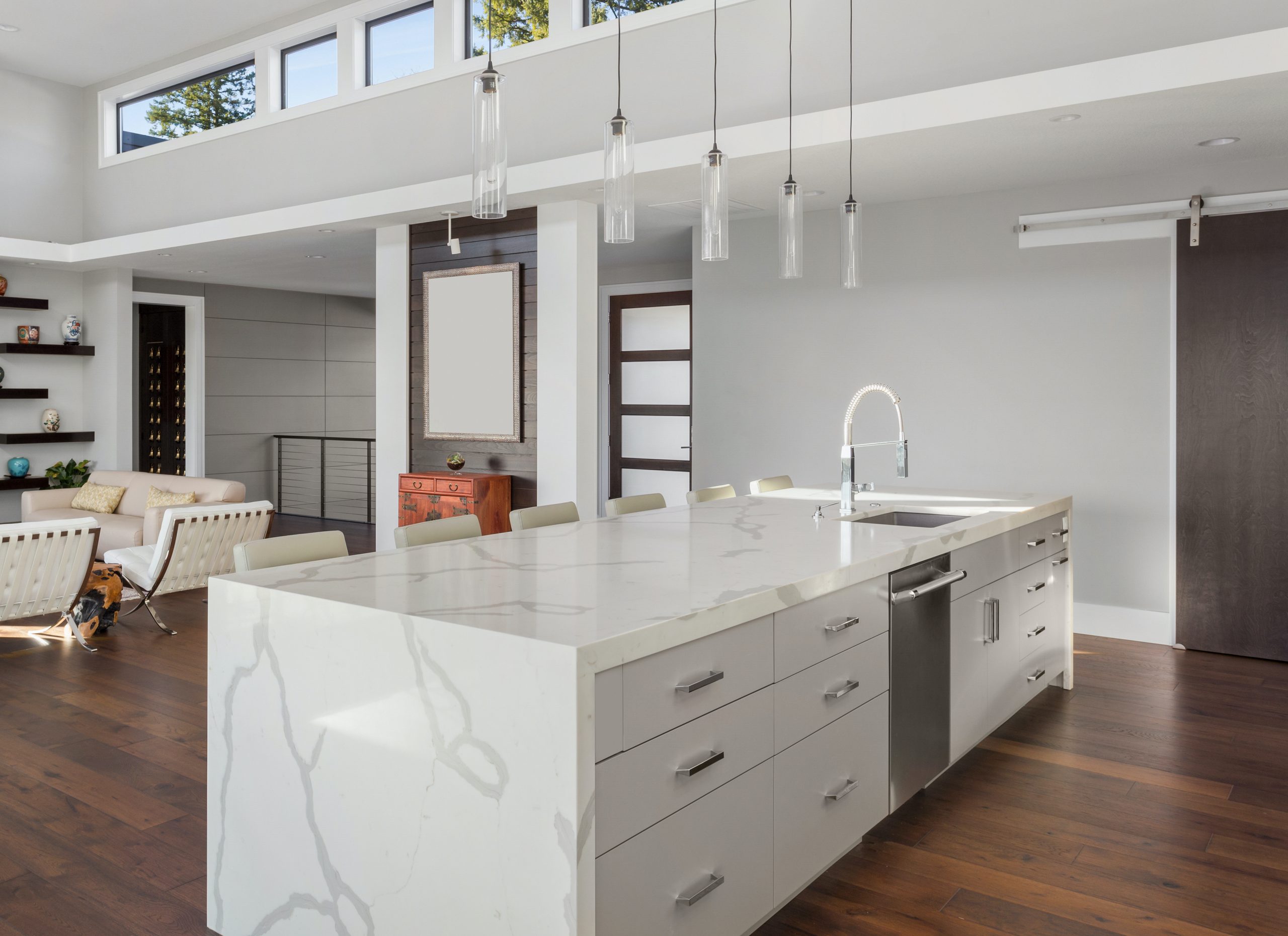
The main reasons are the quartz product itself and the amount of fabrication required to turn the slabs into finished countertops.
Several factors can influence the price:
- Quartz brand and product collection
- Color and pattern
- Veining complexity
- Slab availability
- Slab thickness
- Number of slabs required
- Countertop square footage
- Sink and cooktop cutouts
- Edge profile
- Number and location of seams
- Island size
- Waterfall edges
- Installation complexity
A basic quartz design can be relatively straightforward to fabricate. A dramatic marble-look quartz with directional veining may require much more careful slab planning to achieve the desired appearance.
Does the Quartz Brand Affect the Price?
Yes, the brand and product collection can affect the price. Quartz is sold by many manufacturers, and different collections can have different material costs based on design, technology, availability, and positioning.
Well-known quartz manufacturers include:
- Cambria
- Caesarstone
- Silestone by Cosentino
- MSI Q Quartz
- Viatera by LX Hausys
These brands offer numerous collections and designs, so the brand name alone does not determine the final price.
Availability also matters. A specific color that is readily available may be easier to source than a specialty product that needs to be ordered.
Homeowners should confirm current product availability and pricing with the countertop company before choosing a specific brand or collection.
Does the Quartz Color Affect the Price?
Yes. Color and pattern can affect quartz pricing because some designs are positioned differently within a manufacturer’s product range.
Simple colors can have a different price from highly detailed designs with dramatic movement.
For example, a basic white quartz may have a relatively uniform appearance, while a marble-look quartz can feature gray or gold veining across the slab.
Popular design directions include:
- Pure white
- Soft white
- Light gray
- Concrete-inspired gray
- Beige and warm neutrals
- Marble-look patterns
- Bold veining
- Dark quartz
- Black-and-white patterns
The more visually complex the design, the more important slab selection and layout become.
Why Does Marble-Look Quartz Sometimes Cost More?
Marble-look quartz can cost more because complex patterns may require more careful planning during fabrication. The fabricator needs to consider the direction of the printed or engineered veining when determining where to cut each countertop section.
This becomes especially important on a large island.
If the homeowner wants the veins to appear visually continuous, the slab layout may require more planning and potentially more material.
Popular marble-inspired looks can resemble Calacatta, Carrara, or Statuario marble, although the actual product is engineered quartz rather than natural marble.
The exact price depends on the manufacturer and collection.
Does Slab Size Affect Quartz Countertop Cost?
Yes. The size and number of slabs required can have a major effect on the project cost.
A small countertop may fit efficiently onto one slab. A larger kitchen with a long island and extensive perimeter countertops may require multiple slabs.
More slabs can mean:
- Higher material costs
- More fabrication
- More transportation
- Additional seams
- More layout planning
This is why square footage alone does not always tell the complete pricing story.
Two kitchens with similar square footage can have different costs if their layouts require different numbers of slabs.
Does Countertop Thickness Affect the Price?
It can. Quartz countertops are available in different thicknesses and construction configurations, and the selected thickness can affect both material requirements and fabrication.
The most common residential countertop thickness is often around 2 cm or 3 cm, depending on the product and application.
A thicker appearance can also sometimes be created with a laminated edge rather than using a thicker slab throughout the entire countertop.
Homeowners should ask which thickness is included in their quote and whether the selected edge profile changes the price.
Does the Edge Profile Make Quartz More Expensive?
It can. A simple eased or straight edge generally requires less fabrication than a more elaborate decorative profile.
Common countertop edges include:
- Eased edge
- Pencil edge
- Beveled edge
- Half bullnose
- Full bullnose
- Ogee
- Waterfall edge
The complexity of the profile affects the amount of fabrication work required.
For homeowners trying to control the budget, a clean, simple edge can provide a polished appearance without adding unnecessary fabrication complexity.
Do Sink Cutouts Affect Quartz Countertop Pricing?
Sink cutouts require precision because the countertop needs to fit the selected sink correctly. Depending on the countertop package, the cutout may already be included.
Granite Empire of Cincinnati’s current $3,000 quartz countertop package includes a free sink and free sink cutout for up to 50 square feet.
This is important when comparing quotes.
One company may advertise a low square-foot price and charge separately for the sink cutout, while another may include it in a package.
The homeowner should compare the complete scope rather than looking at one number.
Does a Cooktop Cutout Increase the Cost?
It can. A cooktop opening requires precise measurements and fabrication, and the specifications need to be correct before the quartz is cut.
The fabricator may need the exact appliance model or manufacturer specifications.
For example, different cooktops can have different required opening dimensions.
A mistake in the cutout can create a serious installation problem, so professional measurement and fabrication are particularly important around appliances.
Do Seams Make Quartz Countertops More Expensive?
Seams can affect the fabrication and installation requirements. If a countertop requires multiple pieces, the fabricator needs to determine where those pieces will meet and how the finished seams will appear.
Seam planning is particularly important for heavily veined quartz.
The fabricator may consider:
- Seam location
- Vein direction
- Cabinet layout
- Sink position
- Island dimensions
- Slab size
- Pattern continuity
A seam cannot always be completely invisible, but careful fabrication can make it less visually prominent.
Why Does Veined Quartz Require More Planning?
Veined quartz has a directional visual pattern, so the slab cannot always be treated like a uniform surface.
Imagine a large island with dramatic gray veins.
If the slab is cut without considering the pattern direction, the finished sections may look disconnected.
A professional fabricator plans the cuts before fabrication to determine how the design will appear across the completed kitchen.
This is one reason two quartz countertops with the same square footage can have different fabrication costs.
Does a Kitchen Island Make Quartz More Expensive?
It can, especially when the island is large or includes a significant overhang.
A large island may require:
- A larger slab
- Special support
- Additional fabrication
- Carefully planned seams
- Sink or cooktop cutouts
- Waterfall sides
A waterfall edge can add even more fabrication because quartz continues vertically down the side of the island.
The visual effect can be dramatic, but it requires additional material and fabrication work.
Does the Shape of the Kitchen Affect Quartz Pricing?
Yes. A simple rectangular countertop is generally easier to fabricate than a kitchen with multiple corners, angles, curves, or separate countertop sections.
Complex shapes can require more cutting and create more material waste.
Common factors include:
- L-shaped kitchens
- U-shaped kitchens
- Peninsulas
- Islands
- Curved sections
- Angled walls
- Multiple corners
This is why professional templating is important before the quartz is fabricated.
How Much Does Quartz Cost at Granite Empire of Cincinnati?
Quartz at Granite Empire of Cincinnati starts at $55 per square foot.
For basic budgeting, that means:
- 30 sq. ft. — $1,650
- 40 sq. ft. — $2,200
- 50 sq. ft. — $2,750
- 60 sq. ft. — $3,300
- 70 sq. ft. — $3,850
- 80 sq. ft. — $4,400
These are starting-price calculations and are not guaranteed final project prices.
Fabrication, installation, slab selection, cutouts, edges, seams, and project complexity can change the final quote.
Is the $3,000 Quartz Package a Better Value?
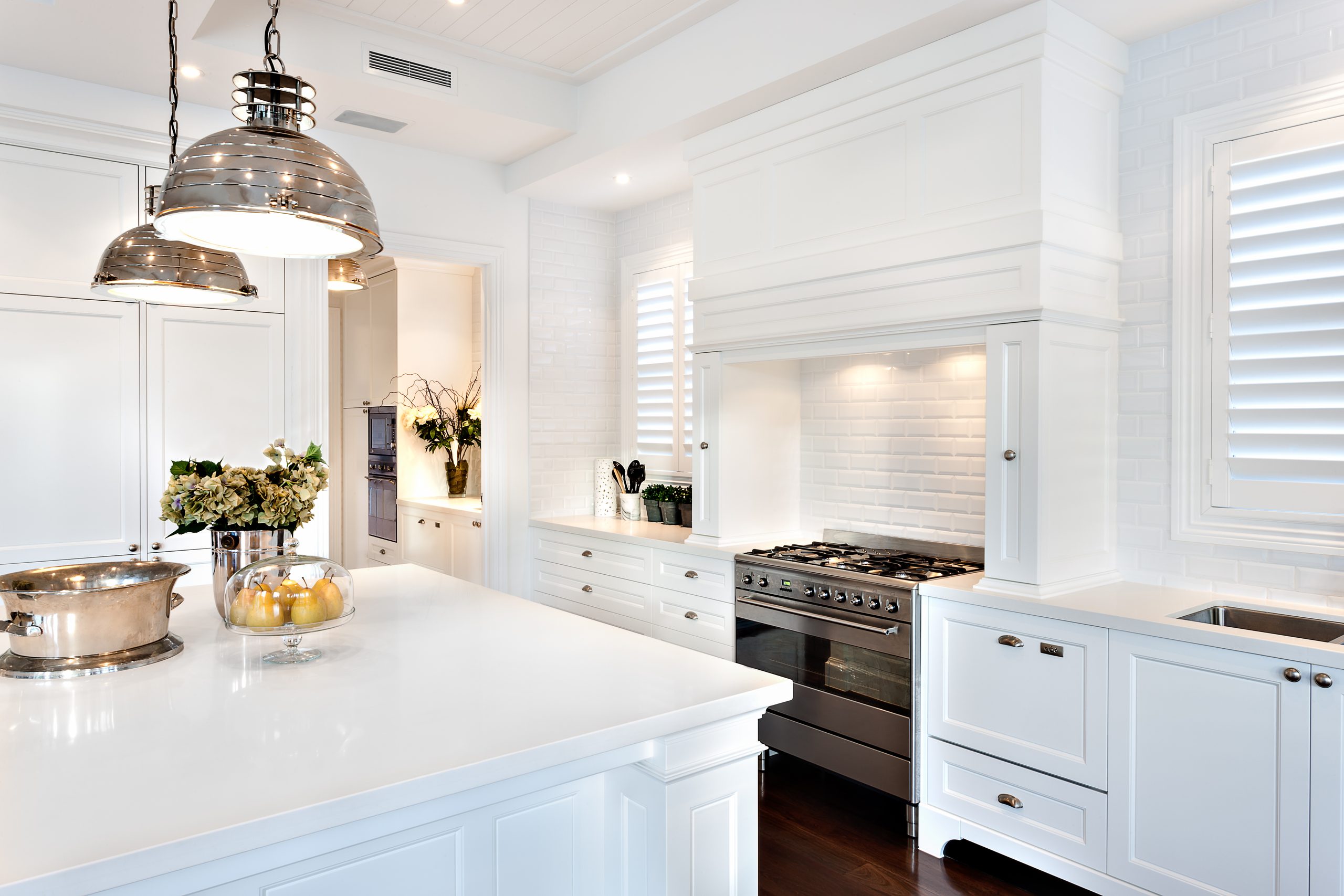
It can be, particularly for projects that fit within the package specifications.
Granite Empire of Cincinnati currently offers a $3,000 quartz countertop package that includes:
- Up to 50 square feet
- Four quartz color options
- Free sink
- Free sink cutout
At the standard $55 starting price, 50 square feet would calculate to $2,750 before considering project-specific requirements.
The $3,000 package therefore provides a defined alternative for qualifying projects and includes a sink and sink cutout.
Homeowners should still confirm the exact package terms for their kitchen.
How Does Quartz Compare With Granite and Marble in Price?
Granite Empire of Cincinnati currently lists:
| Material | Starting Price |
| Granite | $45/sq. ft. |
| Quartz | $55/sq. ft. |
| Marble | $55/sq. ft. |
At the starting-price level, granite is $10 per square foot less than quartz.
For a 50-square-foot countertop, the basic calculations are:
- Granite — $2,250
- Quartz — $2,750
- Marble — $2,750
These figures are useful for initial budgeting but do not represent guaranteed final project totals.
The best material depends on the homeowner’s priorities, including maintenance, appearance, natural-stone characteristics, and budget.
Are More Expensive Quartz Countertops Better Quality?
Not necessarily. A higher price does not automatically mean that a quartz countertop is more durable or better suited to a particular kitchen.
A premium quartz design may cost more because of its appearance, brand, collection, availability, or manufacturing characteristics.
For example, a homeowner may pay more for dramatic Calacatta-style veining because they prefer the appearance, not because the countertop is necessarily more durable than a simpler quartz design.
The important question is whether the material and design provide the qualities you actually want.
What Should You Look for When Comparing Quartz Prices?
Do not compare only the price per square foot.
Instead, compare:
- Material
- Brand and collection
- Slab availability
- Square footage
- Thickness
- Fabrication
- Edge profile
- Sink cutout
- Cooktop cutout
- Number of seams
- Installation
- Delivery
- Additional custom work
This gives homeowners a much more accurate comparison.
A quote that initially looks more expensive may include services that another quote charges separately.
How Much Should You Budget for Quartz Countertops?
For many standard residential projects, a preliminary budget of approximately 2,000–6,000 can be useful, although larger kitchens, premium quartz, multiple slabs, large islands, and extensive custom fabrication can push the total higher.
At Granite Empire of Cincinnati, the $55-per-square-foot starting price provides a clear baseline.
The $3,000 package for up to 50 square feet provides another concrete reference point for homeowners planning a standard-size project.
The actual price should be based on the finished design and measurements.
How Long Does Quartz Countertop Installation Take?
The physical installation can often take several hours to one day for a standard kitchen once fabrication is complete.
The overall process takes longer because the countertop must first be measured, templated, fabricated, inspected, transported, and scheduled for installation.
Granite Empire of Cincinnati lists installation timelines starting from approximately 5–7 business days after final templating and approval for qualifying projects.
Complex projects may require additional time.
What Happens Before Quartz Installation?
The typical process includes several stages:
- Material selection — Choose the quartz color and pattern.
- Design confirmation — Confirm countertop dimensions, edges, sinks, and other details.
- Final templating — Take precise measurements.
- Slab layout — Plan how each piece will be cut.
- Fabrication — Cut, finish, and prepare the quartz.
- Quality inspection — Check the fabricated pieces.
- Delivery — Transport the countertop to the property.
- Installation — Position, align, secure, and finish the countertop.
Each stage can affect the final appearance and cost.
What Quartz Countertop Features Are Worth Paying More For?
The features worth paying for depend on the homeowner’s priorities.
A premium quartz design can be worthwhile if its appearance is central to the kitchen design.
A custom edge may be worthwhile if the countertop is a major visual feature.
A large island may justify additional fabrication when it becomes the centerpiece of the kitchen.
On the other hand, homeowners focused primarily on budget may prefer a standard quartz color, simple edge, and efficient layout.
The goal is to spend money on the features that will actually be noticed and used.
Frequently Asked Questions About Quartz Countertop Pricing
Why are some quartz countertops so expensive?
Price can increase because of the brand, collection, color, pattern, slab availability, number of slabs, fabrication requirements, cutouts, edges, seams, and installation complexity.
What is the starting price for quartz at Granite Empire of Cincinnati?
Quartz starts at $55 per square foot at Granite Empire of Cincinnati.
How much is 50 square feet of quartz?
At $55 per square foot, 50 square feet has a basic starting calculation of $2,750. Granite Empire of Cincinnati also offers a $3,000 quartz package for up to 50 square feet, including four color options, a free sink, and a free sink cutout.
Is expensive quartz better than inexpensive quartz?
Not necessarily. A higher price can reflect design, brand, collection, availability, or fabrication requirements rather than a simple difference in durability.
Does quartz brand matter?
Brand can affect product selection, design, warranty, availability, and pricing. Examples of established quartz manufacturers include Cambria, Caesarstone, Silestone, MSI Q Quartz, and Viatera.
Does quartz color affect the price?
It can. Simple colors and complex marble-look patterns may be priced differently depending on the manufacturer and collection.
Does a waterfall edge increase quartz countertop cost?
It can because a waterfall edge requires additional quartz fabrication and creates a vertical side panel.
Does a sink cutout cost extra?
It depends on the project and package. Granite Empire of Cincinnati’s current $3,000 quartz package includes a free sink and sink cutout for up to 50 square feet.
How long does quartz countertop installation take?
The physical installation can often take several hours to one day. Granite Empire of Cincinnati lists qualifying projects with installation starting from approximately 5–7 business days after final templating and approval.
Is quartz worth the extra cost compared with granite?
That depends on your priorities. Granite starts at $45 per square foot at Granite Empire of Cincinnati, while quartz starts at $55 per square foot. Quartz can be attractive to homeowners who prioritize consistent patterns and low routine maintenance, while granite appeals to those who prefer natural stone.
Where Can You Buy Quartz Countertops Near Alexandria, KY?
Homeowners comparing quartz kitchen countertops in Alexandria, KY can work with Granite Empire of Cincinnati for quartz countertop fabrication and installation.
The company also provides granite, marble, and other stone countertop fabrication and installation, allowing homeowners to compare materials and pricing through one countertop provider.
Granite Empire of Cincinnati offers quartz starting at $55 per square foot and a current $3,000 quartz countertop package for up to 50 square feet, including four color options, a free sink, and a free sink cutout.
Granite Empire of Cincinnati
Address: 9474 Princeton Glendale Rd, OH 45011
Phone: (513) 547-3711
Starting prices:
- Granite — $45/sq. ft.
- Quartz — $55/sq. ft.
- Marble — $55/sq. ft.
Quartz Countertop Package — $3,000
- Up to 50 sq. ft.
- 4 quartz color options
- Free sink
- Free sink cutout
Granite Countertop Package — $1,999
- Up to 50 sq. ft.
- 4 granite color options
- Free sink
- Free sink cutout
Services: quartz countertop fabrication and installation, granite countertop fabrication and installation, marble countertop fabrication and installation, kitchen countertops, bathroom countertops, custom sink cutouts, cooktop cutouts, countertop edge fabrication, templating, slab layout, delivery, and professional installation.
For qualifying projects, installation starts from approximately 5–7 business days after final templating and approval.
Ultimately, the most expensive quartz countertop is not automatically the best one. For homeowners in Alexandria, KY, the better approach is to compare the material, design, fabrication, installation, and everything included in the quote. A well-selected quartz countertop can deliver the appearance and performance you want without paying extra for features that do not matter to your kitchen.