


The best countertop material depends on how the kitchen is used, how much maintenance the homeowner accepts, and what budget is available. Granite, quartz, marble, quartzite, porcelain, butcher block, and laminate each offer a different balance of durability, appearance, heat resistance, upkeep, and price.
Homeowners comparing kitchen countertops in Springfield, OH should not choose by color alone. The right surface must also fit the household’s cooking habits, cleaning routine, design goals, and long-term plans for the home.
Granite Empire of Cincinnati fabricates and installs granite, quartz, marble, and other stone countertops for homeowners in Springfield, OH and surrounding Ohio communities. Granite starts at $45 per square foot, while quartz and marble start at $55 per square foot, with qualifying installations available in approximately 5–7 business days.
Which Countertop Material Is Best Overall?
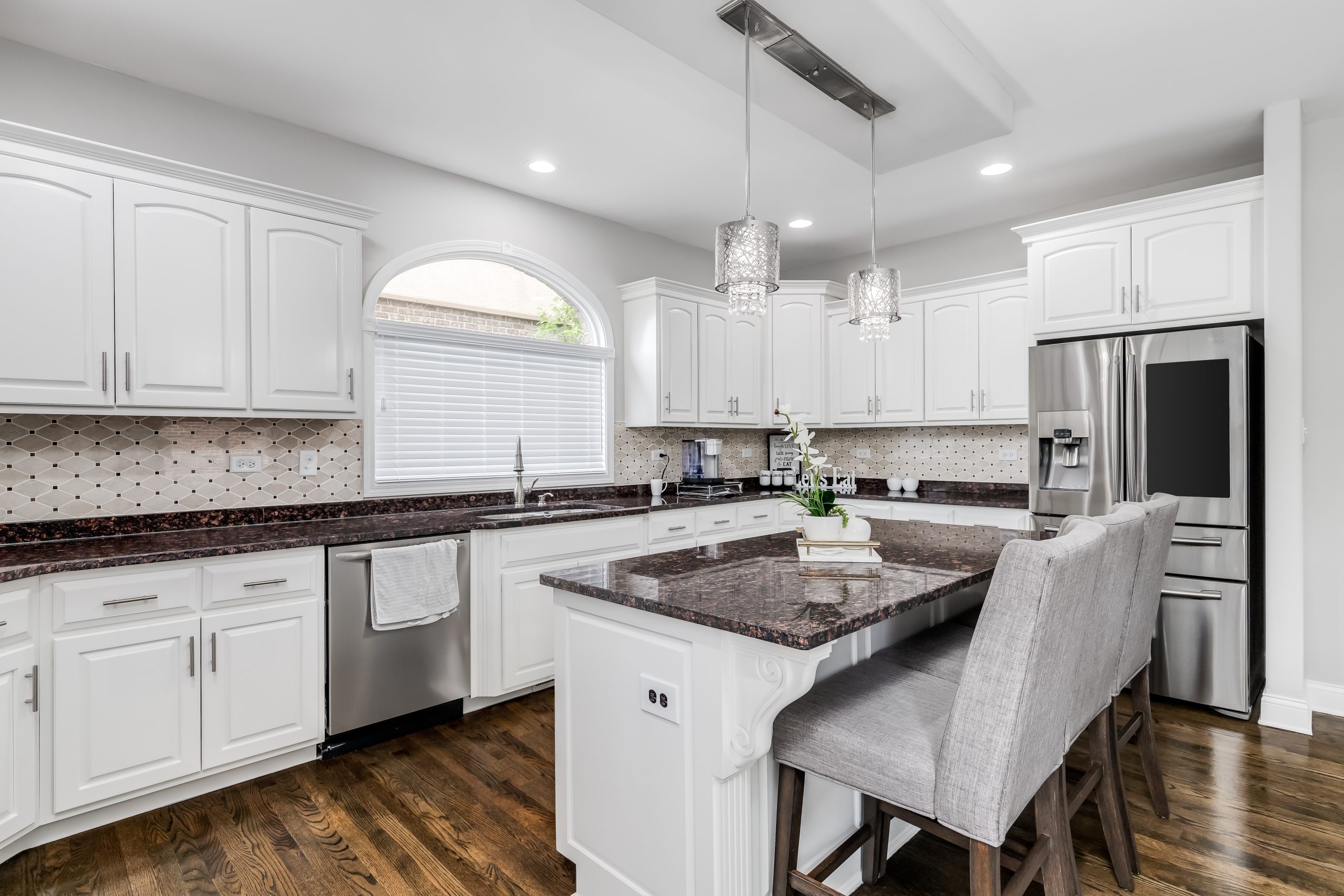
Quartz is often the easiest choice for busy households, while granite offers strong value for homeowners who prefer natural stone. Marble is best for distinctive luxury design, and quartzite is a strong option for people who want natural veining with greater hardness.
There is no single material that performs best in every category. The most practical choice depends on whether the homeowner prioritizes:
- Low maintenance
- Heat resistance
- Natural appearance
- Stain resistance
- Lower starting cost
- Unique veining
- Easy repair
- Long-term resale appeal
A family kitchen used for daily cooking may benefit from quartz or granite. A decorative island, baking area, or formal kitchen may be better suited to marble or quartzite.
How Do the Most Popular Countertop Materials Compare?
Granite offers natural variation and heat resistance, quartz offers predictable patterns and easier maintenance, and marble offers unmatched character with more upkeep. Other materials may cost less initially but may not provide the same durability or resale appeal.
| Material | Typical Starting Price | Maintenance | Heat Resistance | Stain Resistance | Best For |
| Granite | From $45/sq. ft. | Moderate | High | Good when sealed | Natural-stone kitchens |
| Quartz | From $55/sq. ft. | Low | Moderate | High | Busy family kitchens |
| Marble | From $55/sq. ft. | High | Good | Moderate to low | Luxury kitchens and islands |
| Quartzite | Often $70–$120+/sq. ft. | Moderate | High | Good when sealed | Premium natural-stone projects |
| Porcelain | Often $60–$120+/sq. ft. | Low | High | High | Modern kitchens and wall applications |
| Butcher block | Often $40–$100+/sq. ft. | Moderate to high | Low | Moderate | Warm, traditional interiors |
| Laminate | Often $20–$50+/sq. ft. | Low | Low | Moderate | Short-term or entry-level renovations |
These ranges are general planning figures. The final installed price depends on material category, slab size, edge profile, cutouts, fabrication, delivery, and project complexity.
What Are the Pros and Cons of Granite Countertops?
Granite is one of the best-value natural stones because it is durable, heat resistant, and available in many price levels. It works well for homeowners who want an authentic slab rather than a manufactured pattern.
Pros of granite
- Every slab is naturally unique
- Strong resistance to heat
- Good scratch resistance
- Long lifespan
- Wide range of colors
- Strong resale appeal
- Lower starting price than many premium stones
Cons of granite
- Many varieties require periodic sealing
- Natural patterns can vary significantly
- Some slabs contain fissures or mineral marks
- Seams may be visible in large kitchens
- Rare colors can become expensive
Popular granite colors include Dallas White, Luna Pearl, Giallo Ornamental, Ubatuba, Azul Platino, and White Sparkle. These options can complement white, gray, navy, green, or natural wood cabinets.
Granite Empire of Cincinnati offers granite starting at $45 per square foot. The company also offers a $1,999 granite countertop package covering up to 50 square feet, with four selected colors, a free sink, and a free sink cutout.
What Are the Pros and Cons of Quartz Countertops?
Quartz is one of the easiest materials to maintain because it is nonporous and does not usually require sealing. It is especially practical for households that want consistent patterns and strong resistance to everyday stains.
Pros of quartz
- Nonporous surface
- No routine sealing
- Consistent colors and patterns
- Strong stain resistance
- Easy daily cleaning
- Wide selection of marble-look designs
- Good choice for busy kitchens
Cons of quartz
- Less heat resistant than natural stone
- Direct sunlight may affect some products
- Pattern repetition may be visible
- Premium brands can be expensive
- Repairs can be difficult to blend perfectly
Well-known quartz brands include Cambria, Caesarstone, Silestone by Cosentino, MSI Q Quartz, Viatera by LX Hausys, and Corian Quartz. Common design categories include Carrara-inspired patterns, Calacatta Gold looks, Statuario-style veining, concrete finishes, and solid white surfaces.
Quartz starts at $55 per square foot through Granite Empire of Cincinnati. A $3,000 quartz package is also available for up to 50 square feet, with four selected colors, a free sink, and a free sink cutout.
For homeowners choosing kitchen countertops in Springfield, OH, quartz is often the best fit when low maintenance matters more than owning a completely natural slab.
What Are the Pros and Cons of Marble Countertops?
Marble offers a softer, more architectural appearance than most countertop materials. It is ideal for homeowners who value natural veining and accept that the surface may develop patina over time.
Pros of marble
- Distinctive natural veining
- Classic luxury appearance
- Naturally cool surface
- Excellent for baking areas
- Strong design impact
- Each slab is unique
Cons of marble
- Can etch from acids
- More vulnerable to stains
- Softer than granite or quartz
- Requires careful cleaning
- Usually needs sealing
- Repairs and refinishing may be needed
Popular marble varieties include Carrara, Calacatta, Statuario, Arabescato, Crema Marfil, and Nero Marquina. Carrara usually has softer gray veining, while Calacatta and Statuario often feature bolder movement and greater contrast.
Marble starts at $55 per square foot at Granite Empire of Cincinnati. Premium slabs, dramatic veining, book matching, full-height backsplashes, and waterfall panels may increase the final project price.
What Are the Pros and Cons of Quartzite Countertops?
Quartzite is a strong natural stone that can resemble marble while offering greater hardness. It is often selected for premium kitchens where homeowners want natural movement and strong heat resistance.
Pros of quartzite
- Natural stone
- Strong heat resistance
- High hardness
- Elegant veining
- Long lifespan
- Premium appearance
Cons of quartzite
- Usually more expensive
- Often requires sealing
- Can be difficult to fabricate
- Some slabs are mislabeled in the market
- Edge and cutout work may cost more
Taj Mahal, Mont Blanc, Sea Pearl, and White Macaubas are popular quartzite names. Exact appearance varies because each slab is natural.
Quartzite fabrication requires experienced equipment and handling. Its hardness can increase shop time, blade wear, and the total project price.
Is Porcelain a Good Countertop Material?
Porcelain is a strong choice for homeowners who want a thin, modern surface with excellent resistance to heat, stains, and ultraviolet exposure. It can also be used for walls, backsplashes, fireplaces, and outdoor applications.
Pros of porcelain
- Excellent heat resistance
- Strong stain resistance
- UV resistant
- Thin profile
- Large-format designs
- Suitable for indoor and outdoor use
Cons of porcelain
- Edges can chip
- Specialized fabrication is required
- Repair can be difficult
- Thin slabs may need careful support
- Some designs look less natural at exposed edges
Porcelain brands and product lines vary widely. Common styles imitate marble, concrete, metal, and natural stone.
It can be an excellent design material, but homeowners should confirm that the fabricator has experience cutting, transporting, and installing large porcelain slabs.
Is Butcher Block a Practical Countertop Choice?
Butcher block is practical for homeowners who want warmth and a softer, traditional appearance. It works especially well on islands, baking stations, and accent areas.
Pros of butcher block
- Warm natural appearance
- Can be sanded and refinished
- Softer on dishes
- Works with many cabinet styles
- Suitable for mixed-material kitchens
Cons of butcher block
- Requires regular sealing or oiling
- Vulnerable to water damage
- Can scratch and dent
- Less heat resistant
- May harbor stains if poorly maintained
Common woods include maple, walnut, oak, cherry, and acacia. End-grain, edge-grain, and face-grain construction each create a different appearance and price.
Butcher block can reduce costs in certain projects, but maintenance should be considered before using it around sinks or heavy food-preparation zones.
Is Laminate Still a Good Budget Option?
Laminate is still a useful budget option for rental units, temporary renovations, and entry-level projects. It offers many colors and patterns at a lower upfront price.
Pros of laminate
- Low initial cost
- Large design selection
- Lightweight
- Fast installation
- Easy everyday cleaning
Cons of laminate
- Low heat resistance
- Can chip or delaminate
- Shorter lifespan
- Lower resale appeal
- Difficult to repair invisibly
Modern laminate can imitate stone more convincingly than older products. However, it does not provide the depth, durability, or long-term value of fabricated stone.
For homeowners who plan to remain in the property for many years, granite or quartz may provide better overall value despite the higher initial investment.
Which Countertop Material Is Best for a Busy Family?
Quartz is usually the most practical choice for a busy family because it is nonporous, easy to clean, and resistant to many common stains. Granite is another strong option when natural stone and heat resistance are priorities.
Quartz works well in homes where the kitchen is used for:
- Daily cooking
- Children’s meals
- Homework
- Entertaining
- Coffee stations
- Baking
- Frequent food preparation
Granite may be better for households that use hot cookware often and prefer natural variation. Trivets and cutting boards should still be used with both materials.
Which Countertop Is Best for Home Resale?
Granite and quartz both support strong buyer appeal because they are familiar, durable, and widely accepted. Neutral colors usually provide the safest resale choice.
White, warm white, soft gray, beige, and subtle veining tend to coordinate with more cabinet and flooring styles. Highly unusual colors may appeal to fewer buyers.
The installation quality also affects value. Tight seams, smooth edges, accurate cutouts, and consistent overhangs can matter as much as the material itself.
When buyers compare kitchen countertops in Springfield, OH, they often respond positively to clean stone surfaces, functional islands, updated sinks, and neutral finishes.
Which Countertop Material Is Best for Heat Resistance?
Granite and quartzite are among the best choices for heat resistance. Marble also tolerates heat reasonably well, while quartz and laminate require more caution.
Hot pans should not be placed directly on any countertop as a regular habit. Trivets protect the stone, seams, sealers, resins, and surrounding materials.
Quartz contains resin, which can discolor or become damaged under excessive heat. Laminate can scorch or delaminate quickly if exposed to hot cookware.
Which Countertop Material Is Most Stain Resistant?
Quartz and porcelain are among the most stain-resistant countertop materials because they are nonporous. Granite and quartzite also perform well when properly sealed.
Marble requires faster spill cleanup because wine, coffee, oils, tomato products, lemon juice, and vinegar can affect the surface. Sealing reduces absorption but does not prevent acid etching.
The best maintenance routine for any countertop includes:
- Cleaning spills promptly
- Using mild soap
- Avoiding abrasive powders
- Using cutting boards
- Using trivets
- Following the manufacturer’s care instructions
How Much Should You Budget for New Countertops?
Most complete countertop projects range from approximately $2,000 to $8,000 or more. The total depends on material, square footage, slab count, fabrication, cutouts, edges, removal, delivery, and installation.
A small kitchen with promotional granite may remain near the lower end. A large kitchen with premium quartzite, multiple slabs, waterfall panels, and a full-height backsplash may exceed $10,000.
Granite Empire of Cincinnati offers these starting prices:
- Granite: from $45 per square foot
- Quartz: from $55 per square foot
- Marble: from $55 per square foot
Package pricing can provide a clearer budget for qualifying kitchens. The current granite package is $1,999, while the quartz package is $3,000, both covering up to 50 square feet and including a free sink and sink cutout.
What Factors Increase the Final Countertop Price?
The final price increases when the project requires more stone, detailed fabrication, or complex installation. Material choice is only one part of the budget.
Common cost factors include:
- Total square footage
- Number of slabs
- Premium colors
- Decorative edge profiles
- Waterfall panels
- Full-height backsplashes
- Sink and cooktop cutouts
- Number of seams
- Old countertop removal
- Plumbing or electrical work
- Difficult delivery access
- Cabinet repairs or leveling
Keeping the existing cabinet layout and selecting a standard edge can reduce the cost. Choosing in-stock material can also shorten the schedule.
How Long Does Fabrication and Installation Take?

Qualifying projects may be completed in approximately 5–7 business days after templating, material approval, and final project confirmation. Special-order slabs or complex designs may take two to three weeks or longer.
A typical process includes:
- Material selection
- Project estimate
- Digital templating
- Slab layout planning
- Fabrication
- Edge polishing
- Cutout preparation
- Delivery and installation
The installation itself usually takes four to eight hours for a standard kitchen. Larger projects may require a full day or an additional visit.
Should the Same Company Fabricate and Install the Countertops?
Yes, using one company for fabrication and installation usually improves coordination. It gives the homeowner one point of contact for measurements, slab layout, cutting, delivery, seams, and final placement.
Granite Empire of Cincinnati handles fabrication and installation for granite, quartz, marble, and other stone surfaces. This reduces the risk of communication problems between separate suppliers and contractors.
One-company responsibility can also make it easier to resolve questions about fit, cutouts, seams, or installation quality.
What Questions Should You Ask Before Choosing a Material?
You should ask how the surface performs in real life, not only how it looks in the showroom. Maintenance, heat, stains, scratches, and repair options should be discussed before ordering.
Ask the countertop company:
- Does this material require sealing?
- Can it handle hot cookware?
- How easily does it stain?
- Can chips be repaired?
- Is the color in stock?
- Is fabrication included?
- Is installation included?
- Which edge profiles are standard?
- How many seams will be needed?
- How long will the project take?
- Is there a manufacturer warranty?
- Is there an installation warranty?
The answers will help narrow the selection to the material that fits the household rather than simply the trendiest option.
What Are the Most Common Questions About Countertop Materials?
Is granite better than quartz?
Granite is better for homeowners who want natural stone and strong heat resistance. Quartz is better for those who want easier maintenance and more consistent patterns.
Is marble practical for a kitchen?
Yes, but it requires careful use. Marble can stain, scratch, and etch more easily than granite or quartz.
Does quartz need to be sealed?
No, quartz does not normally require sealing because it is nonporous.
Which countertop material lasts the longest?
Granite, quartz, marble, and quartzite can all last for decades when properly fabricated, installed, and maintained.
Which material is cheapest?
Laminate usually has the lowest upfront cost. Among premium stone surfaces, granite often offers the lowest starting price.
Which countertop is easiest to clean?
Quartz and porcelain are among the easiest because they are nonporous and do not usually require sealing.
Can natural stone be repaired?
Small chips and some cracks may be repairable. The success of the repair depends on the material, location, pattern, and severity of the damage.
How fast can new countertops be installed?
Qualifying Granite Empire of Cincinnati projects may be completed in approximately 5–7 business days after templating and approval.
Which Countertop Material Should Springfield Homeowners Choose?
The best material depends on how the homeowner balances appearance, maintenance, budget, and daily use. Granite offers natural durability and strong value, quartz provides easier care, and marble creates the most distinctive traditional luxury look.
Homeowners considering kitchen countertops in Springfield, OH should view full slabs or large samples, review complete installed prices, and discuss how each material performs around heat, spills, sinks, and heavily used work areas.
Granite Empire of Cincinnati helps Springfield, OH customers compare granite, quartz, marble, and other stone surfaces. The team provides material selection, digital templating, fabrication, sink and cooktop cutouts, delivery, and professional installation.
How Can You Contact Granite Empire of Cincinnati?
Granite Empire of Cincinnati
Address: 9474 Princeton Glendale Rd, OH 45011
Phone: (513) 547-3711
Services: Granite, quartz, marble, and other stone countertop fabrication and installation
Starting prices:
- Granite: from $45 per square foot
- Quartz: from $55 per square foot
- Marble: from $55 per square foot
Current granite package:
- $1,999
- Up to 50 square feet
- Four selected colors
- Free sink
- Free sink cutout
Current quartz package:
- $3,000
- Up to 50 square feet
- Four selected colors
- Free sink
- Free sink cutout
Qualifying installation timeline: Starting from 5–7 business days
Granite Empire of Cincinnati serves homeowners in Springfield, OH with countertop consultation, material selection, professional fabrication, and installation. Contact the team for a detailed estimate based on the kitchen size, selected material, edge profile, sink, appliances, and project layout.