

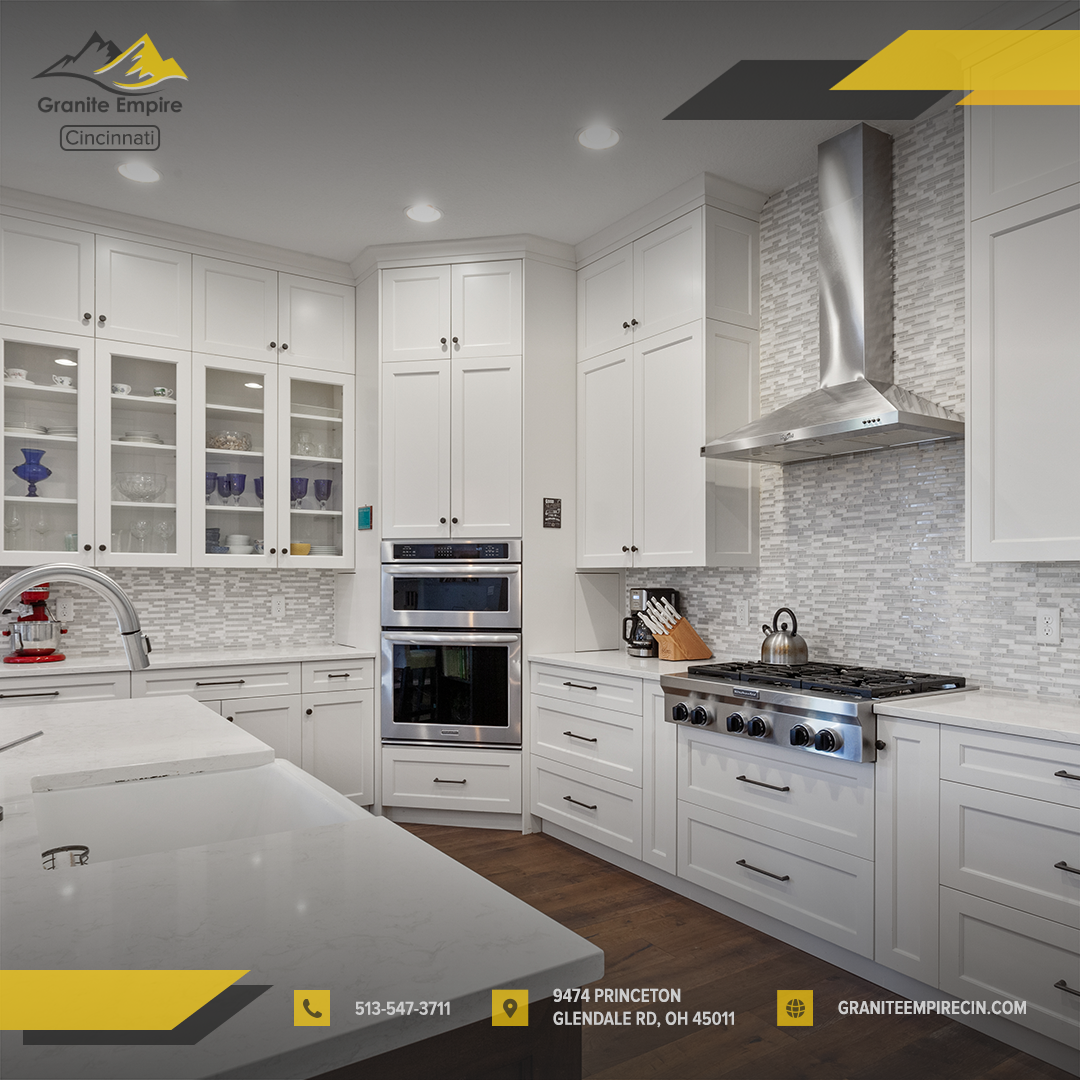
Quartz is marketed as nearly indestructible — and for normal kitchen use, it largely is. But quartz has specific vulnerabilities that most homeowners don’t learn about until something goes wrong. Heat is the biggest one: a single hot pan set directly on the surface can cause permanent damage that no amount of cleaning fixes. For homeowners with quartz countertops in Kettering, OH, knowing these risks upfront prevents costly mistakes on a surface that starts at $55/SF.
This guide covers every lesser-known way quartz gets damaged — and how to avoid each one.
What Is the Biggest Hidden Risk to Quartz Countertops?

Heat — and specifically, thermal shock from sudden temperature changes. This is the single most common cause of quartz damage that homeowners don’t anticipate.
Quartz countertops are made from roughly 90–95% crushed natural quartz bound with polyester or epoxy resin. The resin component is what makes quartz vulnerable to heat in ways that solid granite or quartzite simply aren’t.
What happens with heat damage:
- Discoloration — a yellow or brown ring appears where a hot item sat, caused by the resin reacting to heat
- Cracking — sudden temperature changes (a hot pan on a cold countertop, especially near a window in winter) can cause micro-fractures
- Surface dulling — repeated heat exposure in the same spot gradually changes the texture and shine of the surface
- Warping at seams — heat near a seam can cause the adhesive bond to weaken over time
None of this is reversible with cleaning. Once the resin is heat-damaged, the only fix is professional repair or, in severe cases, replacing the affected section.
How Hot Does Something Need to Be to Damage Quartz?
Most manufacturers rate quartz as safe up to around 150°F (65°C) for brief contact — but real kitchen items routinely exceed this by a significant margin.
| Item | Typical Temperature | Risk to Quartz |
| Cup of coffee | 130–160°F | Low risk, brief contact |
| Pot of boiling water | 212°F | High risk |
| Cast iron skillet (off stove) | 300–500°F | Severe risk — instant damage possible |
| Baking sheet from oven | 350–450°F | Severe risk |
| Slow cooker (exterior) | 150–200°F (sustained) | Moderate to high risk with prolonged contact |
| Curling iron or hair straightener | 300–450°F | Severe risk if set down directly |
The danger isn’t just the temperature — it’s the duration of contact and the temperature differential. A pan straight from a 425°F oven set on a 70°F countertop creates exactly the kind of thermal shock that causes cracking.
What Everyday Habits Quietly Damage Quartz?
Beyond the obvious hot-pan scenario, several common kitchen habits cause cumulative damage that homeowners often don’t connect to the countertop until the damage is visible.
- Setting a slow cooker or instant pot directly on quartz for hours — sustained moderate heat is more damaging than brief high heat in some cases, because the resin has time to soften and shift
- Using the countertop as a cutting surface — quartz resists scratching but isn’t scratch-proof; repeated knife contact in the same area dulls and scratches the surface over time
- Harsh chemical cleaners — bleach, oven cleaners, and high-pH or high-acid products (like some drain cleaners or rust removers) can break down the resin binder and discolor the surface permanently
- Abrasive scrubbing pads — steel wool, scouring pads, and abrasive powders dull the polished surface and create micro-scratches that trap dirt and discolor over time
- Direct sunlight exposure — quartz near a sunny window can experience slow color fading and resin yellowing over years; this is also why quartz isn’t recommended for outdoor kitchens
- Standing water around the sink edge — while quartz is non-porous, prolonged water exposure at seams or edges can degrade the adhesive and cause lifting over time
Can Quartz Crack from Impact?
Yes — and this surprises homeowners who assume quartz is impact-proof because it’s so hard. Quartz is hard but also somewhat brittle, particularly at edges and corners.
High-risk impact scenarios:
- A heavy cast iron pot dropped directly on a corner or edge
- A cutting board or appliance dropped from height onto the surface
- Pressure applied near an unsupported overhang — for example, sitting or leaning on a bar-height overhang without proper support brackets
Why edges and corners are more vulnerable:
The thinnest, most exposed parts of the slab — outside corners, areas around sink cutouts, and unsupported overhangs — are where impact damage concentrates. A solid impact in the center of a well-supported countertop is far less likely to cause damage than the same impact at an edge.
For homeowners planning a kitchen island with seating, proper support bracket spacing during installation is essential — this is something Granite Empire of Cincinnati addresses during the in-home measurement and fabrication planning for every project.
What Cleaning Products Should You Never Use on Quartz?
Most quartz damage from cleaning products happens because homeowners assume “if it’s safe for granite, it’s safe for quartz” — but the resin content changes the chemistry.
Products to avoid on quartz:
- Bleach and bleach-based cleaners — can discolor and weaken the resin over repeated use
- Oven cleaners — extremely high pH; can permanently etch and discolor the surface
- Vinegar and acidic cleaners — while quartz doesn’t etch like marble, repeated acid exposure can dull the surface sheen over time
- Drain cleaners and rust removers — highly caustic; any contact with the countertop surface should be cleaned immediately
- Nail polish remover (acetone) — can dissolve and discolor the resin if left in contact for more than a few seconds
- Permanent markers and dyes — can stain the surface if not cleaned immediately; while quartz is non-porous, pigmented products can leave residue in the polish
What’s safe: mild dish soap and warm water, isopropyl alcohol for disinfecting, and quartz-specific cleaning products designed for engineered stone.
How Does Quartz Compare to Granite and Marble for Heat and Impact Resistance?
| Factor | Quartz | Granite | Marble |
| Heat resistance | Moderate — resin vulnerable | Excellent — fully natural | Moderate |
| Direct hot pan damage | Yes — discoloration/cracking possible | No — generally safe | Possible — thermal shock risk |
| Impact resistance (center) | High | High | Moderate |
| Impact resistance (edges) | Moderate — can chip | High | Lower — chips more easily |
| Chemical sensitivity | Resin reacts to harsh chemicals | Low — sealed surface resists most | High — acids cause etching |
| UV/sunlight exposure | Can fade/yellow | Excellent | Good |
| Sealing required | Never | Annually | Every 6–12 months |
This is the tradeoff worth understanding: quartz’s non-porous, low-maintenance surface comes with a specific heat and chemical vulnerability that granite — a fully natural stone — doesn’t have.
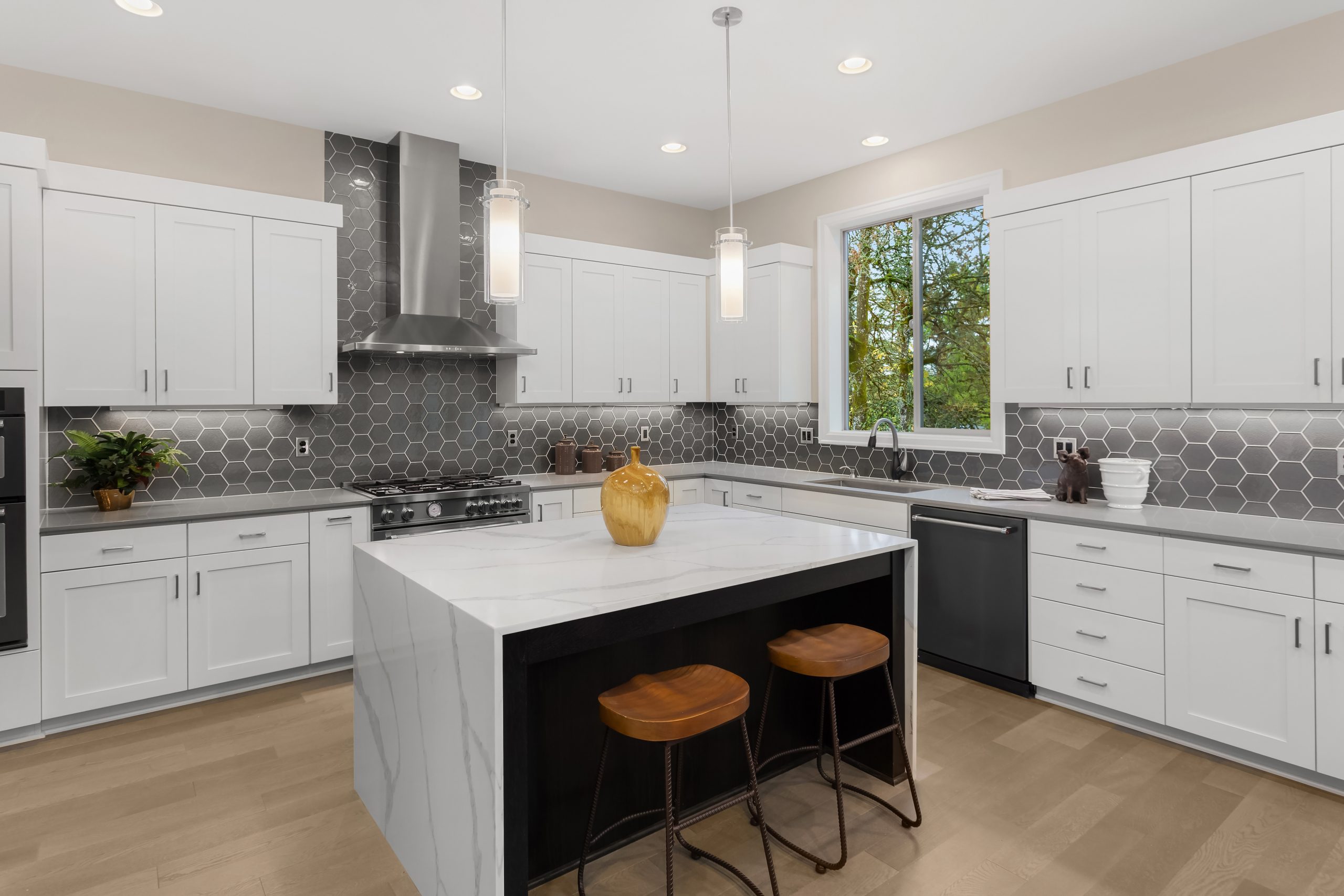
What Should You Do If Quartz Gets Damaged?
The right response depends on the type of damage:
Heat discoloration:
Minor heat marks sometimes improve with specialized quartz polish, but significant discoloration is usually permanent. Professional repair services can sometimes blend the affected area, but full restoration to original appearance isn’t always possible.
Scratches:
Light scratches can often be buffed out with a quartz-specific polishing compound. Deep scratches may require professional resurfacing of the affected area.
Chips at edges or corners:
Small chips can be repaired with color-matched epoxy filler, similar to granite repair. The repair is durable but may be slightly visible depending on the color and pattern.
Cracks:
Cracks from impact or thermal shock typically require professional assessment. Small cracks can sometimes be stabilized with epoxy injection; larger cracks may require section replacement.
For homeowners with quartz countertops in Kettering, OH experiencing any of these issues, Granite Empire of Cincinnati can assess the damage and advise whether repair or replacement is the better path forward.
How Much Does It Cost to Replace a Damaged Quartz Section?
If repair isn’t viable, replacing a section — or the full countertop — is the next step.
| Project Scope | Estimated Cost |
| Single section replacement (10–15 SF) | $800 – $1,500 |
| Full kitchen quartz replacement (up to 50 SF) | $3,000 (package price) |
| Bathroom vanity quartz replacement | $900 – $2,200 |
Granite Empire of Cincinnati’s Quartz Countertop Package — $3,000 for up to 50 SF, including a free stainless steel sink and cutout — is often the more economical choice when damage affects a significant portion of the countertop, since matching an exact discontinued color for a partial replacement isn’t always possible.
How Long Does Quartz Replacement Take Near Kettering, OH?
Granite Empire of Cincinnati completes quartz countertop installation in 5–7 business days from measurement. The full timeline:
- Day 1 — Consultation, damage assessment if applicable, and color selection
- Day 2 — In-home measurement and template creation
- Days 3–5 — In-house fabrication: cutting, edge profiling, sink cutout preparation
- Days 5–7 — Professional installation, sink drop-in, silicone finishing, and cleanup
For homeowners dealing with damaged quartz, this 5–7 business day window means a full replacement often takes less time than waiting for a manufacturer repair service to schedule a technician visit.
Frequently Asked Questions
Can you put a hot pan on quartz for just a few seconds?
Brief contact — a few seconds — is generally low risk for most quartz brands, but it’s not worth the gamble. The damage threshold varies by manufacturer and resin formulation, and there’s no visible warning before damage occurs. Using a trivet takes no real effort and eliminates the risk entirely.
Why did my quartz countertop turn yellow near the stove?
This is almost always heat damage to the resin binder, caused by repeated exposure to heat from nearby cooking, hot pans set down without a trivet, or a dishwasher venting steam directly upward if the countertop is positioned above it. The discoloration is typically permanent.
Is quartz still a good choice if it can be damaged by heat?
Yes — for the vast majority of kitchen tasks, quartz performs excellently and the heat risk is easily managed with basic trivet use. The non-porous, zero-sealing benefit of quartz countertops in Kettering, OH far outweighs the heat consideration for most households, as long as the household develops the habit of using trivets.
Does Granite Empire of Cincinnati repair damaged quartz countertops?
Yes. Depending on the type and extent of damage, Granite Empire of Cincinnati can advise on repair options or, if replacement is the better path, complete a full quartz countertop replacement in 5–7 business days using the Quartz Countertop Package starting at $3,000 for up to 50 SF.
What is the most common quartz damage homeowners regret not knowing about?
Heat discoloration near the stove is by far the most common — and most regretted — type of quartz damage. Most homeowners learn about the heat sensitivity only after it happens, since quartz is marketed primarily on its durability and stain resistance rather than its heat limitations.
How do I get a quote for quartz countertops in Kettering, OH?
Call Granite Empire of Cincinnati at (513) 547-3711 or visit the showroom at 9474 Princeton Glendale Rd, Hamilton, OH 45011 — approximately 30–35 minutes from Kettering, OH. The Quartz Countertop Package at $3,000 for up to 50 SF includes a free stainless steel sink and cutout, with installation completed in 5–7 business days.
Get Quartz Countertops Installed in 5–7 Business Days
Granite Empire of Cincinnati fabricates and installs quartz, granite, marble, and other natural stone countertops for kitchens and bathrooms across the greater Cincinnati area, including Kettering, OH, Dayton, Beavercreek, Xenia, and Hamilton.
Address: 9474 Princeton Glendale Rd, Hamilton, OH 45011
Phone: (513) 547-3711
Turnaround: 5–7 business days from measurement
Quartz Package: $3,000 for 50 SF — free sink and cutout included
Services: Quartz, granite, marble, and stone countertop fabrication and installation
Serving: Kettering, OH, Dayton, Beavercreek, Xenia, Hamilton, and the greater Cincinnati area